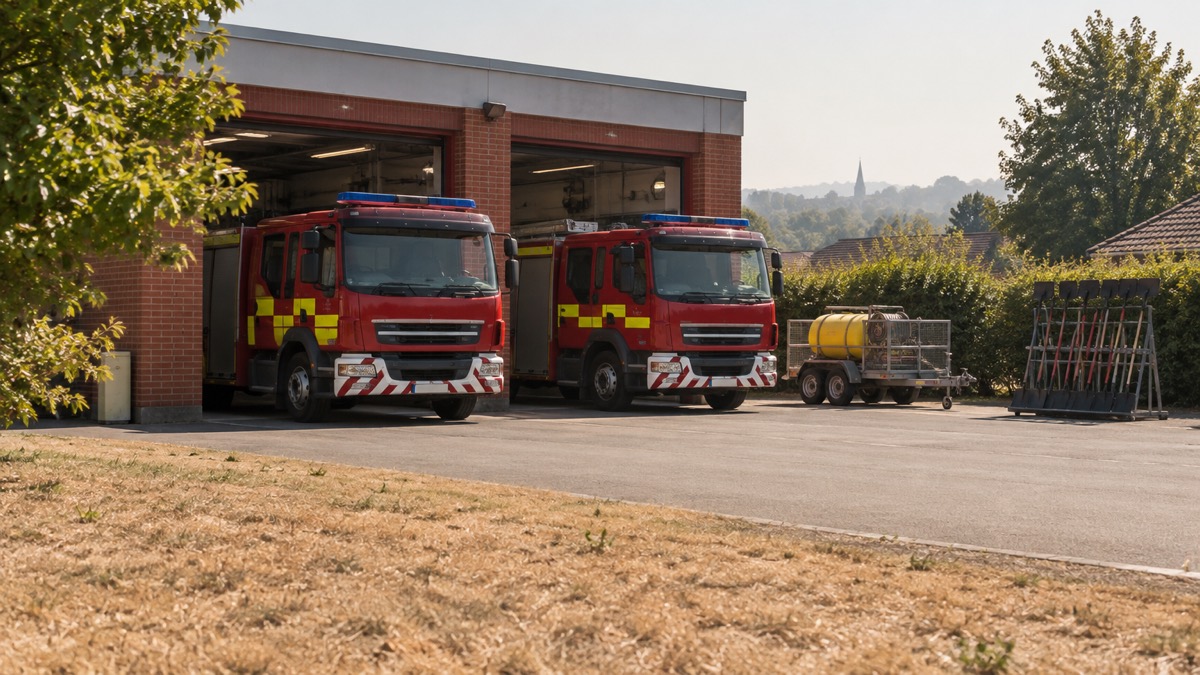
Fire and rescue services in England and Wales had responded to 996 wildfires as of 4 September 2025, according to the Environment Agency. This is an increase from 994 in the drought of 2022, which the agency describes as previously the worst year on record for wildfires1.
The figure appears in the agency's policy paper on how drought is managed in England, updated on 8 April 20261. The same document records that 2025 saw the highest number of drought permits issued, within a total of 124 drought permits and 57 drought orders issued between 1996 and 20261. It describes 2022 and 2025 as short, intense droughts, in contrast with events such as 2004 to 2006 that extended over multiple seasons1.
The paper sets out how drought is classified and managed. Drought is listed as a risk facing England on the National Risk Register, and the agency states that more frequent and severe droughts are likely in future because of the changing climate1. It notes that droughts and heatwaves are not the same thing, and that a heatwave can worsen a drought by raising demand for water when supplies are already low1. It also records that intense rainfall at the end of a dry period can cause flash flooding, as happened in south west England after the 2025 drought, and that rain during a drought does not necessarily mean the drought is over1.
On the 2025 to 2026 event, the paper states that rainfall at the end of the year brought most of the country to recovery in December, except for parts of the East and South, and that by 23 March 2026 the country had fully recovered from drought1.
"as of 4 September 2025, the fire and rescue services in England and Wales responded to 996 wildfires. This is an increase from 994 seen in the drought of 2022, which was previously the worst year on record for wildfires."
Why it matters for households
The count covers England and Wales and is a record of incidents attended, not a measure of damage or injury; the paper gives no breakdown by region, cause or property affected, and no figures for casualties or homes lost1. Wildfire risk to households, and what can be done around the home and in the wider countryside, is set out in the guide to wildfires and grass fires.
The paper links the frequency of such events to wider changes in UK summers, covered in why UK summers are getting hotter and drier. It also describes the legal mechanisms available when water is short: drought permits and drought orders, which allow more flexibility in managing water resources during an exceptional shortage of rain, and temporary use bans, formerly known as hosepipe bans, which water companies can implement under their own powers1. These are explained in the guide to drought permits, orders and emergency rota cuts.
For households on private supplies, the paper states there are around 1 million users of some 40,000 private water supplies from streams, boreholes and springs, of which just over half are domestic1. It states that where circumstances pose a danger to life or human health, the local authority has powers to require the water company to provide an alternative supply, such as bottled water, at a cost to those to whom the supply is provided1.
What happens next
The paper records that the country had fully recovered from drought by 23 March 20261. It states that the Environment Agency carries out a light touch review of its drought plans each spring, and a full update every five years or following major droughts1. No further wildfire figures for 2026 have been reported.
 Wildfires and Grass Fires
 Why UK Summers Are Hotter





