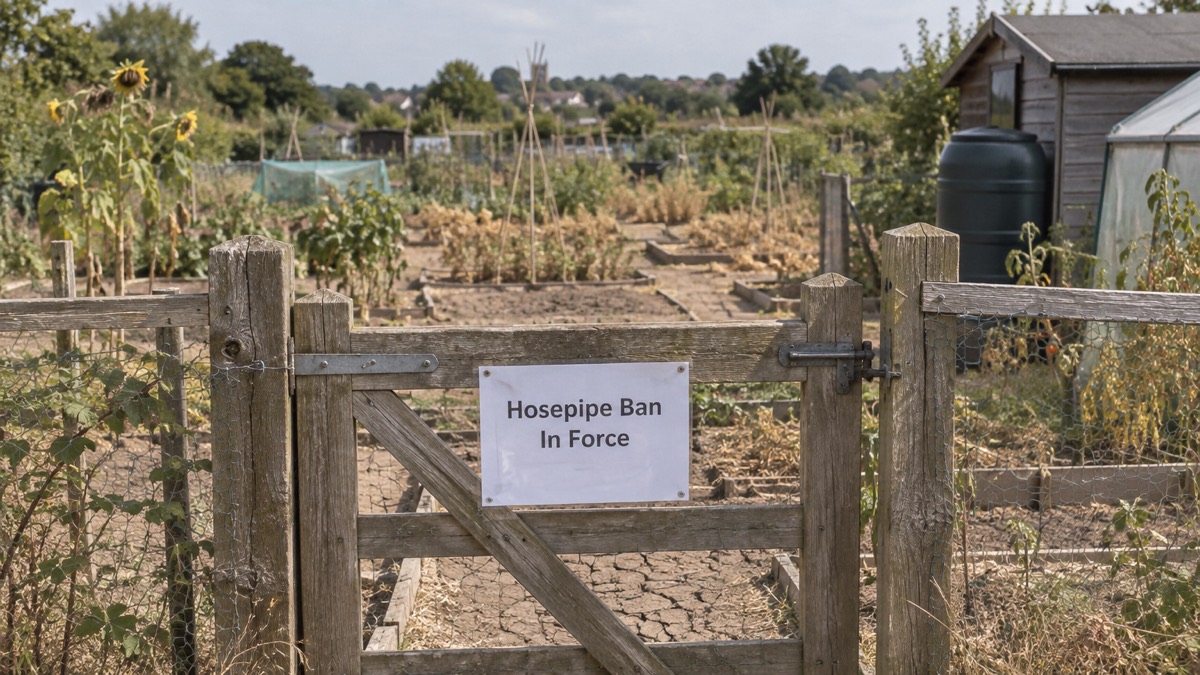
Ten water companies were operating temporary use bans (TUBs), better known as hosepipe bans, as of Monday 14 September 2026, according to the Consumer Council for Water (CCW). The independent body said the restrictions were introduced to reduce demand for water, which rose significantly during repeated heatwaves and prolonged dry weather over the summer1.
The bans began in July and were extended through August. South East Water restricted customers in Kent from 3 July and customers in Sussex, Surrey, Hampshire and Berkshire from 25 July. Southern Water restricted customers in Hampshire and the Isle of Wight from 10 July. Anglian Water restricted all of its customers from 11 July, Cambridge Water from 17 July, and Affinity Water customers in its Central region from 17 July, with its East region following on 17 August. Thames Water restricted all of its water customers from 23 July1.
| Water company | Area covered | Restrictions in force from |
|---|---|---|
| South East Water | Kent | 3 July |
| Southern Water | Hampshire and the Isle of Wight | 10 July |
| Anglian Water | All customers | 11 July |
| Cambridge Water | All customers | 17 July |
| Affinity Water | Central region | 17 July |
| Thames Water | All water customers | 23 July |
| South East Water | Sussex, Surrey, Hampshire and Berkshire | 25 July |
| Essex and Suffolk Water | All customers | 3 August |
| South West Water | Devon, Cornwall, parts of Dorset and Somerset, and the Isles of Scilly | 8 August |
| Affinity Water | East region | 17 August |
| Wessex Water | All customers | 18 August |
| Bristol Water | All customers | 27 August |
CCW said banning the use of hosepipes, which it said can use as much as 1,000 litres of water an hour, was intended to reduce pressure on supply networks, protect water for essential use and prevent further harm to rivers, streams and other parts of the environment from which water is sourced1.
Mike Keil, CCW's Chief Executive, said:
"Hosepipe restrictions will understandably frustrate some people but water companies have a responsibility to act when sustained hot weather and rising demand for water risks harming our beautiful chalk streams, rivers and wider natural environment."
He added that "what was once considered to be extreme is rapidly becoming the new normal" and that water companies "have to step up the pace in adapting their infrastructure"1.
Why it matters for households
Households supplied by any of the ten companies listed are subject to a temporary use ban from the dates given. CCW describes the restrictions as covering hosepipe use, and its chief executive points to switching from a hosepipe to a watering can as one way to save water, adding that simple water-saving measures can ease pressure on the environment and reduce the bill for metered customers1. The specific rules and exemptions for each company have not been reported here; households would need to check with their own supplier. Our guides on how temporary use bans work, what you can and cannot do in a hosepipe ban and watering the garden, allotment and new lawn set out the general position, and the water shortage and hosepipe ban checklist covers household preparation.
What happens next
CCW gives no end date for any of the restrictions, and no date for further announcements has been reported. Its statement records the position as of 14 September 20261. Households can follow their supplier's drought plan and the wider water company drought plans guidance, and the heatwaves and drought and water sections cover shortages and how companies respond to major incidents.
 Hosepipe Ban Rules
 Hosepipe Bans and the Garden
 Water Company Drought Plans
 Household Guide to Drought





