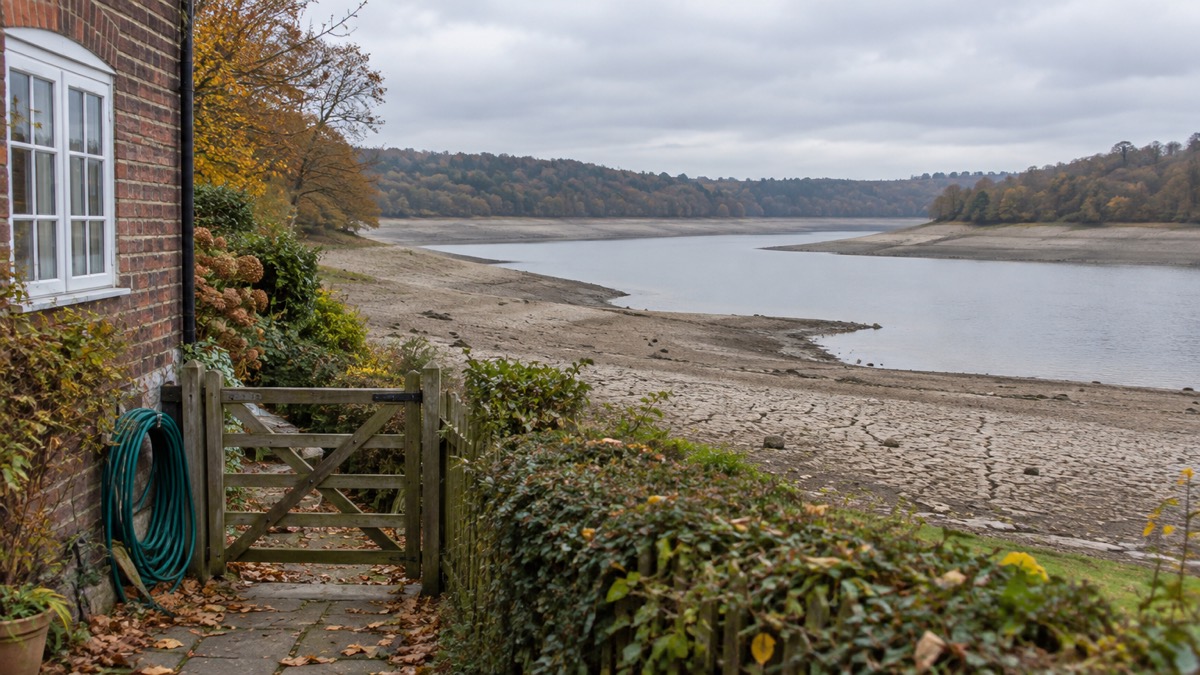
South East Water applied on 10 October 2025 to the Secretary of State for Environment, Food and Rural Affairs for a Drought Order to help manage the water resource situation in Sussex1. The company says the application has now been approved1. The order concerns the River Ouse and Shell Brook, and the company states it superseded an earlier Drought Permit and lasted for up to six months, to 2 June 20261.
The order allowed the company to temporarily change how it managed water resources in the River Ouse and Ardingly Reservoir during the 2025 drought. It permitted a reduction in the amount of additional water released from Ardingly Reservoir into the Shell Brook tributary of the River Ouse, and a reduction in the minimum flow that had to remain in the river at Barcombe Mills after water had been taken for customers1. The company says these measures helped conserve water stored in the reservoir while continuing to protect the environment1.
The background given by the company is that extremely low rainfall for a large part of 2025 left the water level in Ardingly Reservoir approaching critically low levels1. On 22 September, South East Water was granted a Drought Permit by the Environment Agency to help conserve storage in the reservoir1. The company also applied on 24 October 2025 for a Non-Essential Use Ban under a Drought Order, and cancelled that application in December 2025 following a period of positive recovery at Ardingly Reservoir, which moved it to Level 1 of its Drought Plan1.
The page carrying this account also describes conditions in 2026, and the two years are set out together on the same page. South East Water says the exceptionally dry weather experienced throughout 2026 has put significant pressure on water resources, particularly in Sussex1. It applied on 2 October 2026 for a Non-Essential Use Ban under a Drought Order in its Sussex supply area; that application must be approved by the Secretary of State before a ban can be introduced, and the company states it is not currently in force1. A Non-Essential Use Ban targets certain commercial and non-household uses of water, and the company says it would only implement the ban if drought conditions in Sussex become more severe1.
"Despite recent rainfall, Ardingly Reservoir is currently only 22.8 per cent full and has triggered the next level of our Drought Plan."
The company reports that between March and August, Sussex received just over 56 per cent of expected rainfall, and cites the Met Office as provisionally reporting Summer 2026 to be the hottest on record, while July in England was the driest since records began 190 years ago1. It says sustained rainfall is still needed for water resources in Sussex to recover, because the ground must be moistened so water can filter deep into underground aquifers and replenish rivers and reservoirs1. On 28 August 2026 the company applied for a further Drought Permit in Sussex, which was granted by the Environment Agency on 29 September 2026; it allows the same two reductions in releases from Ardingly Reservoir and in the minimum flow at Barcombe Mills1.
Why it matters for households
Household customers in Sussex are currently subject to hosepipe restrictions, with changes to exemptions taking effect from 9 October 20261. From that date, existing exemptions will be removed, except where hosepipe use is permitted for health and safety purposes1. The company states there are no additional restrictions in place as a result of the 2026 Non-Essential Use Ban application, which would apply to certain commercial and non-household uses of water if approved and implemented1. The 2025 order did not introduce household restrictions; it changed how water was released from the reservoir and the flow kept in the river1. The stages by which drought is declared in England and the permits, orders and emergency rota cuts that can follow set out where these measures sit.
What happens next
The 2026 Non-Essential Use Ban application awaits a decision by the Secretary of State for Environment, Food and Rural Affairs, and South East Water says it would only implement the ban if drought conditions in Sussex become more severe1. The exemption changes to Sussex hosepipe restrictions take effect from 9 October 20261. The company publishes current reservoir levels and its water company drought plan on its own site1.
Sources (1)
- Drought Orders | South East Water, southeastwater.co.uk
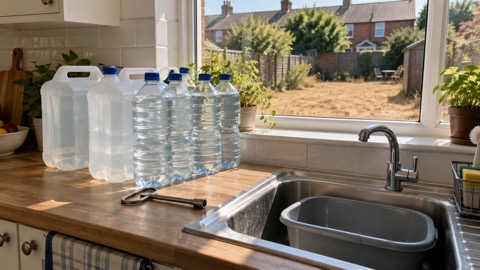 Drought Permits and Rota Cuts
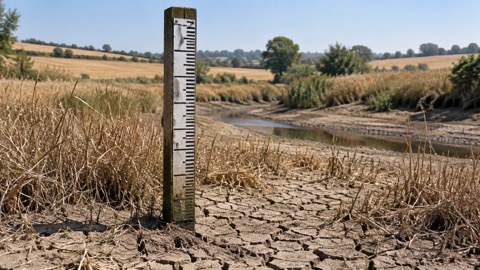 Drought Stages in England
 Water Company Drought Plans





