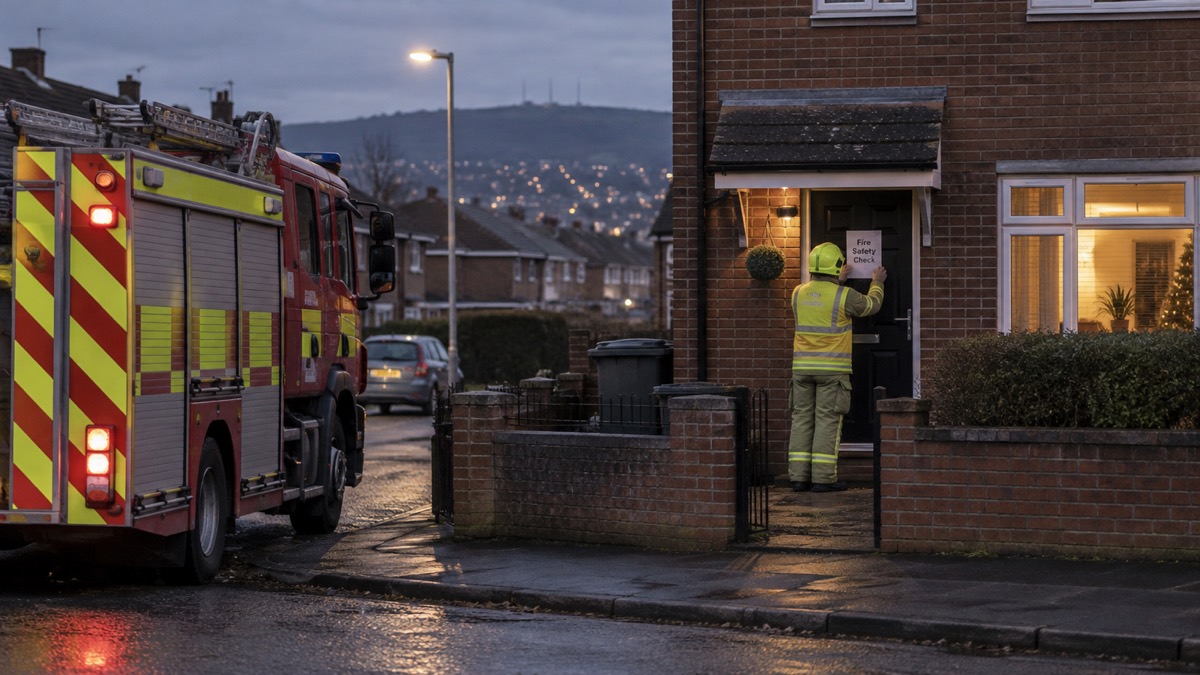
Northern Ireland Fire & Rescue Service (NIFRS) issued an urgent home fire safety appeal on Monday 15 December 2025 after four people died in separate house fires across Northern Ireland over the preceding three days1. The service said the number of fatal incidents in such a short period was highly unusual and deeply concerning, and that there had been 15 fatal house fires so far this year1.
The most recent fire was reported at 5.54pm on Sunday 14 December at a mobile home on Tansy Road, Lisburn. Firefighters from Lisburn, Lurgan and Springfield Fire Stations attended, wearing breathing apparatus and using two hose reel jets, and left the scene at 10.46pm. A woman aged in her 90s died at the scene, and the cause is believed to be accidental1.
On Saturday 13 December, firefighters responded to a fatal house fire at Areema Drive, Dunmurry, where a woman aged in her 40s died at the scene1. On Friday 12 December there were two further separate fatal home fires: a man aged in his 20s died at a flat fire at Queen Victoria Gardens, Fortwilliam, and a woman aged in her 50s died at a house fire at Abbey Park, Bangor1. NIFRS said the three incidents are believed to have been accidental ignition1.
| Date | Location | Property type | Person who died |
|---|---|---|---|
| Friday 12 December | Queen Victoria Gardens, Fortwilliam | Flat | Man aged in his 20s |
| Friday 12 December | Abbey Park, Bangor | House | Woman aged in her 50s |
| Saturday 13 December | Areema Drive, Dunmurry | House | Woman aged in her 40s |
| Sunday 14 December | Tansy Road, Lisburn | Mobile home | Woman aged in her 90s |
NIFRS Area Commander Suzanne Fleming said:
"In the space of just 3 days, 4 people have sadly lost their lives to separate home fire incidents across Northern Ireland. This number of fatal incidents in such a short space of time is both highly unusual and deeply concerning."
Why it matters for households
The appeal covers the whole of Northern Ireland and comes during the winter period, when the service's advice addresses heating, Christmas lights, candles and real Christmas trees alongside routine risks1. NIFRS advises households to have a working smoke alarm fitted on each floor and a working carbon monoxide alarm in rooms with fuel burning appliances1. It says cooking should never be left unattended, that people should avoid cooking under the influence of alcohol, and that cooking appliances should be turned off after use1.
On electrical safety, NIFRS advises checking that Christmas lights are in good working order and conform to the British Standard, never overloading sockets, and turning Christmas lights off before going to bed or leaving the house, with one plug per socket1. It advises buying only from reputable retailers and ensuring electrical equipment and chargers comply with required safety standards1. Extra heaters used in winter should be kept away from soft furnishings and Christmas decorations, a real Christmas tree should be well hydrated because a dry tree is more flammable, and candles should be kept away from soft furnishings, decorations, trees and wrapping paper, out of reach of pets and children, and never left unattended1. Cigarettes should be extinguished correctly, ashtrays emptied safely, and smoking in bed avoided1.
NIFRS also advises households to keep escape routes clear, discuss a fire escape plan with family and anyone staying in the home, and check on vulnerable older relatives, neighbours and friends1. Area Commander Fleming said the recent fires show how quickly everyday situations can turn into life-changing emergencies, and that taking a few simple steps now could prevent further loss of life or serious injury1.
The service's figures follow its earlier published guidance on alarm rules and fire services in Wales and Northern Ireland, and sit alongside this site's fire safety checklist for your home and its guidance on kitchen fires and children who set fires. Households affected by a fire can find practical steps in what to do after a fire in your house, within the wider home emergencies section covering fire, carbon monoxide, gas leaks and burst pipes.
What happens next
No further steps, investigation outcomes or figures beyond those published on 15 December 2025 have been reported1.
 Home Emergencies
 Home Fire Safety Checklist