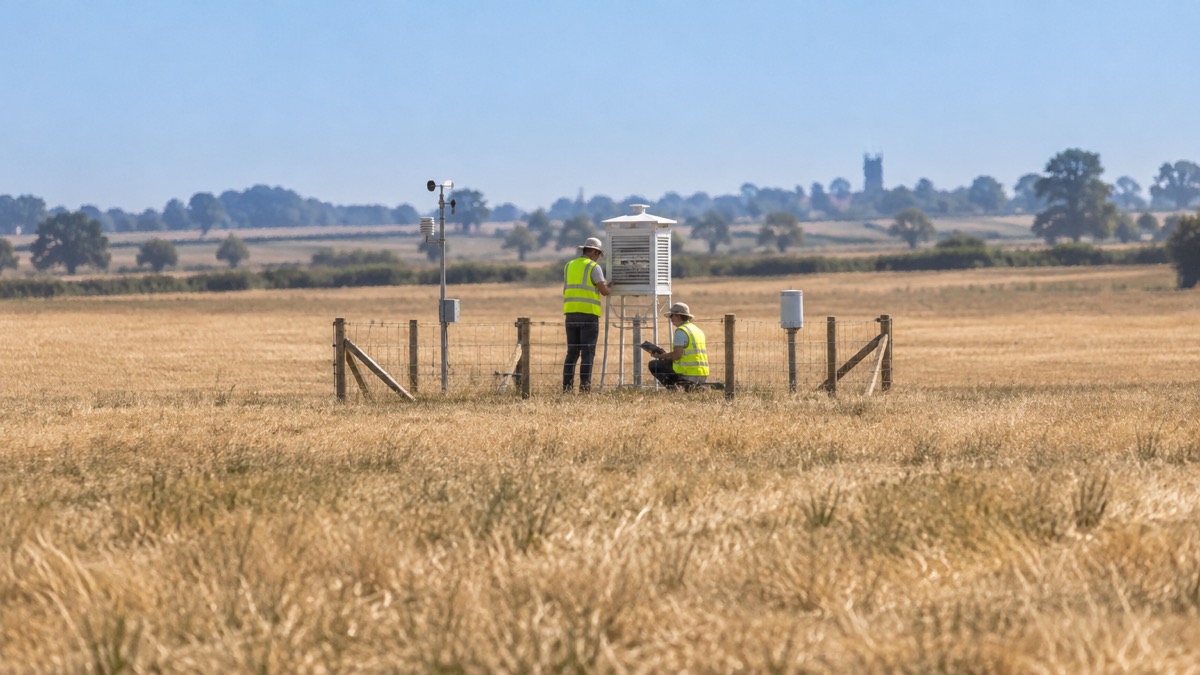
A new UK and England maximum temperature record for June of 38.0°C was recorded at Lingwood, Strumpshaw Hill, in Norfolk on 26 June 2026, the Met Office has reported. The previous June record was 35.6°C, at Camden Square in Greater London on 29 June 1957 and Southampton Mayflower Park on 28 June 19761. The Eastern Daily Press reports the figure as 38C at Lingwood, near Norwich, surpassing the previous high for the month of 35.6C recorded in 19572.
The Met Office says heatwave conditions were reached somewhere in the country every day from 16 to 30 June, with high pressure over Europe moving gradually north and extending heatwave conditions from France across the UK1. A red weather warning for heat in southeast England was issued for three consecutive days, the longest period of red warnings since extreme heat warnings were introduced to the weather warnings system in 2021. The first red warning was issued on 22 June for south Wales and central and western southern England, and a second was issued on 25 June for 26 June over a more easterly region1.
Other June records set during the heatwave are set out in the Met Office table1:
| Record for June | Station | Value (°C) | Date | Previous value (°C) |
|---|---|---|---|---|
| UK and England highest maximum | Lingwood, Strumpshaw Hill, Norfolk | 38.0 | 26 June 2026 | 35.6 |
| Wales highest maximum | Hawarden Airport, Flintshire (provisional) | 35.1 | 26 June 2026 | 33.7 |
| Northern Ireland joint highest maximum | Castlederg, Tyrone | 30.8 | 25 June 2026 | 30.8 |
| UK and England highest minimum | Hastings, East Sussex | 23.2 | 26 June 2026 | 22.7 |
| Northern Ireland highest minimum | Murlough, Down | 19.1 | 26 June 2026 | 18.2 |
| Wales highest minimum | Tenby | 22.7 | 25 June 2026 | 20.0 |
The Met Office says the heatwave was notable for high humidity and high minimum temperatures providing little respite overnight, resulting in high discomfort and negative effects on human and animal health. On 26 June, 107 stations in England and Wales recorded minimum temperatures exceeding 20°C. The UK Health Security Agency issued a red heat health alert for the southeast of England for 24 to 26 June, warning of danger to life1. Around 2,200 excess deaths due to heat related causes have been estimated in England and Wales for the period 18 to 28 July1.
"This heatwave was notable for the high humidity and high minimum temperatures providing little respite overnight, resulting in high discomfort and negative effects on human and animal health"
Travel disruption was reported across the UK, with train services reduced and cancelled and authorities advising against non-essential travel. Hundreds of schools were reported to have closed in England and Wales, and at least six NHS trusts were reported to have declared critical incidents after being overwhelmed with patients. South East Water reportedly introduced a hosepipe ban for around 850,000 customers in Kent1. Thunderstorm warnings were also issued, with intense rainstorms and lightning in parts of London overnight on 22 to 23 June causing significant flooding and at least two house fires, and flash flooding and hail in the Highlands on 25 June1.
Why it matters for households
The record fell during a fortnight in which heatwave conditions were met somewhere in the UK every day, so households in most parts of the country were affected at some point between 16 and 30 June, not only in East Anglia1. The Met Office's account shows the main risks were overnight rather than daytime: high minimum temperatures and humidity gave little relief at night, and the health alert for the southeast warned of danger to life1. The Met Office thresholds for what counts as a heatwave explain how these periods are defined. The same heatwave period brought both heat warnings and thunderstorm warnings, with flooding and lightning damage reported in London and Scotland1. Water supplies were also affected, with a hosepipe ban reported for around 850,000 customers in Kent1; the site's water shortage and hosepipe ban checklist covers this ground. The Eastern Daily Press reports that half of England and all of Wales were in drought at the time of its later article, with more regions possibly to be declared following a meeting of the National Drought Group2; the current drought situation in England sets out where restrictions apply.
What happens next
The Met Office report was last updated on 4 August 20261. The Eastern Daily Press reports that the UK Health Security Agency issued amber heat health alerts covering much of England, including the eastern region, in place until 9pm on Tuesday and possibly to be extended, and that parts of the UK were set to see a fifth heatwave of the summer2. The Met Office's explanation of why UK summers are getting hotter and drier gives the longer background.
Sources (2)
- metoffice.gov.uk, metoffice.gov.uk
- East Anglia to see high temps during UK's August heatwave | Eastern Daily Press, edp24.co.uk
 Why UK Summers Are Hotter





