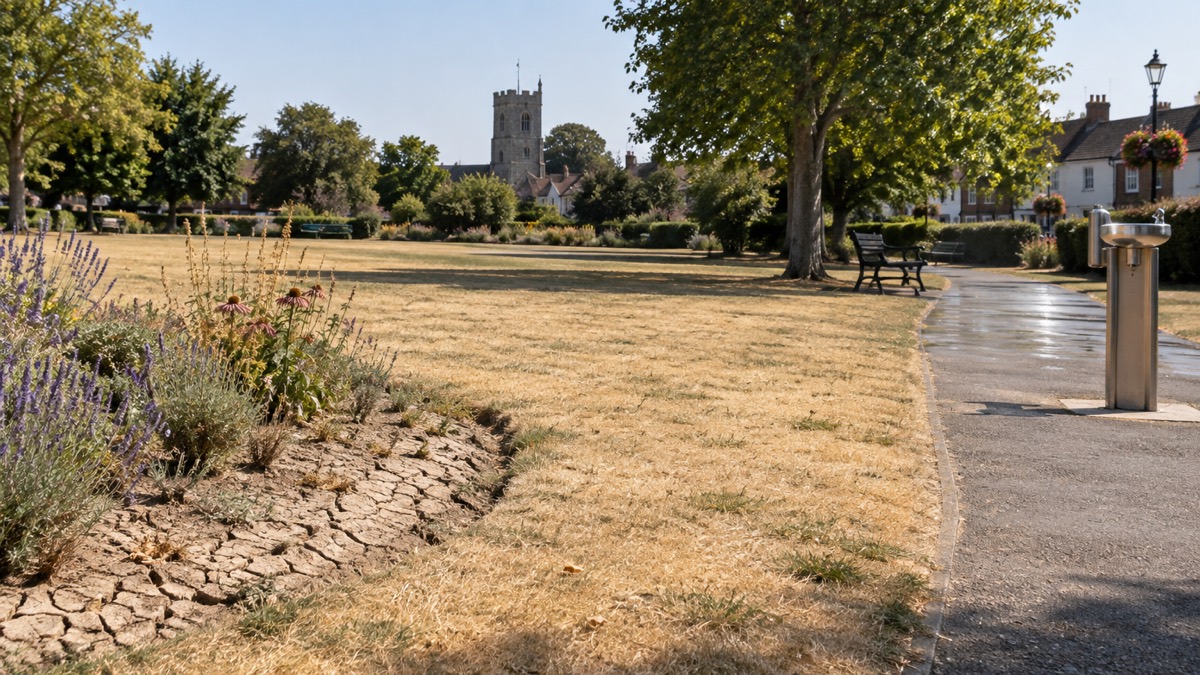
The UK Health Security Agency (UKHSA) issued an Amber Heat Health Alert highlighting increased risks to those more vulnerable to heat, as the Met Office forecast heatwave conditions across much of England and Wales in the week beginning 4 September 20231. The Met Office said official heatwave criteria would be met for large parts of southern UK that week, with temperatures likely peaking between Wednesday and Saturday at 32 to 33°C across parts of the south and southeast1. NHS England later reported that the amber alert covered most of the country until 9pm on Sunday 10 September2.
The Met Office said there was a chance the highest temperature of the year so far, 32.2°C on 10 June, could be exceeded, most likely in the southeast where one or two places could see 33°C1. It warned of uncomfortably warm nights, with a chance of tropical nights, when overnight temperatures remain above 20°C, and said the September record overnight minimum of 21.7°C could be threatened on Wednesday and Thursday nights in particular1. The Met Office has not issued an Extreme Heat Warning, which covers the UK and aligns with the wider national severe weather warning service and looks at more widespread potential impacts for the public1.
NHS England said there were 32,130 visits to its heat exhaustion and heatstroke advice page from Sunday 3 to Thursday 7 September, compared with 4,928 for the same period the previous week (27 to 31 August), an increase of 552%, with visits peaking at one every eight seconds on Thursday2. It said the alert highlighted increased risks for people over the age of 65 or with pre-existing health conditions such as respiratory and cardiovascular diseases2.
"Help to protect the vulnerable people that you know including older people, those with underlying conditions and those who live alone; they may need support to keep cool and hydrated."
The Met Office also reported advice from the British Veterinary Association that pets can be extremely susceptible to heat-related illnesses such as heatstroke, and that all pets should have access to fresh drinking water, good ventilation and shade from direct sunlight at all times1. The NHS heat exhaustion page lists signs including tiredness, dizziness, feeling sick, and fast breathing or heartbeat, and states that heat exhaustion does not usually need emergency medical help if you can cool down within 30 minutes, but if it turns into heatstroke it needs to be treated as an emergency2. NHS England said that if someone's condition does not start to improve after 30 minutes, medical attention should be sought by calling 111 or 999 in an emergency2.
| Area | Forecast in the Met Office update of 5 September 2023 |
|---|---|
| South and southeast England | 32 to 33°C likely between Wednesday and Saturday; up to 33°C in the southeast on Saturday1 |
| England and Wales | Heatwave conditions likely across much of both, especially England1 |
| Scotland and Northern Ireland | Parts likely to see unseasonably high temperatures1 |
| Some North Sea coasts | Exception to the warm conditions, with low cloud at times1 |
| Western areas | Increasing chance of intense thundery downpours from the weekend, most likely in the west1 |
Why it matters for households
The alert applied to the health and social care sector in England and flagged increased risk to people more vulnerable to heat, including older people, those with underlying conditions and those who live alone1. The Met Office said many areas would remain very warm or hot until at least Saturday, with the heat becoming more confined to southeastern areas on Sunday and Monday, and temperatures easing off on Sunday and Monday1. It also said there was a chance the thunderstorm risk to western areas from Friday onwards might require a warning response, with some potentially impactful downpours, though exact details were still being determined and many places might see little if any rain on Friday and Saturday1. The Met Office's published advice includes checking on vulnerable people, and the NHS lists measures including drinking plenty of cold drinks, avoiding the sun between 11am and 3pm, avoiding excess alcohol and avoiding extreme exercise1. The Met Office has published information on how hot spells are becoming more frequent and severe as the climate changes, projecting that over southern parts of the UK exceeding 30°C for two days or more becomes sixteen times more frequent than it is today1.
What happens next
The amber alert was in place until 9pm on Sunday 10 September, according to NHS England2. The Met Office said the heat would ease off on Sunday and Monday, with an increasing chance of thundery downpours most likely in the west over the weekend, and that the thunderstorm risk to western areas from Friday onwards might require a warning response1. No further alert timings beyond 10 September are given in the published updates.
Households can read how alert levels work in the guide to heat-health alerts, find out who is most at risk in hot weather in the guide to people at risk, and sign up for alerts using the guide to heat-health alert signup. Background on the issuing body is in the guide to the UK Health Security Agency, and wider context is in the heatwaves and drought hub.
 Heat-Health Alerts Explained
 UK Health Security Agency
 Who Is at Risk in Hot Weather
 Why UK Summers Are Hotter





