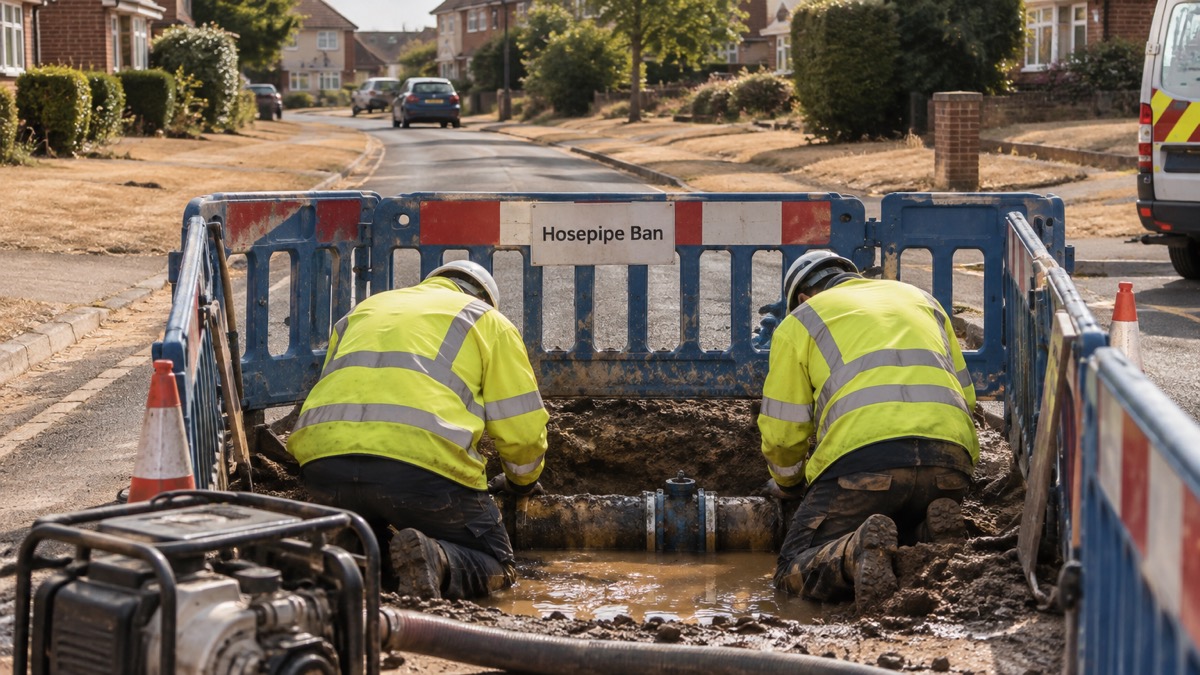
Affinity Water introduced hosepipe restrictions covering customers in its East region on 17 August, according to the Consumer Council for Water (CCW)1. The company had already brought in restrictions for customers in its Central region from 17 July1. Affinity Water's East region covers Bedfordshire, Berkshire, Buckinghamshire, Hertfordshire, Surrey, and parts of London and Essex, iNews reported2.
The restrictions are temporary use bans (TUBs), the legal instrument water companies use to limit non-essential domestic water use during drought or severe water shortages2. CCW, which tracks the bans, said ten water companies were operating them as of Monday 14 September, brought in "to reduce demand for water, which rose significantly during repeated heatwaves and prolonged dry weather over the summer"1. It noted that a hosepipe "can use as much as 1,000 litres of water an hour"1. Bristol Water gives the same figure and puts the average UK household's use at 323 litres per day3.
The sequence of bans announced by companies, as listed by CCW1:
| Company | Area covered | In force from |
|---|---|---|
| South East Water | Kent | 3 July |
| Southern Water | Hampshire and the Isle of Wight | 10 July |
| Anglian Water | All customers | 11 July |
| Cambridge Water | All customers | 17 July |
| Affinity Water | Central region | 17 July |
| Thames Water | All water customers | 23 July |
| South East Water | Sussex, Surrey, Hampshire and Berkshire | 25 July |
| Essex and Suffolk Water | All customers | 3 August |
| South West Water | Devon, Cornwall, parts of Dorset and Somerset, Isles of Scilly | 8 August |
| Affinity Water | East region | 17 August |
| Wessex Water | All customers | 18 August |
| Bristol Water | All customers | 27 August |
Wessex Water's ban was its first in 50 years and affected 1.4 million customers, iNews reported2. Bristol Water said it introduced its ban from 00:01am on Thursday 27 August across its supply area, to protect water resources in the River Severn following a drought order by the Environment Agency4. The Environment Agency had declared drought in 11 regions in England, and around 45 million people were living in drought conditions in August, according to iNews2.
"Hosepipe restrictions will understandably frustrate some people but water companies have a responsibility to act when sustained hot weather and rising demand for water risks harming our beautiful chalk streams, rivers and wider natural environment."
Why it matters for households
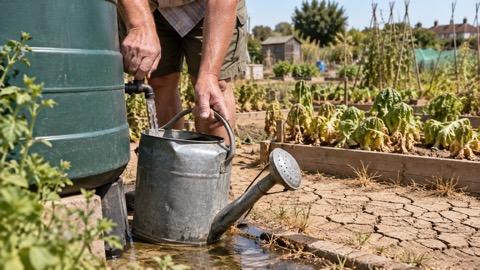
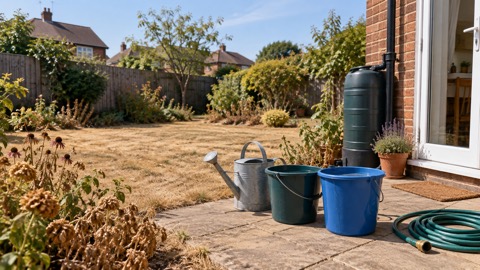
A temporary use ban means households cannot use a hosepipe for non-essential purposes such as washing a car, filling pools and paddling pools or watering a garden, Bristol Water states3. Most of these tasks can still be done with a bucket, sponge or watering can3. Bristol Water says the ban generally does not apply to businesses, and that there are exceptions set out in law for customers on its Priority Services Register or WaterSure Plus tariff, for Blue Badge holders unable to make reasonable adjustments because of a health condition or disability, and for protecting human health and safety or animal welfare, including pets, livestock and fish3. It says a ban carries legal force and that enforcement action could result in a fine of up to £1,0003. The ban does not automatically reduce water bills, though metered customers may pay less if they use less water3.
CCW's chief executive said that as well as switching from a hosepipe to a watering can, there are simple ways to save water which can ease pressure on the environment and reduce bills for metered customers1. Bristol Water lists shorter showers, turning off the tap while brushing teeth and care when watering plants among actions that "can make a real difference"4. It also states that its water storage levels remain good across its region and that the drought declaration reflects environmental conditions rather than an immediate change to its operational position4.
What happens next
No end date for the Affinity Water East region restrictions has been reported. iNews reported that England would need 120 per cent of typical rainfall over the next seven months just to be considered out of drought status, and that above-average rainfall through autumn and winter would be needed for most areas to be out of drought by April 20272. It quoted an expert saying that unless the UK had a "significant amount of rainfall" this winter, hosepipe bans were likely to stay in place for the foreseeable future2. Defra announced a new Flood and Drought Resilience Taskforce to strengthen the nation's ability to mitigate and respond to extreme weather2. Yorkshire Water said it was not planning to impose restrictions at that moment despite the region's new drought status2.
Households can check what the rules cover in the guide to what you can and cannot do in a hosepipe ban, how the legal mechanism works in hosepipe bans: how temporary use bans work, and where restrictions currently apply in England's 2026 drought.
Sources (4)
- Hosepipe restrictions - why are they happening and are you affected - CCW, ccw.org.uk
- The UK towns at risk of running out of water until 2027, inews.co.uk
- Why is there a hosepipe ban?, bristolwater.co.uk
- Drought 2026, bristolwater.co.uk
 Hosepipe Bans and the Garden
 England 2026 Drought Areas
 Hosepipe Ban Rules
 Household Guide to Drought





