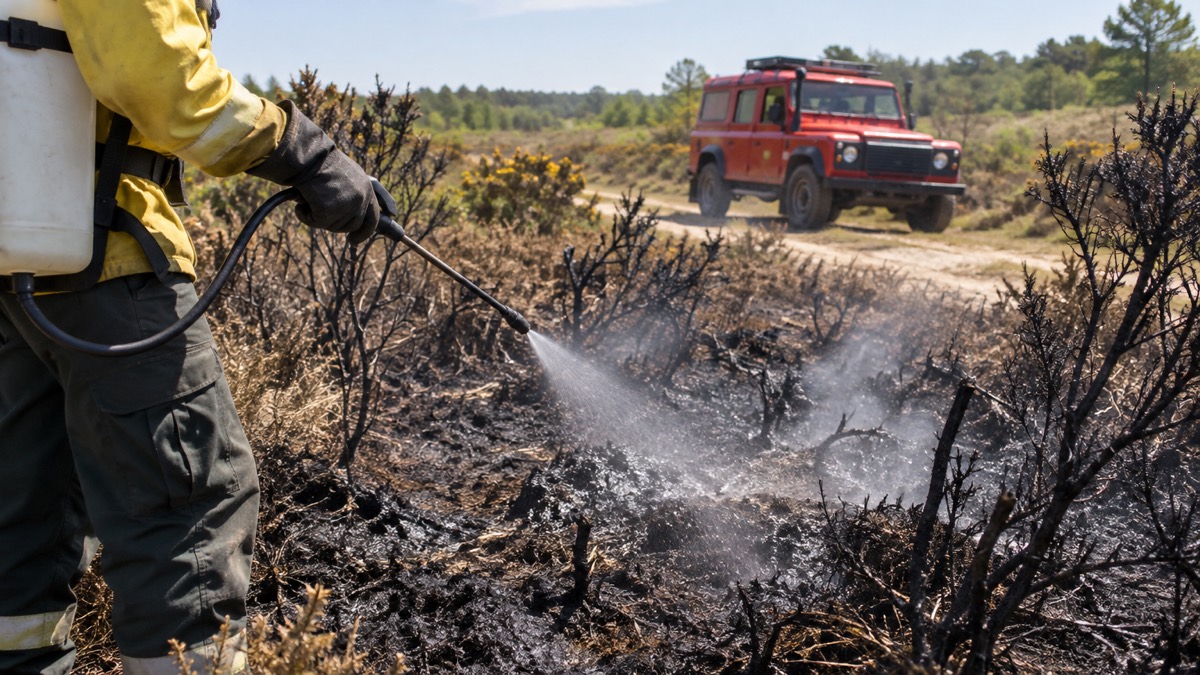
Fire and rescue services in England and Wales had responded to 564 wildfire incidents by 19 June 2025, according to National Resilience data published by the National Fire Chiefs Council (NFCC)1. The figure covers the period from 1 January and was recorded as of 9am on Thursday 19 June1. The NFCC, an independent membership association and the professional voice of the UK Fire and Rescue Service, said heatwaves were anticipated across the UK in the coming days and urged the public to take care outdoors1.
The total is a 717% increase on the same period in 2024, when 69 incidents were recorded, and more than double the 277 seen in the same period of 2022, which went on to be the worst year on record for wildfires1. The NFCC gave the following comparison for 1 January to 19 June in each of the previous five years1:
| Year | Wildfire incidents responded to by 19 June |
|---|---|
| 2025 | 564 |
| 2024 | 69 |
| 2023 | 213 |
| 2022 | 277 |
| 2021 | 189 |
The NFCC said most wildfires in the UK are caused by human activity, some accidental and some deliberate, and that it anticipated more fires in the rural urban interface, where vegetation is close to buildings including people's homes1. It cited July 2022, when a wildfire in Wennington in East London destroyed approximately 18 houses1. The NFCC also said drier conditions mean fires can burn into peat and it is likely some will take days rather than hours to extinguish, and that responding requires significant resources over prolonged periods, making maintenance of normal 999 response coverage extremely difficult1. It said fire and rescue services do not receive protected funding for tackling wildfires, with the role falling under general duties and resourced from core budgets1.
Phil Garrigan, chair of the NFCC, said:
"We are deeply concerned about the escalating threat of wildfires this summer, which have the potential to become more frequent, intense, and dangerous, particularly in areas where communities border the countryside."
The NFCC's public safety advice, issued with the figures, asks people to avoid disposable barbecues in open countryside, parks and moorland areas; not to discard cigarettes, matches or glass bottles, as they can ignite dry vegetation; and to follow local authority guidance on fire risks and restrictions1. It asks anyone who notices suspicious behaviour or sees someone intentionally starting a fire to contact the Police immediately or report anonymously to Crimestoppers on 0800 555 111, and any signs of fire to be reported immediately by calling 999 and asking for the Fire and Rescue Service1. On water, it says 37% of people who drowned in 2023 were running or walking and had no intention of entering the water, and advises against jumping into water to cool off, active supervision of children in and near water, and not entering the water after drinking alcohol1. It cites research, including by the Royal Life Saving Society and Bournemouth University, showing that when air temperature is 25°C or above the risk of accidental drowning is five times higher than on days averaging 10°C1.
A later NFCC notice, published 11 July 2025, repeated the 564 figure and the 2022 comparison and said the advice followed an Amber heat alert for large parts of England issued by the UK Health Security Agency2. It repeated the same wildfire and water safety advice and the Call, Tell, Throw and Float to Live guidance for water emergencies2.
Why it matters for households
The figures cover England and Wales and the year to 19 June, so they describe incidents already attended rather than a forecast. The NFCC links the risk to dry weather and rising temperatures and points to homes and businesses bordering countryside as the areas of growing concern, with fires there able to spread between vegetation and buildings1. It advises households to follow local authority guidance on fire risks and restrictions, which may include restrictions on barbecues and open fires in some areas2. Its water safety advice applies to anyone near rivers, lakes or the coast during hot weather, including people walking or running who do not intend to enter the water2.
What happens next
The NFCC said it anticipated wildfires would increase in the rural urban interface as dry weather continues, and that some fires are likely to take days rather than hours to extinguish1. No further update to the incident total beyond 19 June has been reported. The NFCC's StayWise platform carries resources for children and young people on staying safe around water2.
For practical preparation, see the guide to wildfires and grass fires: risk and prevention and the heatwaves and drought section, including how services respond under the Adverse Weather and Health Plan.
 Wildfires and Grass Fires





