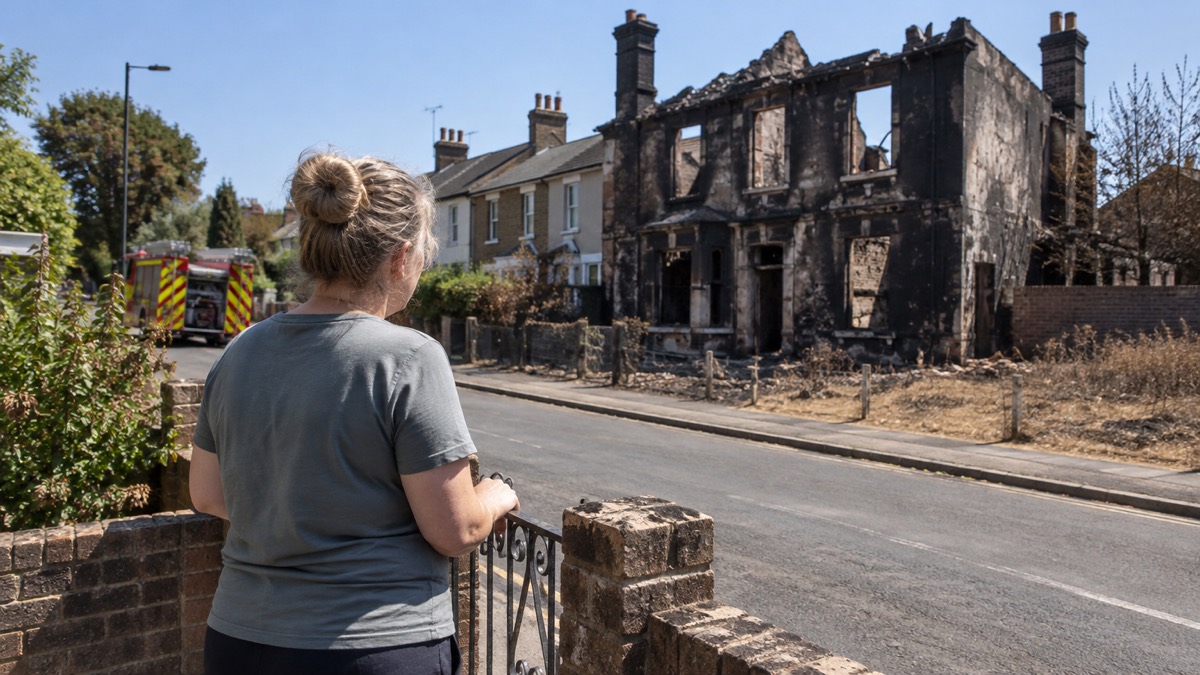
A wildfire in Wennington, east London, destroyed about 18 to 19 houses on 19 July 2022, during the 2022 United Kingdom heatwave, with no one killed1. The National Fire Chiefs Council (NFCC) records that many residents needed to be evacuated3.
Accounts of the number of homes destroyed differ. North Yorkshire Fire & Rescue Service and Wikipedia both say about 18 to 19 houses were destroyed, including all the possessions of many residents1. The NFCC, in its position statement and its Wildfire Aware campaign page, says the fire destroyed 16 homes3. Sky News reported that nine neighbouring cottages were destroyed and 10 others in the village, and that 41 homes were lost across the Greater London area that day, with four more in Barnsley5. The i newspaper reported 19 homes destroyed and dozens more damaged6. Wikipedia records a burned area of 20 hectares (49 acres), 90 families evacuated and no deaths2.
The fire began around 1pm from a compost heap in the south east of the village that spontaneously combusted, with flames spreading along a garden fence, according to Wikipedia2. The fire brigade was called at 13:06 and a fire engine arrived seven minutes later, by which time the fire had expanded2. A fire station is located in the east of the village, but its crews had been called out to other fires2. Ray Morgon, leader of Havering Council, told the i that crews tackling the Wennington blaze had to come from a substantial distance, and that the fire service came from as far away as Orpington in Kent6. Residents took shelter in the nearby St Mary and St Peter's Church, which filled with smoke and had fire burn through its graveyard, but the church itself was not damaged2.
The same day set the UK's highest recorded temperature, 40.3C in Coningsby, Lincolnshire, breaking the previous record set in 2019 by 1.6C2. The NFCC reports that across 18 and 19 July 2022, 84 wildfires were recorded and 14 fire and rescue services declared major incidents, 9 of them linked to difficulties in responding due to increased operational demand3. Fire control rooms in England saw a 500% increase in 999 calls, from a daily average of just over 2,000 to almost 13,500 on 19 July 20223. For the whole summer, 983 wildfires were recorded in England and Wales, up from 247 in 2021 and 146 in 2020, increases of 315% and 573% respectively3.
"The Wennington wildfire that took place on 19th July 2022 resulted in many residents needing to be evacuated and destroyed 16 homes."
Why it matters for households
The NFCC says wildfires can now occur almost anywhere in the country, including where vegetation meets the built environment, and that most UK wildfires are caused by human activity, including leisure activities or deliberate acts3. North Yorkshire Fire & Rescue Service notes that wildfires are uncontrolled vegetation fires which may involve moorland, heath, grassland or agricultural land, but that in recent history their spread has affected nearby homes too, and that homes in rural areas or on the edge of an urban environment can be at risk1. Its wildfire prevention guidance sets out measures including clearing dead leaves from guttering, repairing loose and broken roof tiles to stop hot embers entering the roof space, keeping grass cut short below about 7cm, aiming for a cleared zone of 5 to 10 foot around all sides of the home, and positioning sheds and compost heaps away from the house1. It also advises households to consider essentials they would need if they have to leave, including medication, money, clothing, food, valuables and pets, and to sign up for the government emergency alerts service, which fire and rescue services can use to issue an alert where there is a risk to life, based on the recipient's current location1.
The NFCC states that responding to wildfire incidents is not a specifically funded capability and falls into the general duty of fire and rescue services to extinguish fires, with costs drawn from core budgets being cut in real terms3. It also reports that wildfires are not recorded as a specific incident type in Home Office Fire and Rescue Incident Statistics, which it says makes tracking trends difficult3. Met Office projections cited by the NFCC show that a 2C increase in global temperatures will double the days in the UK with very high fire danger and extend the wildfire season into late summer and autumn, with other research suggesting wildfire danger days could increase 3 to 4-fold by the 2080s3. The 2022 heatwave and drought is covered in the site's record of past events.
What happens next
The i reported in July 2023 that planning applications had been submitted to recreate eight cottages, including that of resident Wendy Davis, but that several homeowners did not have adequate insurance to cover the full costs of rebuilding6. It also reported that all families in Wennington who had been housed in hotels or hostels after the fire had found accommodation, and that the London Fire Brigade said it had made changes to its equipment and training as it prepares for more wildfires6. The NFCC recommends that government keep funding for national wildfire roles under review, establish more consistent national data collection under a single shared definition of wildfires, and improve joint working across departments3.
Sources (6)
- Protecting your home from Wildfires - North Yorkshire Fire & Rescue Service, northyorksfire.gov.uk
- 2022 Wennington wildfire - Wikipedia, en.wikipedia.org
- Wildfires position statement - NFCC, nfcc.org.uk
- Wildfire Aware - NFCC, nfcc.org.uk
- The UK village devastated by wildfire - and why residents fear it could happen again | Sky News, news.sky.com
- 'Like being bombed': How wildfires destroyed my suburban home - as the UK risk remains high, liveapp.inews.co.uk
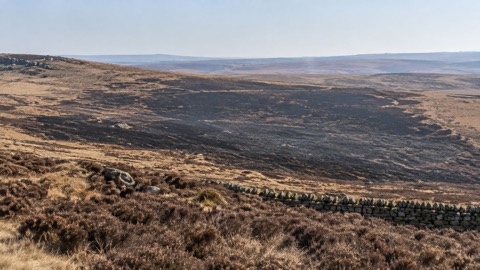 Wildfires and Grass Fires
 Past UK Droughts and Heatwaves





