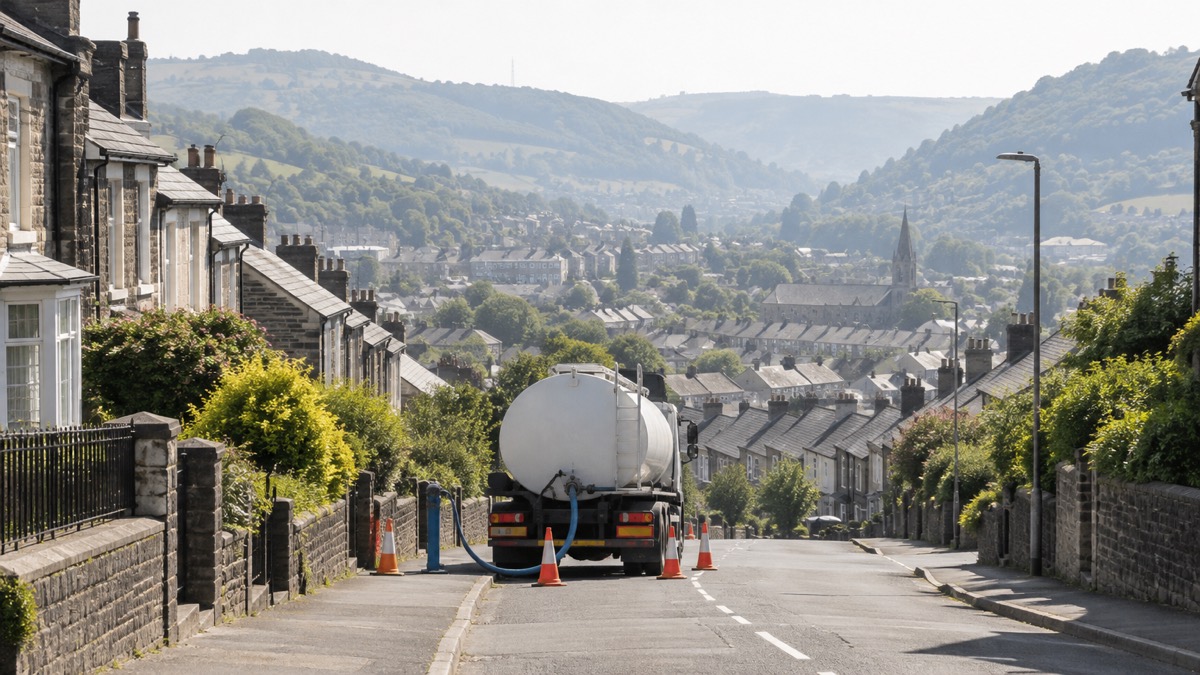
Dŵr Cymru Welsh Water asked customers for help keeping taps flowing after demand passed a billion litres a day during the third heatwave of the year, in a message dated 13 July 20261. The company's drought page records the request under the heading "Welsh Water asks for customers' help to keep taps flowing as demand tops a billion litres a day in third heatwave"1.
The same page lists two further updates in the days that followed. One called on customers to help protect water supplies "as demand reaches unprecedented levels", and another warned that a hosepipe ban might be introduced in Mid and South Ceredigion that weekend "as record demand continues"1. The company says its 23 water resource zones across Wales can move to different stages at different times, and that it follows five stages of action in its Drought Action Plan, managed through demand management measures1.
The drought page now states that the hosepipe ban which was in place for customers served by the Mid and South Ceredigion water network has been lifted, and that there are no restrictions in place for Welsh Water customers1. The restrictions had been introduced as a short-term emergency measure following several weeks of exceptionally high demand for drinking water during the warm weather, and were removed after an improvement in treated water storage levels across the affected zone1. The company's related news list dates the lifting of the Ceredigion temporary hosepipe ban to 4 September 20261.
"The restrictions were introduced as a short-term emergency measure following several weeks of exceptionally high demand for drinking water during the warm weather."
Around 95% of the company's water resources originate as surface water, either from reservoir storage or river abstractions, and it says it has very little dependence on groundwater supplies1. It notes that this reliance on surface waters can increase vulnerability to short periods of low rainfall because river levels change more quickly than groundwaters, and that river levels are the responsibility of Natural Resources Wales1. The company says it works closely with Welsh Government, Natural Resources Wales and other agencies at each stage as part of the Wales Drought Liaison Group1. Its reservoir level information is updated weekly1.
The company sets out six stages in its published sequence, from normal operation through developing drought, drought, severe drought and emergency measures to the end of drought1. At stage 3, a temporary use ban may be in place in some areas to protect supplies; at stage 5, emergency measures could include the use of standpipes and timed cuts to water supplies or widespread pressure management, while considering the potential impact on water quality within specific areas of the supply network1.
| Stage | What the company says |
|---|---|
| 1 Normal operation | Weather normal for the time of year, no concerns on supply or demand |
| 2 Developing drought | Dry conditions; water resources showing signs of developing drought in some very localised areas |
| 3 Drought | Resources lower than expected for the time of year; a temporary use ban may be in place in some areas |
| 4 Severe drought | Exceptionally low resources; additional measures to sustain supplies where temporary use measures are in place |
| 5 Emergency measures | Standpipes, timed cuts to supplies or widespread pressure management possible |
| 6 End of drought | End of drought conditions and temporary restrictions announced |
Why it matters for households
The request for help came during a heatwave, and the company's own account links the pressure on supplies to exceptionally high demand for drinking water in warm weather1. Households in Mid and South Ceredigion were the ones affected by the temporary restrictions, which have since been lifted, and the company states there are now no restrictions in place for its customers1. Because the company depends almost entirely on surface water, and river levels are the responsibility of Natural Resources Wales, the position can change quickly after short periods of low rainfall1. The company's drought stages show what households in an affected zone could see if conditions worsen: a temporary use ban at stage 3, and at stage 5 the possibility of standpipes, timed cuts to supplies or pressure management1. The company thanks customers, businesses and visitors for the way they responded during the period of restrictions and for their help to protect water supplies1. Further detail on how households can prepare for heat and water restrictions is set out in the guide to heatwaves and drought, the explanation of why UK summers are getting hotter and drier, the summary of water company drought plans and the water shortage and hosepipe ban checklist.
What happens next
The company's drought page says reservoir levels are updated weekly1. No further restrictions for Welsh Water customers are reported as in place1.
Sources (1)
- Dry Weather | Dŵr Cymru Welsh Water, dwrcymru.com
 Why UK Summers Are Hotter
 Water Company Drought Plans





