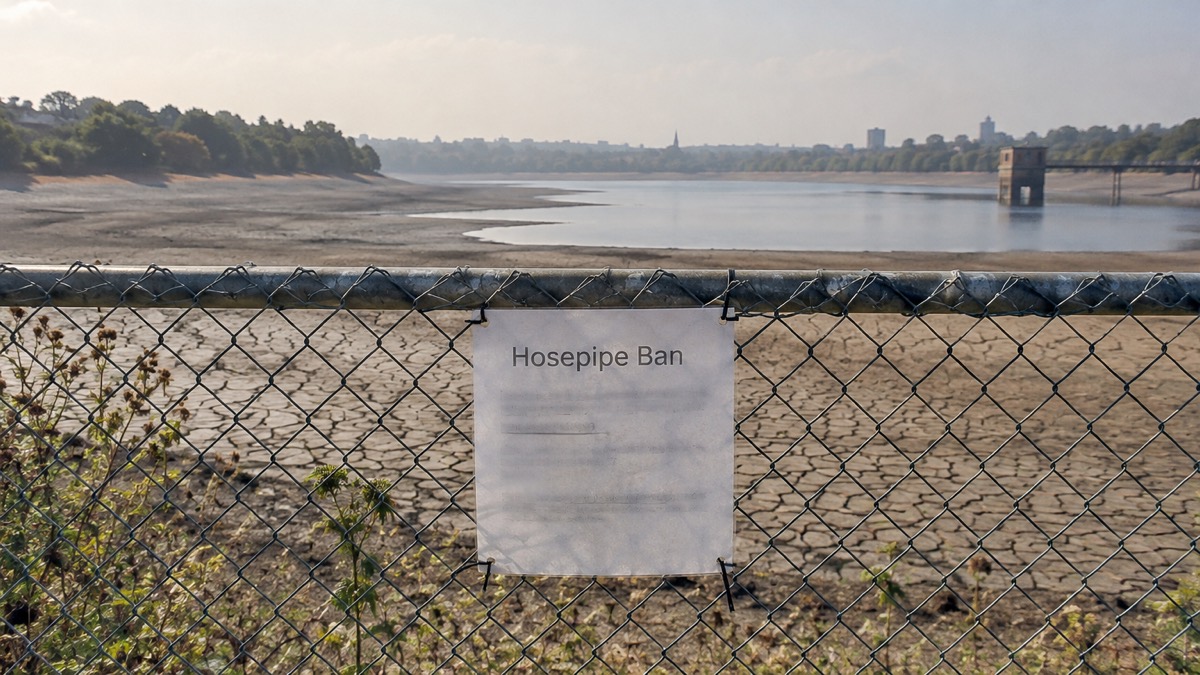
Thames Water published an update on its drought response on 18 August 2026, reporting that London reservoir storage stood at 74% at the end of July and that the Temporary Use Ban introduced on 23 July remains in place. The company said it remains at Drought Event Level 2 across London and the Thames Valley1.
The water resources figures cover the position at the end of July 2026. Thames Catchment rainfall during July was under 1mm, which the company describes as 2% of the long-term average, and rainfall since March has been around 40% of the long-term average. Farmoor Reservoir was 92% full. During July's hot weather, customers used around 100 million litres more water every day than normal. River flows are below average and soils are drier than average across the catchment. Groundwater levels were normal and below normal in Swindon and Oxfordshire, and mostly normal across the rest of the region1.
| Measure | Position reported (end of July 2026) |
|---|---|
| London reservoir storage | 74%, lower than expected for the time of year |
| Farmoor Reservoir | 92% full |
| July rainfall, Thames Catchment | Under 1mm, 2% of long-term average |
| Rainfall since March | Around 40% of long-term average |
| Additional daily demand in July's hot weather | Around 100 million litres above normal |
| Drought status | Drought Event Level 2, Temporary Use Ban in effect from 23 July |
Since the hosepipe ban came in, household demand has fallen by around 3% across London and more than 6% across the Thames Valley and Home Counties, according to the company1.
On leakage, Thames Water said it is fixing more than 1,000 leaks every week, around 20% more than normal, and has increased frontline leakage teams by 18% compared with last year. Since the start of the 2026/27 financial year it has found and fixed 30% more leaks than in the same period last year, and in July alone teams found 88% more leaks than in July 2025. The company said around 95% of water lost through leakage comes from leaks hidden underground, and that more than 75,000 acoustic sensors, alongside AI and satellite technology, are used to locate them. It reported replacing more than 100km of ageing water mains since April 2025, and said leakage performance remains 15.1% lower than the 2019/20 baseline. It said it is investing £3.3 billion between 2025 and 2030 to reduce leakage and improve long-term resilience1.
"With reservoir levels below where we would expect them to be for this time of year, and demand remaining high, we're asking customers to keep going and continue using only what they need."
Why it matters for households
The Temporary Use Ban applies to households across London and the Thames Valley and has been in force since 23 July 2026. Thames Water says it is continuing to monitor water resources alongside weather conditions and customer demand, and that the region remains at Drought Event Level 21. The company's Water Director asks customers to keep following the ban and to use only what they need, citing shorter showers, turning off taps and avoiding non-essential outdoor water use as measures that reduce pressure on the network1. The company also acknowledges that visible leaks while customers are asked to save water can be frustrating, and states that most water lost through leakage is from hidden underground pipes1. Households wanting to understand how water companies plan for drought, or how to reduce use at home when supplies are low, can read our guides on water company drought plans and saving water at home, within the heatwaves and drought section.
What happens next
Thames Water said it is continuing to monitor water resources across its region, alongside weather conditions and customer demands1. No date for lifting the Temporary Use Ban, and no further rainfall or reservoir forecasts, have been reported1.
 Water Company Drought Plans
 Saving Water at Home





