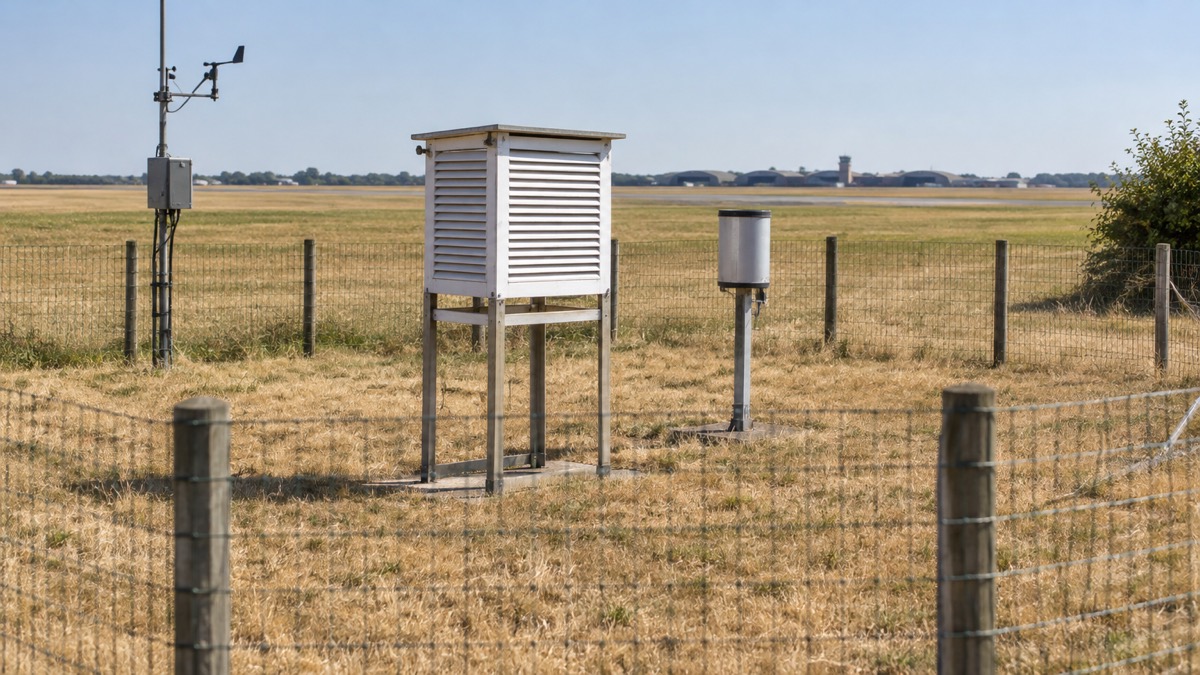
The record daily maximum temperature was provisionally reached on 19 July 2022, with 40.3°C recorded at Coningsby, Lincolnshire, exceeding the previous record of 38.7°C by 1.6°C1. The Met Office said this was the first time 40°C had been recorded in the UK1. Its announcement on the day described the reading as provisional and said it would beat the 2019 record by 1.5°C, so the two Met Office accounts differ slightly on the margin2. The 38.7°C figure was recorded at Cambridge University Botanic Garden on 25 July 20193.
New provisional national records were also set for Wales and Scotland1. Hawarden Airport in Flintshire reached 37.1°C on 18 July, and Floors Castle in the Borders reached 35.1°C on 19 July1. A Met Office summary published in 2025 gives the Scottish figure as 34.8°C at Charterhall, and gives the Welsh record as 37.1°C at Hawarden, so the Scottish location and value differ between Met Office pages4. Northern Ireland's record of 31.3°C at Castlederg, County Tyrone, dates from 21 July 20213.
A total of 46 stations across the UK exceeded the previous UK record of 38.7°C, from Kent to North Yorkshire and from Suffolk to Warwickshire1. Records were set overnight too, when Kenley Airfield in Greater London recorded a new highest minimum temperature of 25.8°C1. The Met Office's announcement on 19 July gave 25.8°C provisionally at Kenley in Surrey and 24.5°C at Aberporth in Wales, exceeding the previous highest daily minimum of 23.9°C recorded in Brighton on 3 August 19902. The average maximum temperature across the whole of the UK exceeded 30°C for the first time, and the UK had its two hottest days on record by that measure in a series going back to 19601.
The heat led the Met Office to issue its longest-range Amber warning ever, with a lead time of six days, followed by a Red warning for extreme heat, the first such one to be issued1. The UK Health Security Agency issued a Level 4 Heat Health Alert for Monday and Tuesday, a level used when a heatwave is so severe or prolonged that its effects extend outside the health and social care system, and illness may occur among the fit and healthy2.
"A new record daily maximum temperature was provisionally reached on 19 July, with 40.3°C recorded at Coningsby, Lincolnshire, exceeding the previous record by 1.6°C."
| Nation | Record temperature | Date | Location |
|---|---|---|---|
| England | 40.3°C | 19 July 2022 | Coningsby, Lincolnshire |
| Wales | 37.1°C | 18 July 2022 | Hawarden Airport, Flintshire |
| Scotland | 34.8°C | 19 July 2022 | Charterhall, Scottish Borders |
| Northern Ireland | 31.3°C | 21 July 2021 | Castlederg, County Tyrone |
Source: Met Office3. A separate Met Office page gives the Scottish record as 35.1°C at Floors Castle on 19 July1.
Why it matters for households
The Met Office says hot weather places a strain on the heart and lungs, that most serious illness and deaths caused by heat are respiratory and cardiovascular, and that older people, those with pre-existing health conditions and young children are particularly at risk3. It adds that hot weather can place strains on water and energy utilities, road and rail transport and the health and fire services3. Water UK said water companies were seeing substantial demand during the extremely hot weather2.
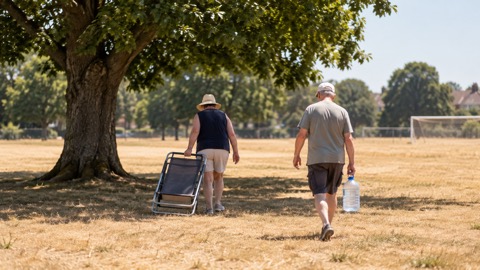
The UK Health Security Agency's advice, as set out by the Met Office, includes keeping homes cool by closing blinds or curtains during the day and ventilating at night, drinking plenty of fluids and avoiding alcohol, wearing lightweight light-coloured clothing and a wide-brimmed hat, staying out of the sun between 11am and 3pm, and checking on neighbours, friends or relatives who may be at risk4. The Met Office also advises that nobody should be left in a closed, parked vehicle, especially infants, young children or animals, and that people going into open water to cool down should take care and follow local safety advice2. Government advice is that 999 services should be used in emergencies only, with 111 for non-emergency health advice2. The Met Office says that if a household is concerned about the temperature in the home, the local authority's environmental health office can help assess for heat-related hazards4.
The Met Office has said that climate change is making UK heatwaves more frequent, intense and long-lasting, and that in a climate unaffected by human influence it is virtually impossible for UK temperatures to reach 40°C1. It has also said that under a very high emissions scenario temperatures exceeding 40°C could occur as frequently as every three years by the end of the century1. Its background on why UK summers are getting hotter and drier sets out the trend, and its record of past UK droughts and heatwaves places 2022 alongside 1976 and 2010 to 2012. Further material is in the heatwaves and drought hub.
What happens next
The Met Office said on 19 July 2022 that temperatures were expected to start returning closer to normal for the time of year through the rest of that week, with cooler air pushing across the country from the west2. It also warned of thunderstorm risk, with a Yellow Thunderstorm Warning issued for parts of the South East for the following day2. Looking ahead to early August 2022, it said temperatures were likely to remain above average across southern areas, while further north they would likely be much closer to average with a greater risk of rain1.
Sources (4)
- A milestone in UK climate history - Met Office, metoffice.gov.uk
- Record breaking temperatures for the UK - Met Office, metoffice.gov.uk
- Hot weather and its impacts - Met Office, weather.metoffice.gov.uk
- How to stay safe and cool in the heat - Met Office, metoffice.gov.uk
 Why UK Summers Are Hotter
 Past UK Droughts and Heatwaves





