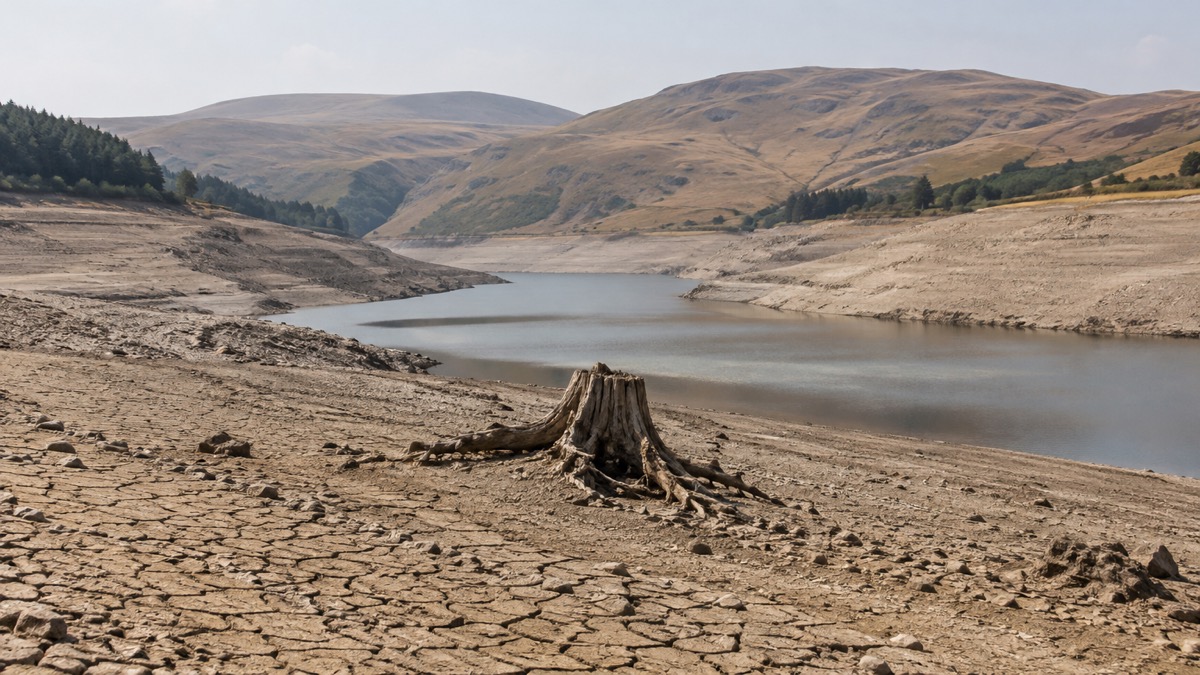
Natural Resources Wales (NRW) moved a number of catchments across North Wales, the Upper Severn and South East Wales into prolonged dry weather status on 16 July 2026, following a prolonged period of hot and dry weather in Wales1. A further assessment on 23 July 2026 moved additional catchments to drought status and others into prolonged dry weather status, the Cabinet Minister for Rural Resilience and Sustainability, Llyr Gruffydd MS, said in a written statement1.
The statement sets out the classifications as follows1:
| Status | Catchments and areas |
|---|---|
| Drought status (declared 23 July 2026) | Gwynedd, Ynys Môn, Clwyd, Dee and Upper Severn |
| Prolonged dry weather status (from 16 July 2026) | A number of catchments across North Wales, the Upper Severn and South East Wales |
| Moved from normal into prolonged dry weather status (23 July 2026) | Additional areas of South and West Wales |
The statement says the changes reflect the continued lack of significant rainfall and sustained high temperatures, which are increasing pressures on rivers, wildlife and habitats, and that NRW continues to monitor conditions in line with its drought management framework1. It states that drought and prolonged dry weather are environmental classifications and should not be confused with measures taken by water companies to manage public water supplies1.
Separately, Dŵr Cymru introduced a Temporary Use Ban on 19 July affecting parts of Mid and South Ceredigion, North Pembrokeshire and North Carmarthenshire1. The company confirmed this was a localised response to exceptionally high customer demand rather than a shortage of water resources, and advised that reservoir levels remain healthy, according to the statement1. Households and businesses served by public water supplies continue to receive water as normal1.
"I encourage everyone to be water aware, use water responsibly and follow the latest advice from NRW and their water supplier."
Why it matters for households
The statement says there are currently no immediate concerns regarding public water supplies in Wales, and that households and businesses on public supplies continue to receive water as normal1. The Temporary Use Ban covers parts of Mid and South Ceredigion, North Pembrokeshire and North Carmarthenshire from 19 July, and Dŵr Cymru's own dry weather page carries the restrictions and the current supply position1. Owners and users of private water supplies, such as wells, boreholes, springs or streams, who experience difficulties or require advice should contact their local authority, the statement says1. The minister encourages everyone to be water aware, use water responsibly and follow the latest advice from NRW and their water supplier1. The statement does not set out specific restrictions for households beyond the Dŵr Cymru ban, and no further measures have been reported.
The background to hotter, drier UK summers is set out in Why UK Summers Are Getting Hotter and Drier, and the heatwaves and drought hub collects the site's related guidance. Dry ground and dry vegetation raise the risk of fires outdoors, covered in Barbecues and Wildfire Risk in Dry Weather.
What happens next
NRW continues to monitor conditions closely and coordinate its response in line with its drought management framework, and publishes the latest information on environmental conditions and drought status on its Dry Weather update page1. The Welsh Government says it continues to work closely with NRW, water companies, the Met Office and other partners through the Wales Drought Liaison Group to monitor conditions and coordinate a joined-up response1. The statement was issued during recess to keep Members informed, and the minister said he would be happy to make a further statement or answer questions when the Senedd returns1. No date for that has been reported.
 Why UK Summers Are Hotter
 Barbecues and Wildfire Risk





