The Medicines and Healthcare products Regulatory Agency (MHRA) launched a safety campaign on 19 June 2023 to raise awareness of anaphylaxis and provide advice on the use of adrenaline auto-injectors (AAIs), with the support of allergy awareness advocates1. The launch coincided with World Allergy Week, an annual initiative led by the World Allergy Organization1.
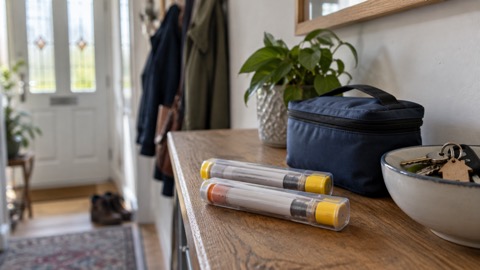
The campaign includes a toolkit of resources for health and social care professionals, freely available to download from the MHRA's guidance page. These include an infographic on the correct use of an AAI, with a Welsh version, and videos on correct use, also with a Welsh version1. The MHRA's advice to prescribers is that they "should prescribe 2 AAIs to make sure patients always have a backup"1. Anaphylaxis UK states that anyone at risk of anaphylaxis should always carry two in-date AAIs at all times2.
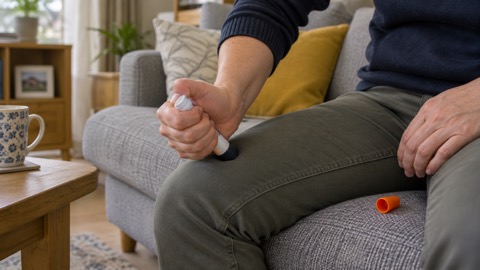
The guidance sets out what to do if anaphylaxis is suspected. The MHRA says AAIs "should be used without delay if anaphylaxis is suspected, even if in doubt about the severity of the event", and that signs may include swelling in the throat or tongue, wheezing or breathing difficulty, dizziness, tiredness and confusion1. After administering adrenaline, the advice is to dial 999 immediately and say anaphylaxis ("ana-fill-axis"); to lie down flat and raise the legs, or lie on the left side if pregnant; to stay lying down even if you feel better; and not to stand up even if someone encourages you to1. A second AAI should be used if there has been no improvement after 5 minutes1. The MHRA also advises carrying 2 AAIs at all times, checking expiry dates, and speaking to a GP or pharmacist about replacements1. Suspected defective AAIs should be reported to the Yellow Card scheme and kept for investigation1.
The MHRA's drug safety update, published on 27 June 2023, records that a small change was made in August 2023 to clarify that new AAIs can be obtained from a GP1. The campaign followed the formation in October 2019 of an Adrenaline Auto-injector Expert Working Group, endorsed by the Commission on Human Medicines, one of whose agreed actions was to develop a communication campaign so that patients, healthcare professionals and the wider public can better understand the importance of AAIs1.
"AAIs are an important and potentially life-saving healthcare product, giving people experiencing anaphylaxis precious time before the emergency services arrive."
Anaphylaxis UK reports that one in five people in the UK suffer with at least one allergy, a figure attributed to Steve Barclay, then Secretary of State for Health and Social Care2. AAIs are available on prescription in pre-loaded injection devices, and the MHRA names EpiPen and Jext as product names1.
Why it matters for households
The campaign concerns households with someone at risk of anaphylaxis, whether a patient or a carer, since AAIs are intended for self-administration by the patient or administration by the patient's carer1. The MHRA's patient-facing advice covers recognising the early signs, injecting without delay, calling 999, body positioning and using a second device after 5 minutes1. Households holding a prescribed AAI are advised by the MHRA to carry two at all times and to check expiry dates, speaking to a GP or pharmacist about replacements1. The MHRA's guidance on adrenaline auto-injectors covers carrying, using and storing them; there is separate material on the EpiPen and Jext devices, on expired injectors, and a wider first-aid hub.
What happens next
No further dated steps have been reported beyond the August 2023 clarification that new AAIs can be obtained from a GP1.
 Adrenaline Auto-Injectors
 EpiPen Adrenaline Auto-Injector