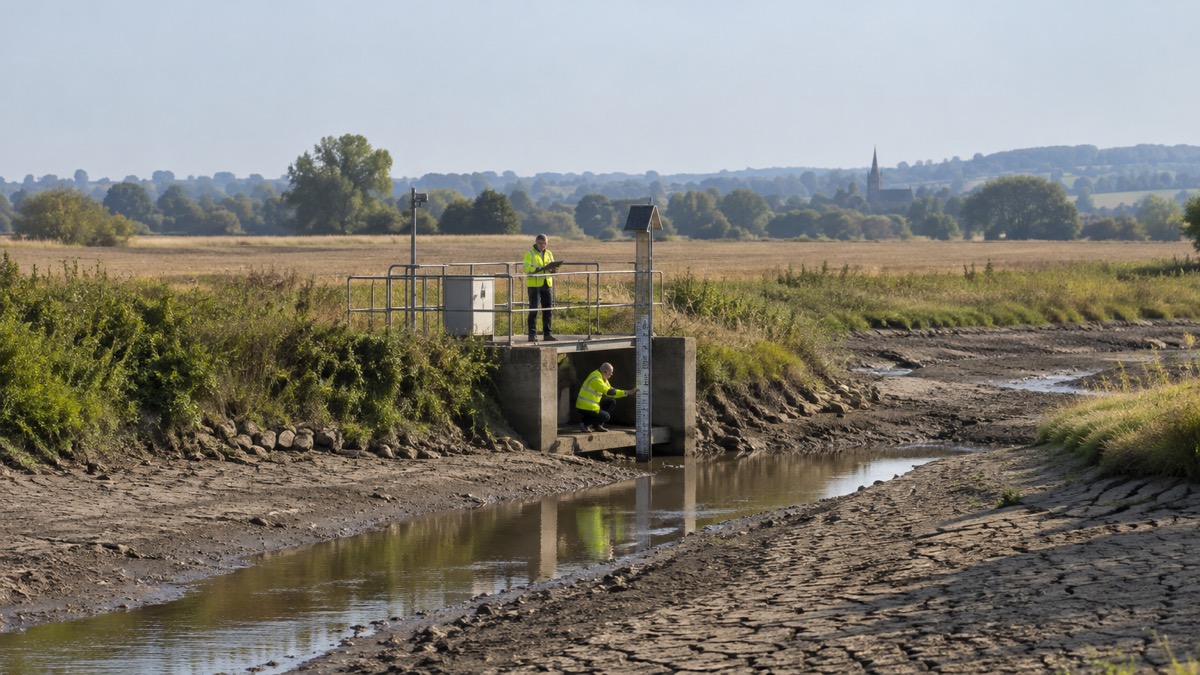
The Met Office recently declared summer 2026 the hottest on record for the UK, according to the Environment Agency, which set out the declaration in a blog post on drought science published on 8 October 20261. The same account describes a summer of prolonged heat, lower river levels and pressure on local water supplies, and says new research shows that 120% of typical rainfall over the next seven months is needed for all areas to be considered out of drought1.
The Environment Agency's chief scientist, Dr Rob Bradburne, wrote that the season brought "prolonged heat, dry gardens, lower river levels, pressure on local water supplies and the challenge of keeping homes, schools and workplaces comfortable during extreme weather"1. The agency says its scientists and hydrologists continuously monitor rainfall, river flows, groundwater levels and reservoir storage across England, and use that evidence with partners through the National Drought Group and regional drought groups to respond to changing conditions in real time1.
On household demand, the agency says public water supply accounts for around 51% of freshwater abstraction in England, compared with around 1% for agriculture1. It cites research discussed through the National Drought Group suggesting that restrictions such as hosepipe bans can reduce demand by up to 4.5%, and says some water companies have reported demand reductions of around 9% following water-saving campaigns and restrictions1.
Separate reporting by the Guardian, published on 27 September 2026, describes the summer as the UK's hottest on record coupled with extreme and persistent drought, and reports that by mid-August firefighters in England and Wales had already attended more wildfires than in the whole of 20252. It records fires in the New Forest, south Wales and Stourbridge in the West Midlands, where homes were burned out2. The Guardian also reports that England alone experiences roughly 30,000 vegetation fire ignitions each year, and that a study in the journal Environmental Research Letters found the UK's wildfire season lengthened from between one and four months in 2011-16 to between six and nine months in 2017-212.
"New research has shown we need 120% of typical rainfall over the next seven months for all areas to be considered out of drought."
Why it matters for households
The declaration confirms the scale of the summer just past rather than announcing new restrictions. The Environment Agency says the evidence it gathers informs decisions about drought status, and that environmental recovery can take years after prolonged dry conditions1. It notes that much of the water abstracted from the environment supports everyday use in homes, schools, workplaces and public services, and that actions taken during prolonged dry weather matter because pressure on rivers, groundwater, wildlife and habitats can increase quickly1. Its guidance names taking shorter showers, fixing leaks, using water carefully in the garden and talking to others about why it matters1. The Guardian reports that summer fires can burn into peat layers, with measurements of up to 20 centimetres of soil consumed in some areas, and that fires can cross roads and move into gardens and homes2. The heatwaves and drought hub collects the site's guidance, including why UK summers are getting hotter and drier and how drought is declared in England and what each stage means.
What happens next
The Environment Agency says that as autumn begins it is relying on scenario planning to help predict when recovery from drought will occur1. It has not reported a date for the next drought status decision. The Guardian reports that the Forestry Commission has plans for two courses, on preserving evidence at wildfire scenes and on investigating wildfire origins and causes, and that both are awaiting funding2.
 Why UK Summers Are Hotter





