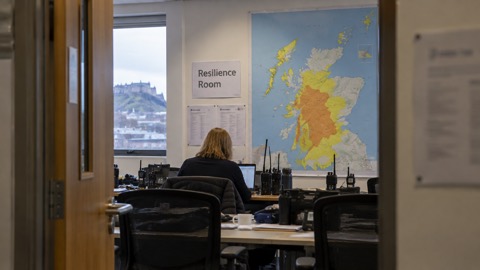
The Welsh Government activated its civil contingencies response arrangements on the evening of Wednesday 15 January in support of the multi-agency North Wales Strategic Coordination Group, which is being led by the North Wales Fire and Rescue Service1. The move followed notification from Dŵr Cymru Welsh Water (DCWW) of a mains water pipe burst near the Bryn Cowlyd Water Treatment Works at Dolgarrog, Conwy1. A major incident was declared1.
Supplies for up to 40,000 properties were affected over the course of Wednesday 15 and Thursday 16 January1. The Welsh Government describes the burst as substantial, "presenting a complex fix in a very challenging location underneath the Afon Ddu"1. Schools closed as a result: 23 on Thursday 16 January and 40 on Friday 17 January1.
In a written statement published on 18 January, Huw Irranca-Davies MS, Deputy First Minister and Cabinet Secretary for Climate Change and Rural Affairs, and Ken Skates MS, Cabinet Secretary for Transport and North Wales, set out the response and the position on repairs1:
"DCWW have now confirmed that the necessary repairs have been completed and the wider water network is being recharged"
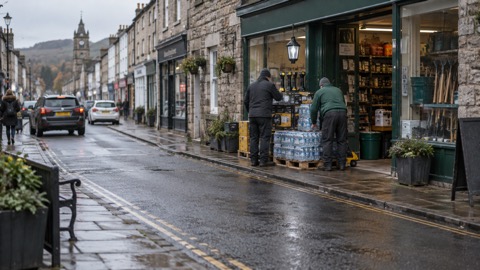
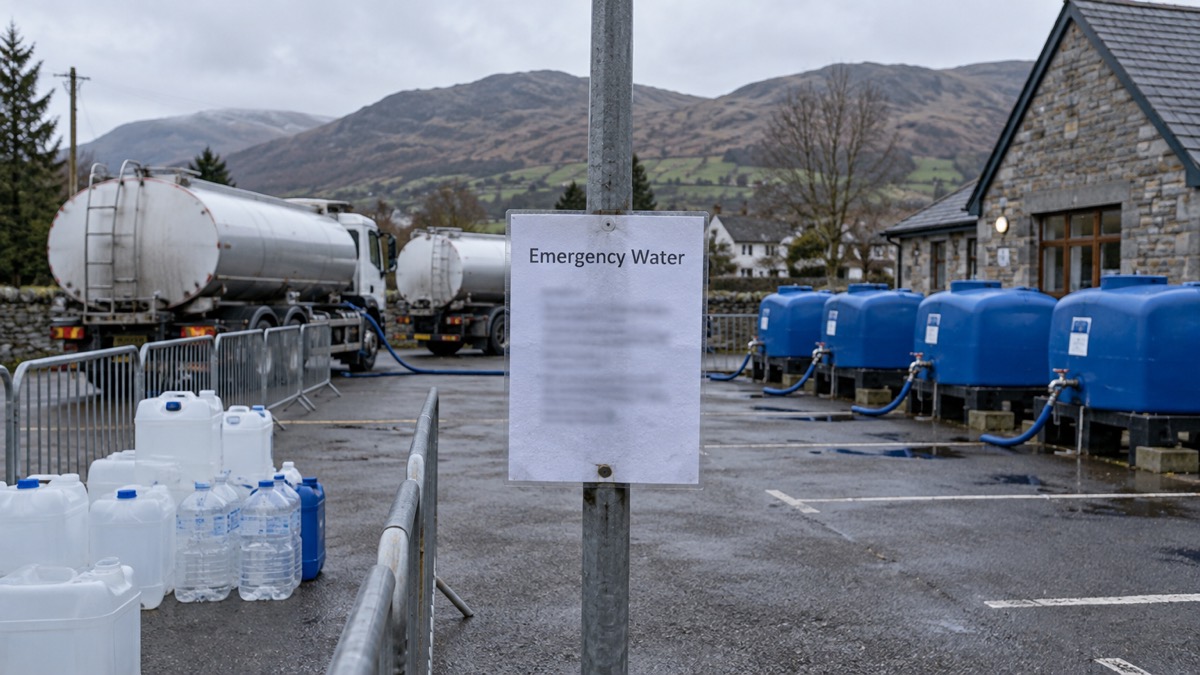
The statement says the recharge is being carried out carefully given the extent of the network affected and the high pressure under which the system in this part of Wales operates1. DCWW has opened bottled water stations in Dolgarrog, Colwyn Bay, Conwy and Llandudno, which will be kept under review, with plans to make deliveries to more isolated communities1. The Alternative Water Supply Group and mutual aid from across the water industry secured additional bottled water, including from England and Scotland1. Two collection points have been established for farmers to fill bowsers and tanks, and DCWW is working with the NFU and FUW to communicate1. DCWW has announced arrangements for compensation for residential and business customers1. Officials have been in close contact with Defra and the UK Government's emergency response hub, COBR, throughout the incident1.
| Area or group | Position reported on 18 January |
|---|---|
| Properties affected | Up to 40,000 over Wednesday 15 and Thursday 16 January1 |
| Schools closed | 23 on Thursday 16 January; 40 on Friday 17 January1 |
| Bottled water stations | Dolgarrog, Colwyn Bay, Conwy and Llandudno, kept under review1 |
| Farmers | Two collection points for filling bowsers and tanks1 |
| Repairs | Completed; wider network being recharged1 |
Why it matters for households
Households in Conwy and the surrounding area lost mains water, in some cases for several days, and the statement records that the loss of supply for any extended period has a very significant impact and caused huge concern for residents1. The Deputy First Minister stressed to DCWW the importance of clear messages to the public, of ensuring emergency supplies are provided and accessible to all, and of ensuring vulnerable customers are supported in particular1. The Cabinet Secretary for Transport and North Wales met the Leader of Conwy Council to discuss support for people who have lost supplies and the impacts on businesses1. Public Health Wales has issued advice to people on staying safe and hydrated while water supplies are interrupted, and additional bottled water supplies are being moved into the affected areas1. The statement says DCWW and local public services are focused on ensuring the most vulnerable households are safeguarded for as long as the incident lasts1. For the wider framework that applies when an incident of this kind is declared, see what it means when a major incident is declared and the Civil Contingencies Act.
What happens next
The statement says the Welsh Government incident response will remain in place and that it will continue to support DCWW and the multi-agency North Wales Strategic Coordination Group as needed until the water supply returns to normal1. DCWW is working to restore supplies to homes and businesses in the affected areas1. No date for full restoration has been reported.
 Emergency Powers