The Chancellor of the Duchy of Lancaster, Pat McFadden, set out the Government's resilience action plan, a chronic risk analysis and an update on the UK biological security strategy in the House of Commons on 8 July 20251. He said the plan focuses on three areas: assessing on a continuous basis how resilient the UK is, enabling the whole of society to take action, and improving core public sector resilience1.
The plan brings together several funding commitments. McFadden said the Government is "earmarking £4.2 billion of funding for new flood defences" and "£370 million to secure the UK's telecoms networks"1. A new resilience academy in North Yorkshire will train 4,000 people every year from the private and public sectors1. On cyber resilience, he referred to "a new cyber-resilience index that highlights the critical national infrastructure at greatest risk", and said the National Audit Office has identified 58 key Government systems with substantial cyber-resilience gaps1.
The biological security strategy includes £15 million from the integrated security fund to address capability gaps, in addition to £1 billion for a new network of national biosecurity centres announced a fortnight earlier1. The defence and security accelerator includes £1 million for projects with universities including Queens University Belfast and Cardiff University1. McFadden also said the National Situation Centre and the devolved Governments will soon sign a memorandum of understanding on data sharing for crisis preparation and response1.
The most immediate measure for households is a nationwide test of the UK emergency alert:
| Detail | Information |
|---|---|
| Date and time | Around 3 pm on Sunday 7 September 20251 |
| Phones notified | 87 million mobile phones at once1 |
| Duration | Around 10 seconds1 |
| Occurrence | Second nationwide test1 |
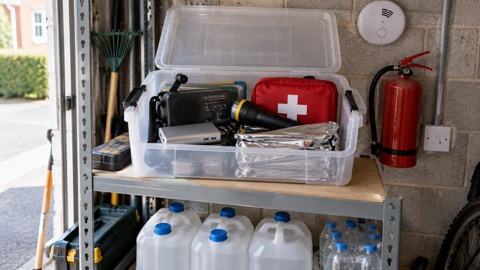
McFadden said the Government will work with stakeholders, including domestic violence charities, to give the public as much warning as possible in the run-up to the test, and will promote the Government's "Prepare" website to help individuals, households and communities understand how to be ready for different emergencies1. He said the alert system "will play a critical role in making sure that we are ready for all kinds of future emergencies"1.
"Today we set out how we will do that with the publication of our resilience action plan, a chronic risk analysis and an update on the UK biological security strategy."
Why it matters for households
The 7 September test will send a notification to mobile phones across the UK at around 3 pm, lasting around 10 seconds1. McFadden said the Government will work with domestic violence charities ahead of the test so that people who may be affected have warning1. The plan also commits to promoting the "Prepare" website, which the Government describes as helping individuals, households and communities understand how to be ready for a range of emergencies1. The £4.2 billion for flood defences and £370 million for telecoms security are national infrastructure commitments; the statement does not set out how either will affect individual households or when1.
What happens next
McFadden said the largest ever national pandemic exercise will take place later this year, and that Exercise Pegasus "has not happened yet; it will happen in the autumn"1. The Health Secretary will publish a pandemic preparedness framework1. The National Situation Centre and the devolved Governments will sign a memorandum of understanding soon1. The emergency alert test is scheduled for around 3 pm on Sunday 7 September 20251.
The UK Government Resilience Framework and Action Plan page sets out how the framework and action plan fit together. The chronic risks page explains long-term threats in government planning, and the Be Ready national resilience campaign page covers public awareness work. Local resilience forums, which McFadden said the Government continues to support in England, are covered in the guide to Local Resilience Forums.
Sources (1)
- Government Resilience Action Plan - Hansard - UK Parliament, hansard.parliament.uk
 UK Resilience Framework