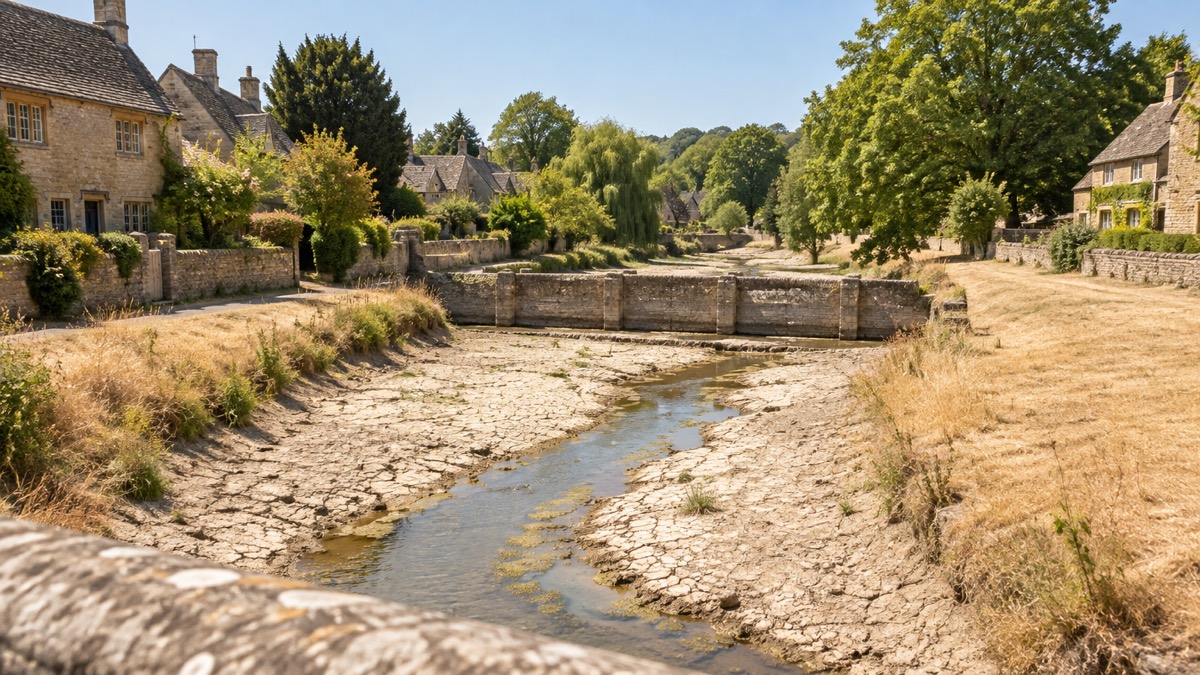
England had its driest July since 1935, according to the Met Office, which reported the figure on 11 August 2022 as it issued an amber extreme heat warning for much of the southern half of England and parts of eastern Wales1. The warning ran from Thursday to Sunday, with temperatures expected to peak at 35C on Friday and possibly 36C over the weekend1.
The rainfall figures differ between bodies. The Met Office gives the driest July in England since 19351. South West Water says July brought just 35% of England's average rainfall2. Waterwise states that July was confirmed as the driest on record in England since 1911 and the driest in the UK since 19843. Bournemouth Water says England and Wales provisionally recorded their driest July on record, with Southern England seeing its driest month ever recorded in a series dating back to 18364. The Met Office also reported that heatwave criteria were being met across England, with Scotland and Northern Ireland possibly reaching official criteria by Saturday1.
Water UK's Director of Communications, Peter Jenkins, said companies were already under pressure from a dry winter and spring:
"Water companies are already managing the unprecedented effects of the driest winter and spring since the 1970s, and with more hot, dry weather forecast, it's crucial we be even more mindful of our water use to minimise spikes in demand and ensure there's enough to go around."
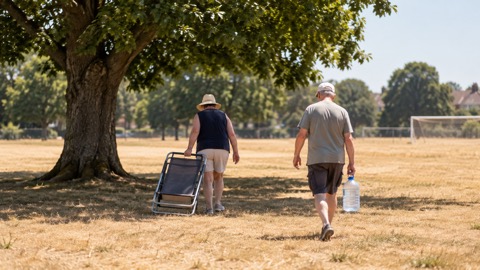
The UK Health Security Agency issued a Level 3 Heat Health Alert in force from Tuesday through to Sunday, advising people to look out for vulnerable people, including older people, young children and those with underlying health conditions1. Dr Agostinho Sousa of the UKHSA said the most important advice was to ensure they stay hydrated, keep cool and take steps to prevent their homes from overheating1. The Met Office advised drinking plenty of fluids, wearing sunscreen and a wide brimmed hat, and avoiding exercise between 11am and 3pm1. The National Fire Chiefs Council asked the public not to use barbecues in the countryside or local parks and to stub out cigarettes fully, warning that rivers and lakes can still be very cold and that jumping in can lead to cold water shock and accidental drowning1.
Why it matters for households
Some water companies asked customers to cut back. South West Water urged customers to avoid non-essential water use, including hosepipes for gardening and washing cars and windows, and said its reservoirs were lower than usual for the time of year2. Waterwise said temporary usage bans, or hosepipe bans, were getting underway in some parts of the UK3. Bournemouth Water said its teams had maximised water production, increased leak detection and repairs and moved water around its network4.
The suppliers set out where household water goes. South West Water and Waterwise both put hosepipe use at about 1,000 litres an hour, which Waterwise said is more than 12 baths in one hour2. Bournemouth Water said a standard tap uses 10 litres a minute, a standard showerhead around 12 litres a minute, and dishwashers and washing machines around 40 litres a cycle, with older models using much more; a leaking toilet can waste up to 400 litres a day4. Waterwise said established lawns do not need watering and will bounce back when it rains3. South West Water and Waterwise advised watering plants early in the morning or later in the evening to avoid evaporation, and reusing bath or washing up water on plants where it is not soapy or bleached2.
What happens next
The Met Office said temperatures would drop early next week as the weather became more changeable, with heavy showers and thunderstorms likely in some areas but low confidence in where and when they would occur1. It said there was little rain in the forecast that week, with only the northwest likely to see short-lived showers1.
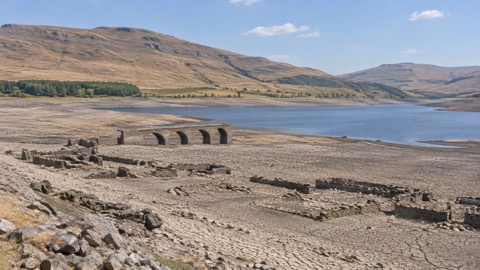
For background on how this summer compares with earlier dry spells, see past UK droughts and heatwaves, and for the longer trend, why UK summers are getting hotter and drier.
Sources (4)
- Extreme heat for much of the UK - Met Office, metoffice.gov.uk
- TV Gardener’s top tips for saving water in the garden, southwestwater.co.uk
- Hot Weather Press Release | News Events | Waterwise, waterwise.org.uk
- Start and end your day right: Bournemouth Water encourages customers to adopt water-efficient routines to protect essential supplies | Bournemouth Water, bournemouthwater.co.uk
 Why UK Summers Are Hotter
 Past UK Droughts and Heatwaves





