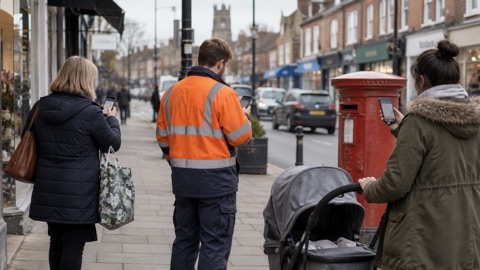
The UK government's Emergency Alerts system is now live, the Isle of Anglesey County Council announced on 12 April 2023. The system will enable people to be contacted via their mobile phone when lives are in danger, and will be used to warn of emergencies such as severe flooding1.
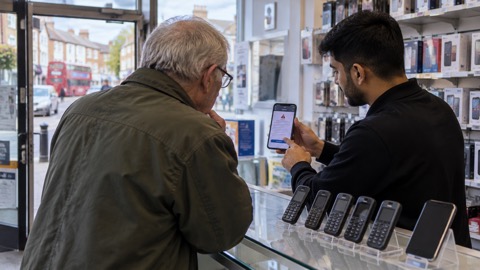
Alerts are sent to all compatible mobile phones within an area of risk. The government's factsheet states that alerts go to compatible 4G and 5G phones in the area, provided they have the latest software update, and that phones released before 2015 are likely to require some changes to the settings2. The message is received on a mobile phone within about 4 to 10 seconds, compared with up to 48 hours for SMS delivery2. The alert appears on the device for 20 seconds and the siren-like sound lasts for up to 10 seconds; the phone uses a distinct vibration and the message stays on screen until acknowledged2.
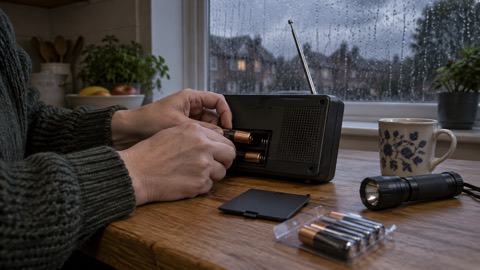
The system does not track location, need a phone number or collect personal data, and only the government and the emergency services can send alerts1. Alerts are one-way2. Recipients can check that an alert is genuine at gov.uk/alerts1. Members of the public can opt out; the factsheet says the government strongly recommends that people do not opt out, as the service is intended to warn when lives are in danger2. Those without a mobile phone will still be kept informed through other channels, including the media and local emergency services1.
A national test is planned for Sunday 23 April at 3pm, when phones will sound the siren-like noise with a message on screen1.
"The new Emergency Alerts system will be tested nationally on Sunday, April 23rd at 3pm."
| Item | Detail |
|---|---|
| Live from | 12 April 20231 |
| National test | Sunday 23 April, 3pm1 |
| Phones covered | Compatible 4G and 5G handsets in the area of risk, with latest software2 |
| Older handsets | Phones released before 2015 likely to need settings changes2 |
| Delivery time | About 4 to 10 seconds, against up to 48 hours for SMS2 |
| Alert display | On screen for 20 seconds; siren for up to 10 seconds2 |
| Opting out | Possible; government strongly recommends against it2 |
Why it matters for households
The system covers households across the UK with a compatible handset in an area where lives are at risk. The practical effect is a loud alert that interrupts other phone functions until acknowledged, followed by on-screen instructions. The factsheet advises drivers not to read or respond to an alert while driving: it says to continue driving, find somewhere safe and legal to stop before reading the message, and, if there is nowhere safe nearby and nobody else in the vehicle, to tune into live radio and wait for bulletins2. It notes that holding a mobile phone while driving or riding a motorcycle is illegal2.
For people who may be distressed by the alert, the factsheet says the public information campaign is working with community leaders so that those more likely to be distressed are aware of the service and the planned test, and advises identifying vulnerable people living nearby who can be informed of the test2. For visually or hearing impaired users, the factsheet says the alert works with screen magnification, may read the message aloud having overridden volume settings, and the noise should be audible for those who use a hearing aid2. After acknowledgement, Android users may find the alert in the Messages app or "Emergency Alert History", and iPhone users in notifications2.
What happens next
The national test on Sunday 23 April at 3pm will send the alert to compatible phones across the country1. The factsheet sets out how to check that a phone's alert settings are switched on, with steps for iPhones, Samsung devices on Android 11 and Android 10 or older, and other Android phones, noting that settings may be named Emergency Alerts, emergency broadcasts, extreme threats or severe threats2. Further information, including how to opt out, is at gov.uk/alerts1.
Households can read more on how Emergency Alerts work, whether their phone will receive them, what to do when an alert arrives, getting a mobile phone ready and getting warnings without a mobile phone.
Sources (2)
- New UK Emergency Alerts system now live, anglesey.gov.wales
- saltfordparishcouncil.gov.uk, saltfordparishcouncil.gov.uk
 Emergency Alerts
 Phones That Get Alerts
 Official Warnings and News
 UK Emergency Preparedness Guide
 Staying Informed in an Emergency
 Getting Your Phone Ready
 When You Get an Alert