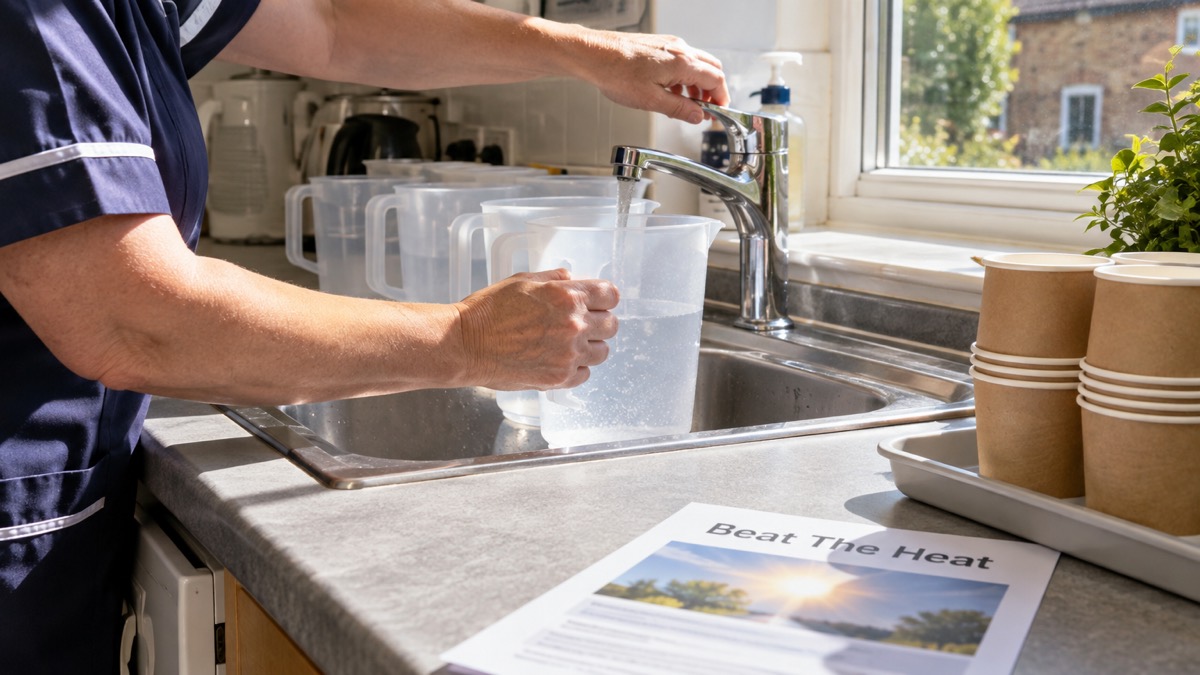
The Met Office Amber Extreme heat warning came into force on 11 August 2022 and remains in place until Sunday, covering much of the southern half of England and parts of eastern Wales1. The Met Office said the warning highlights the potential impacts these levels of heat can have on health, transport and infrastructure1.
Temperatures are expected to build through the week, peaking in the mid 30s Celsius on Saturday, with 35C expected on Friday and possibly 36C over the weekend1. Met Office Chief Meteorologist Andy Page said persistent high pressure over the UK meant temperatures had been rising day on day, and that some places in the south would see increasingly warm nights with temperatures not dropping below the low 20s Celsius1. Heatwave criteria were being met, with temperatures widely into the high 20s and low 30s Celsius across England, and Scotland and Northern Ireland could reach official heatwave criteria by Saturday1. The Met Office said temperatures were not expected to be as extreme as those experienced in July, when new national records were set1.
The UK Health Security Agency issued a Level 3 Heat Health Alert, in force from Tuesday through to Sunday, which the Met Office described as designed to help healthcare professionals manage through periods of extreme weather1. The UKHSA advised people to look out for vulnerable people, including older people, young children and those with underlying health conditions1.
"The most important advice is to ensure they stay hydrated, keep cool and take steps to prevent their homes from overheating."
The Met Office said that after the driest July in England since 1935 there was little rain in the forecast that week, with only the northwest of the UK likely to see short-lived showers1. Mark Hardingham, Chair of the National Fire Chiefs Council, said fire services had responded to a large number of fire and water rescue incidents, many of them preventable, and asked the public not to use barbecues in the countryside or at local parks, to stub out cigarettes fully and not to drop litter, warning that rivers and lakes can still be very cold and that jumping in can lead to cold water shock and accidental drowning1. He said anyone seeing a fire in the open, even a small one, or someone in trouble in the water should call 999 and ask for the fire service1.
National Highways Head of Road Safety Jeremy Phillips advised planning journeys ahead and taking plenty of drinking water, enough for driver and passengers, and checking vehicles such as tyres, coolant and oil levels before heading out1. Dr Justine Shotton, President of the British Veterinary Association, said animals need access to fresh drinking water, good ventilation and shade at all times, that dogs especially can overheat easily and should not be walked or exercised in the hottest parts of the day or left in a hot car or conservatory, and that early signs of heatstroke include heavy panting, drooling, restlessness and lack of coordination1. Water UK's Director of Communications Peter Jenkins said water companies were already managing the effects of the driest winter and spring since the 1970s and that it was crucial to be more mindful of water use to minimise spikes in demand1.
Why it matters for households
The warning covers households across much of the southern half of England and parts of eastern Wales until Sunday, with the hottest conditions expected on Friday and Saturday and warm nights in some southern places1. The UKHSA's Level 3 alert runs from Tuesday to Sunday and names older people, young children and people with underlying health conditions as those to look out for1. The Met Office's published guidance for the period includes drinking plenty of fluids and taking water when out, wearing sunscreen and a wide brimmed hat, and avoiding exercise between 11am and 3pm when the sun is strongest1. The fire service advice covers barbecues, cigarettes and litter in dry conditions, and cold water shock at rivers and lakes1. The Met Office explains the levels used in its warnings in its guide to Met Office weather warnings, and the heat alert levels in its guide to Heat-Health Alerts. Households can find out how to receive warnings in the guide to signing up for Met Office weather alerts and Heat-Health Alerts.
What happens next
The Met Office said temperatures will drop early next week as the weather becomes more changeable, with heavy showers and thunderstorms likely in some areas, though it said there is low confidence in the details and it is impossible to say yet exactly where and when they will occur1. The background to the dry conditions is set out in the guide to why UK summers are getting hotter and drier, and the wider subject in the heatwaves and drought section.
Sources (1)
- Extreme heat for much of the UK - Met Office, metoffice.gov.uk
 Heat-Health Alerts Explained
 Met Office Weather Warnings
 Why UK Summers Are Hotter





