Ford is best known in the UK for cars and vans, but for a household preparing for emergencies it makes two useful things: vehicles that can get you out, keep you warm and charge a phone, and a range of portable generators for when the mains fails. The vehicle on your drive is the piece of kit most households already own, and with a little preparation it becomes a shelter, a charger and a way out. The generator range covers the other half of the problem, keeping a fridge, a light or a phone charger running when the power goes off.
What matters most is preparation before anything happens. Keep at least a quarter of a tank of fuel in case you get stuck in traffic1, and if you have a car, keep half a tank of fuel in it at all times in case you need to evacuate2. Keep a blanket and warm clothes in the car3, and carry a phone charger so you can top up your battery even when you are out and about1. Those four habits cost little and cover most of what a storm, flood or power cut will ask of you.
The rest of this page sets out what Ford makes for UK households, how to use a vehicle and a generator safely in an emergency, and how to check for recalls and get support.
What Ford makes for UK households
For emergency preparedness, Ford's range divides into two families. The first is vehicles: cars and vans that most households already run, and which do the heavy lifting in an evacuation, a winter breakdown or a night stranded on a closed road. The second is Ford Power Equipment, a range of generators and pressure washers sold in the UK under the Ford name, with its own warranty terms and service arrangements9.
The generator range is the part that matters when the mains goes off. The FD7200S is a diesel generator with a 10HP, 499cc engine driving a copper winded alternator with AVR protection, set in a heavy duty and sound proofed canopy6. The automatic dual voltage switch lets it run at 110 volts or 230 volts, so it can supply ordinary UK mains appliances as well as lower voltage equipment6. That makes it a serious piece of kit for a household that expects to be without power for more than a few hours, rather than a stopgap for an evening.
Ford also sells pressure washers, which have a one year (12 months) limited warranty covering parts, return to base labour and return carriage9. They are cleaning equipment rather than emergency kit, and this page does not treat them as part of a household plan.
If you are weighing up whether a generator belongs in your preparations at all, the backup power guide sets out the alternatives, from battery power stations to small inverter generators, and what each can realistically run. The power cuts guide explains what happens during an outage and how long to plan for.
Ford cars and vans in an emergency
A car earns its place in a household plan in three ways: it gets you out, it keeps you warm and dry, and it carries the kit you would otherwise leave behind. The preparation is simple and mostly about what you keep in it.
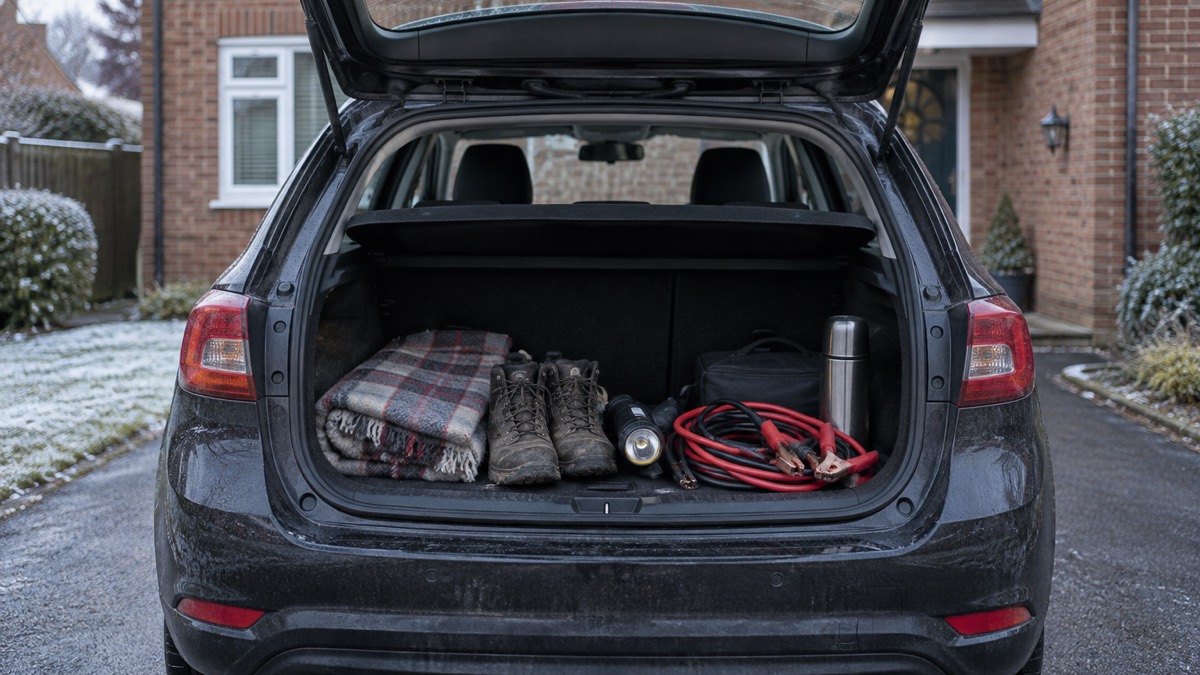
The Met Office's winter car kit is the standard list, and it covers most emergencies, not just snow: an ice scraper and de-icer; a torch and spare batteries; warm clothes and a blanket; a pair of boots; a first-aid kit; battery jump leads; a shovel for snow; a tow rope; food and a warm drink in a flask; sunglasses in the glove box; a fully charged mobile phone; and a map for unplanned diversions4. Add a blanket and warm clothes as a minimum even in summer3, and keep a copy of your car insurance in the car so you can swap details with another driver after an accident or collision10.
If a fire breaks out in or near the vehicle, the advice is the same as for a building: get out, stay out and call the Fire and Rescue Service immediately11. Dial 999 and ask for fire12. Do not go back for possessions, pets or people, and tell the fire service immediately if anyone is missing13.
On the motorway, if you have a problem and cannot get out of your car safely, turn your hazard warning lights on, activate the eCall SOS button to contact a 999 operator, and keep your seatbelts on14. Off the motorway, call for a recovery vehicle, and only call 999 if you are in danger or causing a hazard15.
Charging a phone or device from your Ford
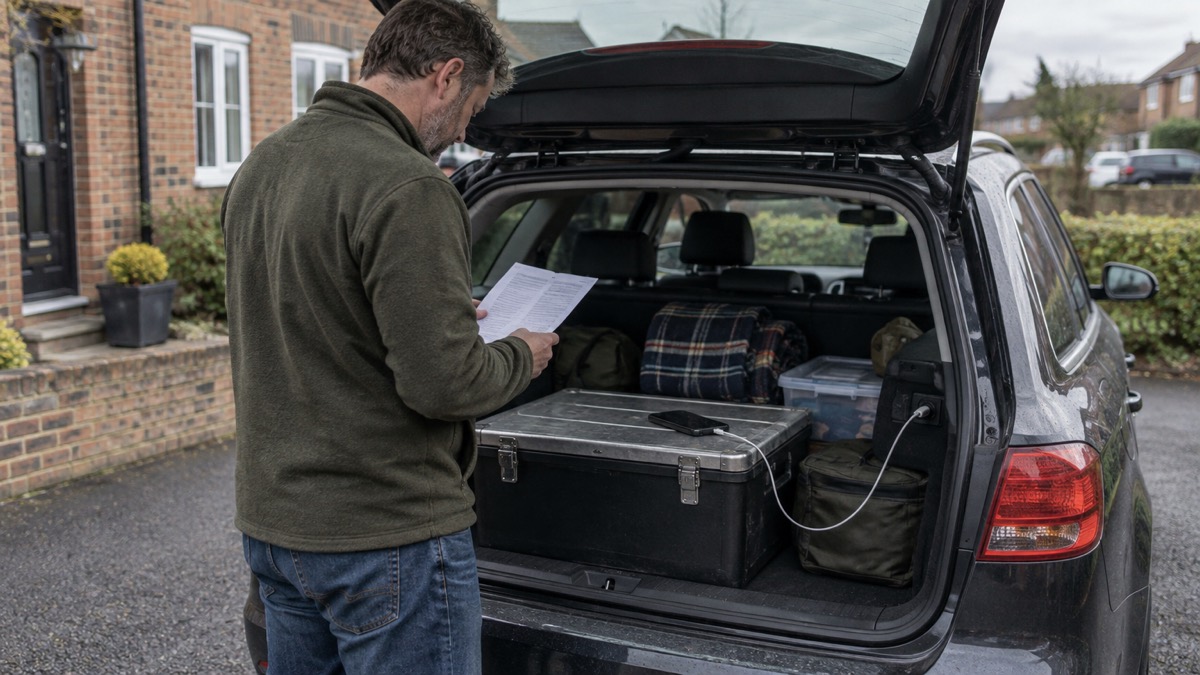
A phone is the single most useful thing you will carry in an emergency, and a vehicle is a large battery with a charging socket. Keep an in-car phone charger so you can top up your battery even when you are out and about1. A portable power bank in your grab bag does the same job when you are away from the car16.
Charging safely matters as much in a vehicle as at home. Fire and rescue services advise that you always charge your phone or laptop on a hard surface like a table or worktop, never on a soft surface like a bed or carpet, as it can easily overheat and catch fire5. Use approved chargers and charge on hard surfaces17. The same principle applies to a power bank left on a car seat or under a blanket.
Lithium-ion batteries, the kind in phones, tablets, laptops, e-bikes and scooters, need a little care. Charge them on a hard, flat surface18, and do not leave a device charging unattended on soft furnishings5. If a battery becomes hot, swollen or damaged, stop using it and do not charge it.
Electric and hybrid Fords in a power cut
An electric or hybrid Ford is a battery on wheels, and in a power cut that changes what the vehicle can do for you. It can be charged when the mains returns, it can run the heater or air conditioning for a period without idling an engine, and it can keep phones and small devices topped up. What it cannot do, without the right equipment and an electrician, is power your home's circuits.
The household side of a power cut is worth preparing separately. Know where your mains electricity cut-off is on your fuse board19, and keep important documents safe and handy20. If you rely on the vehicle for warmth during an outage, remember that a stationary electric vehicle with the climate control running will drain its own battery, so plan how you would recharge.
For the wider picture, the power cuts guide covers what to do when the power goes, and the backup power guide compares the options for keeping a fridge, a light or a phone charger running.
Keeping a Ford ready for an emergency
Readiness is mostly routine. The checks below take a few minutes and cover the failures that actually happen: a flat battery on a cold morning, a tank too low to divert, a boot with no warm clothes in it.
- Fuel: at least a quarter of a tank in case you get stuck in traffic1, and half a tank at all times if you may need to evacuate2.
- Warmth: a blanket and warm clothes in the car4, plus boots and a flask in the winter kit4.
- Power: a fully charged mobile phone and an in-car charger21.
- Recovery: battery jump leads and a tow rope4.
- Paperwork: a copy of your car insurance in the car10.
- Household grab bag: an emergency checklist, insurance policy copies and key emergency service numbers, kept where family members know to find it22.
The grab bag is the bridge between the vehicle and the house. Keep it in a safe place ready in case the worst happens, and make sure everyone in the household knows where it is22. The emergency kit guide sets out what else belongs in it.
Where a running vehicle must never be left
A running vehicle produces exhaust fumes, and those fumes are the reason never to leave an engine running in an enclosed or poorly ventilated space. A garage, a carport with the door shut, or a vehicle parked tight against a building are all places where fumes can build up. If you are sheltering in a vehicle, keep it well away from buildings and never run the engine to keep warm while you sleep.
The same caution applies to generators, which are engines too. A generator must never be run indoors, in a garage or in any enclosed space, and the same rule applies to a vehicle engine used as a charger or heater.
Fire safety in the home has a parallel rule that applies to any vehicle parked close to a building: keep flammable substances such as fuel, fertilisers and pesticides safely stored away from your home23. If you have to leave a vehicle near a building during a wildfire risk, keep it clear of dry vegetation and anything that could carry fire to it.
Driving a Ford through snow, ice or floodwater
Winter driving is where preparation pays off. Avoid harsh braking and acceleration, or sharp steering24. Braking on an icy or snow covered bend is extremely dangerous: the centrifugal force will continue to pull you outwards and the wheels will not grip very well, which could cause your vehicle to spin24. Slow down before the bend, not on it.
In fog, beware of speeding up immediately when visibility improves slightly, because in patchy fog you could find yourself driving blind again only moments later24.
Floodwater is the greater danger. If you have to drive through floods, drive slowly using first gear and keep the engine revving at a high rate, moving forward continuously to avoid stalling; in an automatic, engage and hold in a low gear; check your mirror and test your brakes afterwards4. Better still, do not drive into floodwater at all if you cannot see how deep it is. If a road is flooded, report it: Suffolk's guidance points to the Highways Reporting Tool, where the Show Key button on the map explains what the coloured icons mean for the progress of each report25.
| Condition | What to do | What to avoid |
|---|---|---|
| Snow and ice | Slow down before bends, steer smoothly1 | Harsh braking, acceleration or sharp steering1 |
| Fog | Keep your speed down even when it clears1 | Speeding up as visibility briefly improves1 |
| Floodwater | First gear, high revs, move continuously, test brakes after4 | Driving into water of unknown depth |
The storms, snow and ice guide covers the household side of the same weather, and the flooding guide explains what to do before and after a flood.
Safety notices and recalls: how to check your Ford
Recalls happen to every maker, and the check is quick. Have your vehicle registration or vehicle identification number to hand and ask a Ford dealer or use the maker's recall service. If a recall applies, the work is carried out by the dealer, and it is worth doing before the vehicle is needed in an emergency.
For electrical goods in the home, including chargers and power banks, you can check the list of recalled items on the Electrical Safety First website, which explains what to do with your recalled appliance26. When you register an appliance, you will typically need the model name or number, the serial number and the purchase date26, so keep those details with your household paperwork.
Battery safety is the other notice worth knowing. Lithium-ion batteries range from mobile phones, vaping devices, e-bikes and scooters, vacuum cleaners, tablets, iPads and ear pods27, and they should be charged on a hard, flat surface18. If a battery is damaged, swollen or overheating, stop using it and do not charge it.
Ford support and warranty in the UK
Ford Power Equipment's warranty terms are set out in its own documentation, and they differ by product. The petrol frame mounted generators carry a 1 year (12 months) / 1000 hours (whichever comes first) limited warranty, including parts, return to base labour and return carriage9. The inverter generators carry a 3 years / 1000 hours (whichever comes first) limited warranty for leisure use, on the same basis9. Pressure washers carry a 1 year (12 months) limited warranty9.
The warranty is valid only when the machine receives all necessary preventative maintenance and servicing as described in the Ford Owner's Manual9. In the event of a product failure, contact Ford UK in the first instance9. The customer must provide the company from which the product was purchased, proof of purchase, the model and serial number, a description of the fault, supporting images or videos if requested, and servicing records9.
There are practical limits worth knowing before you buy. If a machine comes back to the service centre with a non-warranty fault, the customer will be charged for carriage both ways, labour and parts used9. Ford UK shall not be liable for indirect or consequential losses, including loss of income, business interruption, or damage to connected equipment9. Highlands and Islands may incur a surcharge, and for Northern Ireland and the Channel Islands it may be more cost-effective for the customer to send the unit to a mainland address, and Ford will collect and return it from there9.
For the vehicle itself, warranty and servicing are handled through the Ford dealer network. Keep your service records with your household paperwork, alongside your insurance details10, so they are to hand if you need to make a claim.
Sources (27)
- Winter car kit, Met Office, 2026-10-29
- Emergency advice: get help in an emergency, Lincolnshire County Council, 2026-10-29
- Emergency kit checklist, Neath Port Talbot Council, 2026-10-29
- Driving in bad weather, Transport Scotland, 2026-10-29
- Student safety, Devon and Somerset Fire and Rescue Service, 2026
- Ford FD7200S diesel generator, Ford Power Equipment, 2026-11-02
- Home fire safety: fuel storage, NHS, 2024-03
- Seasonal Safety - Northern Ireland Fire & Rescue Service, Northern Ireland Fire & Rescue Service
- Ford warranty, Ford Power Equipment, 2026-11-02
- Out and about, Wiltshire and Swindon Prepared, 2026-10-25
- Caravan and mobile home fire safety, Northern Ireland Fire and Rescue Service, 2026-06-22
- Car and vehicle fires, Devon and Somerset Fire and Rescue Service, 2026
- Fire escape plan, Fire Kills, 2026-03-25
- eCall, Traffic England, 2026-10-29
- Vehicle breakdown advice, Milton Keynes Council, 2026
- Reduce the risk of wildfire damage to your property, Hampshire Fire and Rescue Service, 2026-08-27
- Student safety, Northern Ireland Fire and Rescue Service, 2026-09-15
- Rechargeable lithium-ion battery safety advice, Cheshire Fire and Rescue Service, 2026-09-30
- Prepare yourself, Greater Manchester Combined Authority, 2026-10-29
- What to do in a power cut, Met Office, 2026-10-25
- Transport disruption and delays - Be Ready, prepare.campaign.gov.uk
- Northumbria Local Resilience Forum, Northumberland County Council, 2026-10-28
- Warm weather safety, Suffolk Fire and Rescue Service, 2026-10-29
- Winter Preparedness - NHS South East Coast Ambulance Service, NHS South East Coast Ambulance Service
- Report a flood in Suffolk, Suffolk County Council, 2026-10-29
- Electrical safety, Scottish Fire and Rescue Service, 2025-02-27
- Lithium-ion batteries, South Wales Fire and Rescue Service, 2026-01-13
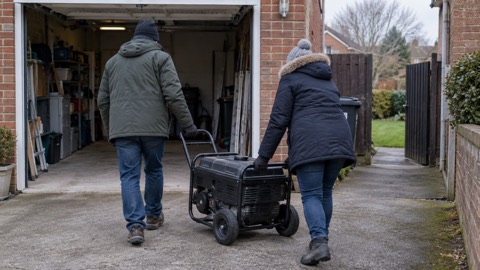 Ford FG6500iSE
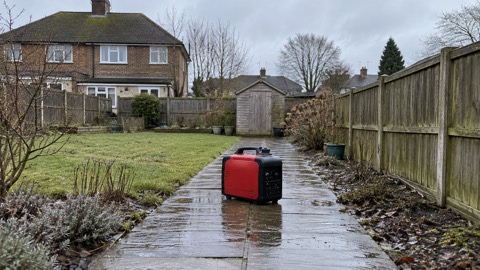 Ford FG2500iS