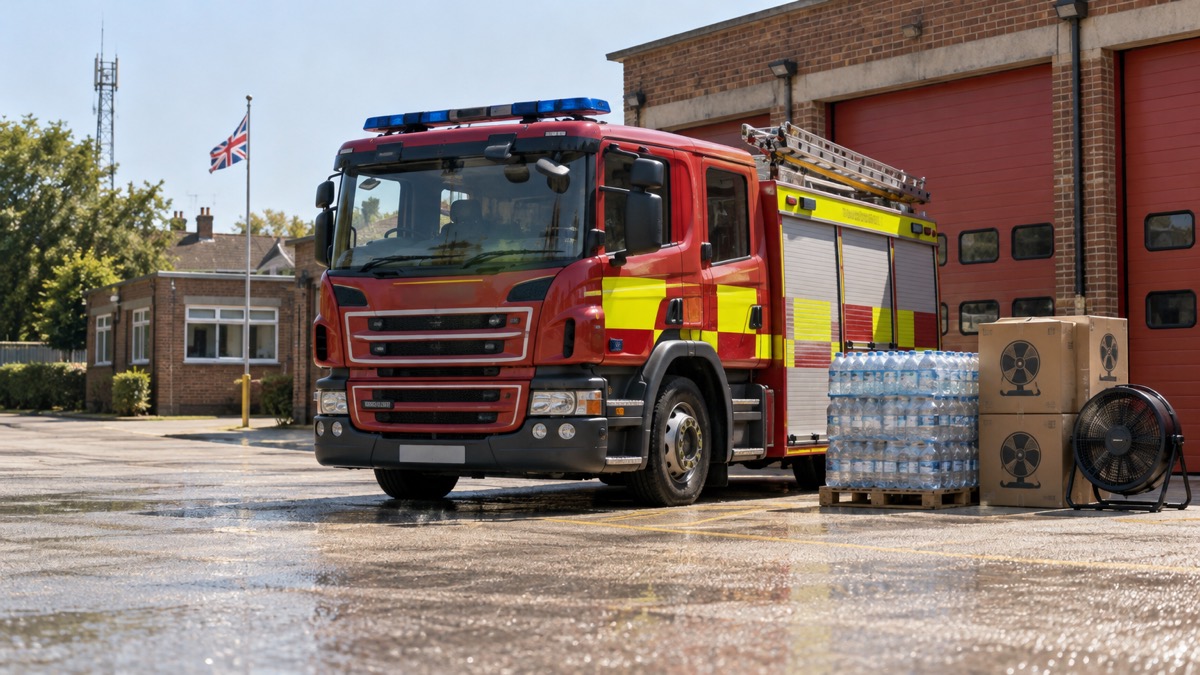
Suffolk Fire and Rescue Service (SFRS) has activated its Extreme Heat Business Continuity Plan in response to the Yellow Heat-Health Alert issued on 8 July by the UK Health Security Agency for the East of England, the county council announced on 10 July 20251.
The service said the plan aims to maintain an effective and efficient emergency response during the period of hotter weather, and that it will remain in place until a decision is made, through ongoing multi-agency discussions, that the additional measures are no longer required1. The plan includes safeguarding the welfare of wholetime and on-call crews and working with other emergency services, Suffolk County Council and Ipswich Borough Council on a coordinated approach to planning and prevention1.
Alongside this, SFRS is working with farmers across the county who are trialling specialist couplings designed to enhance emergency access to on-farm water supplies during wildfires and other rural incidents. The service said the trial aims to enhance firefighting capacity and reduce response times across Suffolk's countryside1.
Jon Lacey, Chief Fire Officer at Suffolk Fire and Rescue Service, said:
"We are thoroughly prepared to handle any challenges, drawing on our extensive experience from the extreme heat events of 2022, when we effectively managed high demand of our resources."
The service urged members of the public to avoid using disposable barbecues or lighting campfires in rural or open areas, and said cigarettes or glass bottles should never be discarded on dry grass or in wooded areas1. It advised extreme caution around water, especially rivers, lakes and the coast, since cold water shock can be fatal even in warm weather1. Business owners were reminded to review their Fire Risk Assessments and Business Continuity Plans, which take account of extreme weather1. Lacey added that anyone who encounters a fire or inland water emergency should not put themselves at risk and should call 999 immediately and ask for the fire service1.
Why it matters for households
The alert covers the East of England, so households in Suffolk are affected from 8 July, when the UK Health Security Agency issued it, and the service's additional measures stay in place until multi-agency discussions decide they are no longer required1. The changes described are internal to the fire service: crew welfare measures and coordination with other emergency services and councils1. The advice attributed to the service covers wildfire prevention in rural and open areas, caution near rivers, lakes and the coast because of cold water shock, and review of fire risk assessments and business continuity plans by business owners1. The service's position is that these are precautions the public can take to prevent serious incidents1. How the heat-health alert system works, and how services respond to it, is set out in the guide to The Adverse Weather and Health Plan: How Services Respond; wider material is collected in the heatwaves and drought hub.
What happens next
The plan remains in place until a decision is made through ongoing multi-agency discussions that the additional measures are no longer required1. No date for that decision has been reported. The outcome of the farmers' couplings trial has not been reported1.
Sources (1)
- suffolk.gov.uk, suffolk.gov.uk
 Adverse Weather and Health Plan