Resuscitation Council UK published its 2025 Adult Basic Life Support guidelines on 27 October 2025, alongside 2025 First Aid guidelines dated the same day1. The council says the central change is that rescuers no longer need to confirm abnormal breathing before calling 9991.
Under the 2025 guidance, a rescuer who finds someone unresponsive calls 999 first and assesses breathing while waiting for the call to be answered, with the ambulance service call handler able to help identify abnormal breathing1. The council states that slow, laboured breathing and other abnormal patterns such as agonal gasping or panting must be recognised as signs of cardiac arrest, and that a short period of seizure-like activity may occur at the onset1. It adds that exercise is a common precipitant of cardiac arrest and that, early after onset, athletes may display a near-normal or panting breathing pattern1.
The guidelines keep the existing compression figures and add detail on the call handler's role and on support for lay rescuers1. The council says bystander CPR and use of an automated external defibrillator (AED) increase the chances of survival by two to four-fold1.
| Measure | 2025 guidance |
|---|---|
| When to call 999 | For any unresponsive person, before assessing breathing1 |
| Compression rate | 100 to 120 per minute1 |
| Compression depth | At least 5 cm, not more than 6 cm1 |
| Trained in rescue breaths | Alternate 30 compressions with 2 rescue breaths1 |
| Not trained in rescue breaths | Continuous chest compressions without interruptions1 |
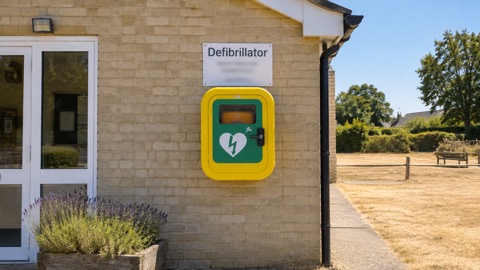
The council states that CPR is most effective on a firm surface but that rescuers should not move a person from a soft surface such as a bed to the floor, starting CPR on the bed and compressing deeper if needed1. It says the risk of harm from CPR is low and that rescuers should not be concerned that they will cause serious injury if the person is not in cardiac arrest1. On defibrillators, it states that anyone can use an AED, that cabinets should be unlocked and accessible 24 hours a day, every day of the year, and that signage should state no training is needed1. It also says AEDs should be registered with The Circuit so their location is available to the ambulance service during a 999 call1.
The First Aid guidelines state that all workplaces, leisure centres, public buildings, homes and cars should have first aid kits, and that kits should be inspected regularly and properly maintained2. They set out an ABCDE assessment (Airway, Breathing, Circulation, Disability, Exposure) and advise calling for help early, ideally on speakerphone, especially if alone2.
"There are the following changes to the 2025 Adult Basic Life Support guidelines: Call 999 for any unresponsive person. Rescuers no longer need to confirm abnormal breathing before calling."
Why it matters for households
The change affects anyone in a UK household who finds a person unresponsive, including family members and neighbours, from the date of publication. The practical effect is that the call to 999 comes before any check of breathing, and the call handler may then guide the caller through recognition and CPR1. The council states that if there is any doubt, cardiac arrest should be assumed and CPR started1. Its first aid guidance says a first aider should not be concerned about causing harm to the patient, and that CPR continues until professional help arrives and takes over, the person becomes responsive, or the rescuer becomes exhausted2. The guidelines also cover choking in adults, with up to five back blows followed by up to five abdominal thrusts, calling 999 if choking is not relieved after five abdominal thrusts, and no blind finger sweeps2.
What happens next
No implementation timetable, training requirement or date for further publications has been reported. The guidelines are published on the council's website, with PDF versions available1.
The council's guidance on these changes is set out in the 2025 Resuscitation Guidelines: What Changed for Bystanders, with related guidance on when to call 999 and on the primary survey.
Sources (2)
- Adult basic life support Guidelines | Resuscitation Council UK, resus.org.uk
- First Aid Guidelines | Resuscitation Council UK, resus.org.uk
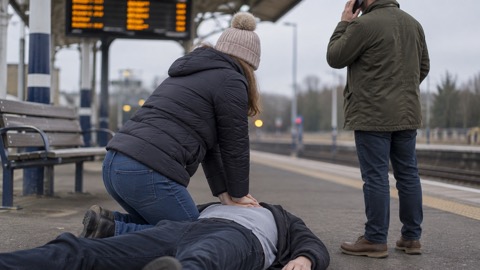 2025 Resuscitation Guidelines
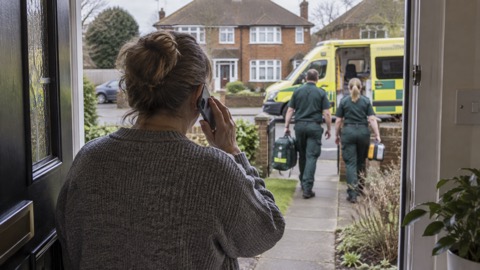 When to Call 999
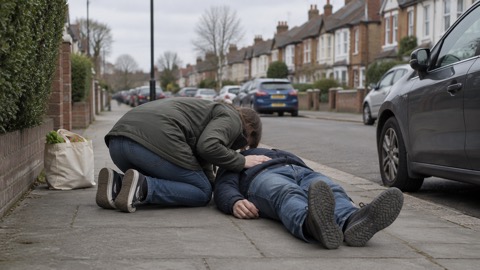 Danger, Response, Airway