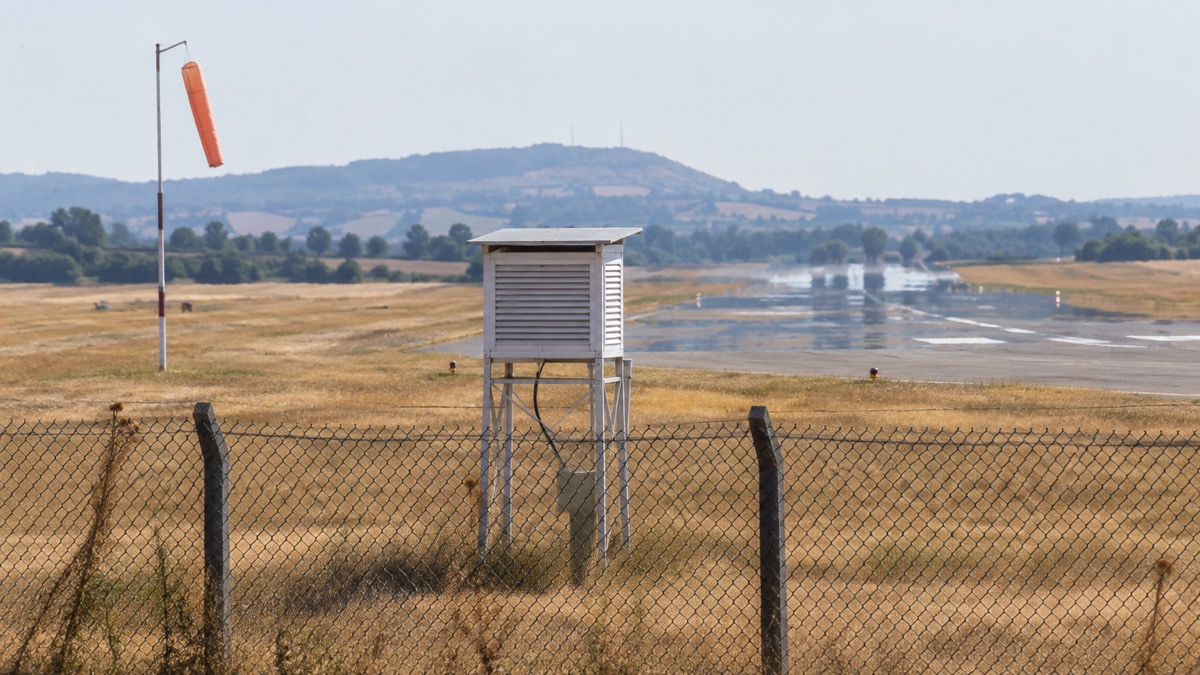
The Met Office reported on 22 July 2022 that new provisional national temperature records were set for Wales and Scotland during the heatwave of 18 and 19 July. Wales reached 37.1°C at Hawarden Airport, Flintshire, on 18 July, and Scotland reached 35.1°C at Floors Castle, Borders, on 19 July1.
The same event produced a new UK record. A daily maximum of 40.3°C was provisionally recorded at Coningsby, Lincolnshire, on 19 July, exceeding the previous UK record of 38.7°C by 1.6°C. This was the first time 40°C had been recorded in the UK. A total of 46 stations across the UK exceeded the previous record, and many long-running stations with records of more than 100 years recorded their highest ever temperature, some by margins of 3 to 4°C1.
Records were also set overnight. Kenley Airfield, Greater London, recorded a new highest minimum temperature of 25.8°C. Across the UK as a whole, the average maximum temperature exceeded 30°C for the first time, and the UK had its two hottest days on record by that measure in a series going back to 1960. The new highest average maximum temperature, set on 19 July 2022, was 2°C higher than the previous value of 29.5°C set on 25 July 20191.
The Met Office said temperatures on both 18 and 19 July exceeded 38°C, and that only two previous dates had passed that threshold in its data: 10 August 2003 and 25 July 2019. It described the heat as far more intense and widespread than previous comparable heatwaves1.
"New provisional national temperature records were also set for Wales and Scotland."
| Nation | Provisional record | Location | Date |
|---|---|---|---|
| Wales | 37.1°C | Hawarden Airport, Flintshire | 18 July 2022 |
| Scotland | 35.1°C | Floors Castle, Borders | 19 July 2022 |
| UK | 40.3°C | Coningsby, Lincolnshire | 19 July 2022 |
The Met Office said the heat resulted in its longest-range Amber warning ever, issued with a lead time of six days, followed by a Red warning for extreme heat, the first such warning to be issued1.
Why it matters for households
The Met Office review sets out how unusual the July 2022 heat was, and its warnings are the part that bears directly on households. The Amber warning gave six days' notice, and the Red warning for extreme heat was the first of its kind. The Met Office notes that heat-related impacts can be triggered by prolonged spells of warm summer weather, not only by the extreme temperatures seen in this event1. The review also records that climate change is making UK heatwaves more frequent, intense and long-lasting, and that of the 30 hottest days by UK area averages, 14 have occurred this century1. The background to rising temperatures is set out in the guide to why UK summers are getting hotter and drier, and the heatwaves and drought hub covers the wider subject.
What happens next
The Met Office said that looking ahead to early August, temperatures were likely to remain above average across southern areas of the UK, which at that time of year can lead to warm and at times hot or very hot weather. Further north, temperatures were expected to be much closer to average, with a greater risk of rain1. The Met Office said its meteorologists monitor the potential for hot air to be drawn up from mainland Europe across southern parts of the UK during the summer months and will highlight anything that becomes unusual1. The Wales and Scotland figures were described as provisional1.
Sources (1)
- A milestone in UK climate history - Met Office, metoffice.gov.uk
 Why UK Summers Are Hotter





