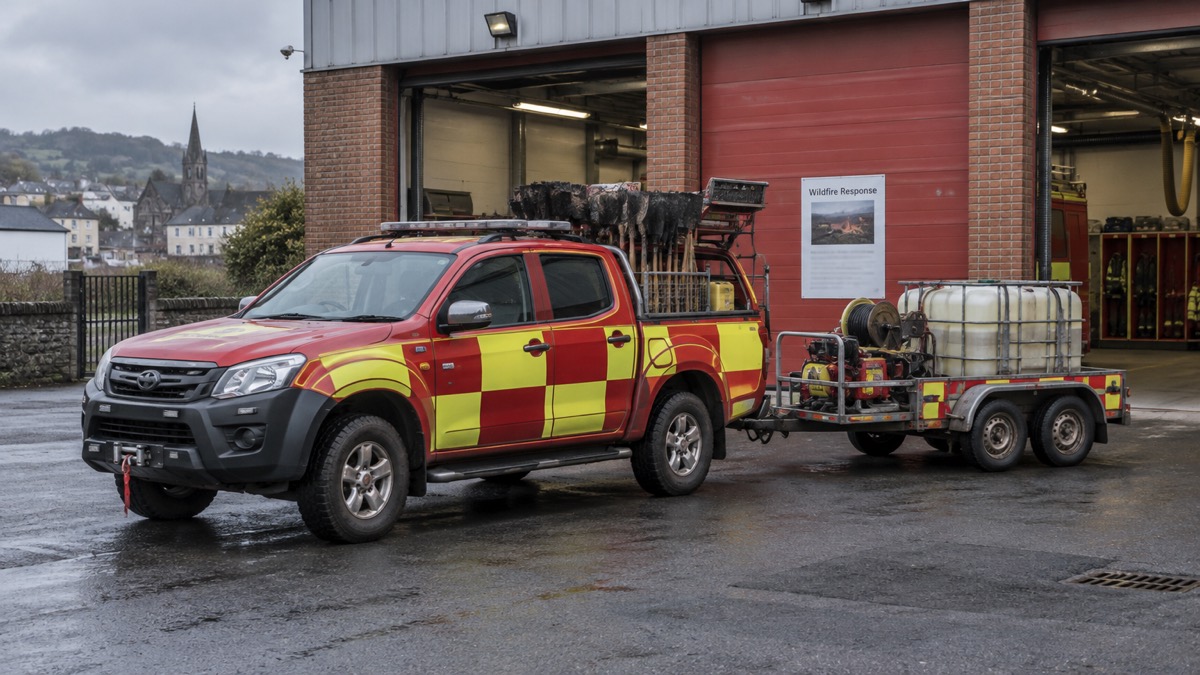
Northern Ireland Fire & Rescue Service (NIFRS) received 2,762 fire calls to its Regional Control Centre and mobilised to 1,499 of them between 3 and 13 April 2025, the service has said. Of the calls mobilised, 390 related to gorse and wildfire incidents1. The figures were published by NIFRS on 30 April 2025, in a statement issued after the Health Minister Mike Nesbitt and the Agriculture, Environment and Rural Affairs Minister Andrew Muir met firefighters and control room staff in Lisburn and at Ballynahinch Station1.
NIFRS said the fires occurred concurrently and over a large area, including wildfires at Bloody Bridge in Newcastle, Silent Valley near Kilkeel, Sawel Mountain near Newtownstewart and in Dervock in County Antrim, with a major incident declared in the Mourne Mountains. A significant number were believed to have been started deliberately, with hundreds of firefighters and other emergency personnel involved in the response1.
Earlier operational updates give the sequence of the period. On Saturday 5 April at 5pm NIFRS was mobilised to a significant wildfire on Sandbank Road, Hilltown, which was subsequently declared a major incident; at the height of operations 15 fire appliances and over 100 firefighters worked with partner agencies, a number of residents were evacuated from homes on the Sandbank and Kilbroney roads as a precaution, and resources began scaling back at approximately 3.00am on Sunday 6 April. The cause of that fire was believed to have been deliberate ignition2. Between midnight on Thursday 3 April and midnight on Saturday 5 April, NIFRS received 741 calls2.
| Date | Calls to Regional Control Centre | Calls mobilised | Of which wildfires |
|---|---|---|---|
| 3 to 5 April (midnight to midnight) | 741 | Not reported | Not reported |
| 7 April | 240 | 148 | 27 |
| 8 April | 330 | 147 | 41 |
| 10 April | 259 | 149 | 53 |
| 3 to 13 April (total) | 2,762 | 1,499 | 390 |
Sources:2 for 3 to 5 April;3 for 7 April;4 for 8 April;5 for 10 April;1 for the 3 to 13 April total1.
On 8 April NIFRS said the Bloody Bridge wildfire had escalated to 8 fire appliances with over 50 firefighters, that firefighting was expected to continue there across the day, and that the wildfires at Sawel Mountain near Newtownstewart and on the Carncullagh Road in the Dervock area had been dealt with3. On 9 April it reported that at the height of the wildfire in the White Bridge area of Ballygawley, County Tyrone, 8 fire appliances with over 40 firefighters tackled the blaze, with 4 appliances then at the scene, and that five appliances and over 35 firefighters had attended gorse on fire on Black Mountain with a 120m fire front4. On 11 April it reported gorse fires at Friary Road, Newtownhamilton (five appliances and 25 firefighters, dealt with by 7.18pm), Corrick Road, Draperstown (25 acres of gorse, five appliances, the Command Support Unit and specialist wildfire teams, dealt with by 9.33pm) and a one mile fire front on the Bunnisnagapple Road, Lisnaskea (three appliances and 15 firefighters, dealt with by 11.46pm)5.
"Between 3 April and 13 April, NIFRS received 2,762 fire calls to their Regional Control Centre and mobilised to 1,499 of these, with 390 of them relating to gorse and wildfire incidents."
Why it matters for households
The figures cover the whole of Northern Ireland. NIFRS said a significant number of the fires were believed to have been started deliberately1, and for the Hilltown fire it said the cause was believed to be deliberate ignition2. Health Minister Mike Nesbitt said his thoughts had been with those evacuated from their homes, and whose lives and livelihoods were put at risk1. Agriculture Minister Andrew Muir said the fires caused a devastating impact on wildlife, flora and fauna, risked livestock and impacted local residents and businesses1.
During the period NIFRS issued public safety advice for the countryside: avoid open fires, extinguish cigarettes and other smoking materials properly, use barbeques only in a suitable and safe area and never leave them unattended, ensure barbeques are fully extinguished and cold before disposing of contents, take bottles and glass home rather than leaving them in woodland or grassland, park considerately so as not to impede emergency vehicles, keep children away from lighters, matches and open fires, and not attempt to tackle fires that cannot be extinguished with a bucket of water but leave the area as quickly as possible. It asked the public to report a fire in the countryside to NIFRS immediately by calling 999, and anyone seen setting fires to the PSNI2. On 8 April it asked the public to stay away from the Bloody Bridge area and avoid hill walking in the mountains around it, and for residents in the Newcastle vicinity to keep windows and doors closed3. On 9 April it asked the public to stay away from the White Bridge area while firefighting operations were taking place and to adhere to road closures4. The site's guide to wildfires and grass fires sets out risk and prevention for households, within the wider heatwaves and drought section.
What happens next
No further dates have been reported. NIFRS said the public were being urged to act responsibly when enjoying the countryside during that week's good weather and over the coming months to reduce the risk of further wildfires1.
Sources (5)
- PUBLIC URGED TO ACT SAFELY AND RESPONSIBLY TO REDUCE WILDFIRE RISK - Northern Ireland Fire & Rescue Service, nifrs.org
- NIFRS appeal for community support as amber wildfire weather warning continues - Northern Ireland Fire & Rescue Service, nifrs.org
- Operational Update - Wildfires - Northern Ireland Fire & Rescue Service, nifrs.org
- Operational Update: Wildfires - 9am - Northern Ireland Fire & Rescue Service, nifrs.org
- Operational Update: Wildfires - 10am - Northern Ireland Fire & Rescue Service, nifrs.org
 Wildfires and Grass Fires





