NHS England announced on 12 February 2022 that it is launching a campaign to encourage people to dial 999 when they have early signs of a heart attack1. The campaign runs from 14 February to 31 March 2022 and is the first of the NHS "Help Us Help You" campaigns specific to heart attacks1. A new NHS advert, starting on the Monday, shows a person experiencing common early symptoms, sweating, uneasiness and chest tightness, and reminds viewers to dial 999 if they experience the symptoms of a heart attack1.
NHS England reports more than 80,000 hospital heart attack admissions in England every year1. It gives the overall survival rate for people experiencing a heart attack as seven in 10, rising to nine in 10 for those who come forward for early hospital treatment1. It also states that cardiovascular disease causes a quarter of all deaths across the country1.
The campaign follows polling that NHS England describes as showing widespread confusion about symptoms. Three in four people thought a heart attack was the same as a cardiac arrest, and fewer than half said they would dial 999 if they or a loved one experienced lesser known symptoms of heart attacks1. While 70% of those surveyed understood that pain in the chest is a symptom, just 41% knew sweating was a symptom and only 27% understood that feeling weak, lightheaded or a feeling of general unease were also symptoms1.
The campaign also sets out the difference between a heart attack and a cardiac arrest. A heart attack occurs when the supply of blood to the heart becomes blocked, which can starve it of oxygen and potentially cause serious muscle damage; the person will be conscious and breathing1. A cardiac arrest usually occurs suddenly and without warning, with the person quickly losing consciousness, and a heart attack can lead to a cardiac arrest1.
"It can be easy to dismiss early symptoms as they don't always feel severe, but it is never too early to dial 999 in this circumstance and the faster you act, the better the chance of a full recovery"
The campaign is backed by the actor Richard Wilson and the Sky Sports presenter Peter Dale, known as Tubes, both of whom describe their own heart attacks in the announcement1. Professor Nick Linker, consultant cardiologist and NHS national clinical director for heart disease, said people often do not realise they are having a heart attack, either because they do not recognise the early signs or because they do not consider them severe enough to trouble the NHS1. Dr Charmaine Griffiths, chief executive of the British Heart Foundation, said every minute counts when someone is having a heart attack and that immediate treatment could be the difference between life and death1. Maria Caulfield, Minister for Patient Safety and Primary Care, said thousands of deaths can be prevented with earlier treatment if people recognise the symptoms1.
Why it matters for households
The campaign is aimed at people in England and runs for six and a half weeks from 14 February 20221. Its focus is the early signs that households may not connect with a heart attack: sweating, uneasiness and chest tightness, alongside the squeezing across the chest that most people already associate with it1. NHS England says the person having a heart attack will be conscious and breathing, which distinguishes it from a cardiac arrest, where the person quickly loses consciousness and has no pulse1. The NHS advises dialling 999 and describing the symptoms, and states that it is never too early to do so1. The British Heart Foundation's chief executive is quoted urging people not to think twice about dialling 9991. The health-emergencies hub covers wider health incidents, and the first-aid hub covers practical response.
What happens next
The advert and campaign run from 14 February to 31 March 20221. No further activity beyond that period is set out in the announcement. The site's guides on when to call 999, on how to tell a cardiac arrest and a heart attack apart and on what to do if someone is having a heart attack set out the background, and the staying-informed hub covers warnings and public information.
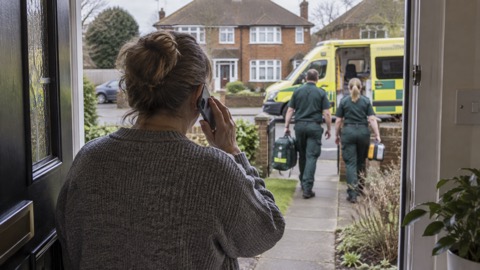 When to Call 999