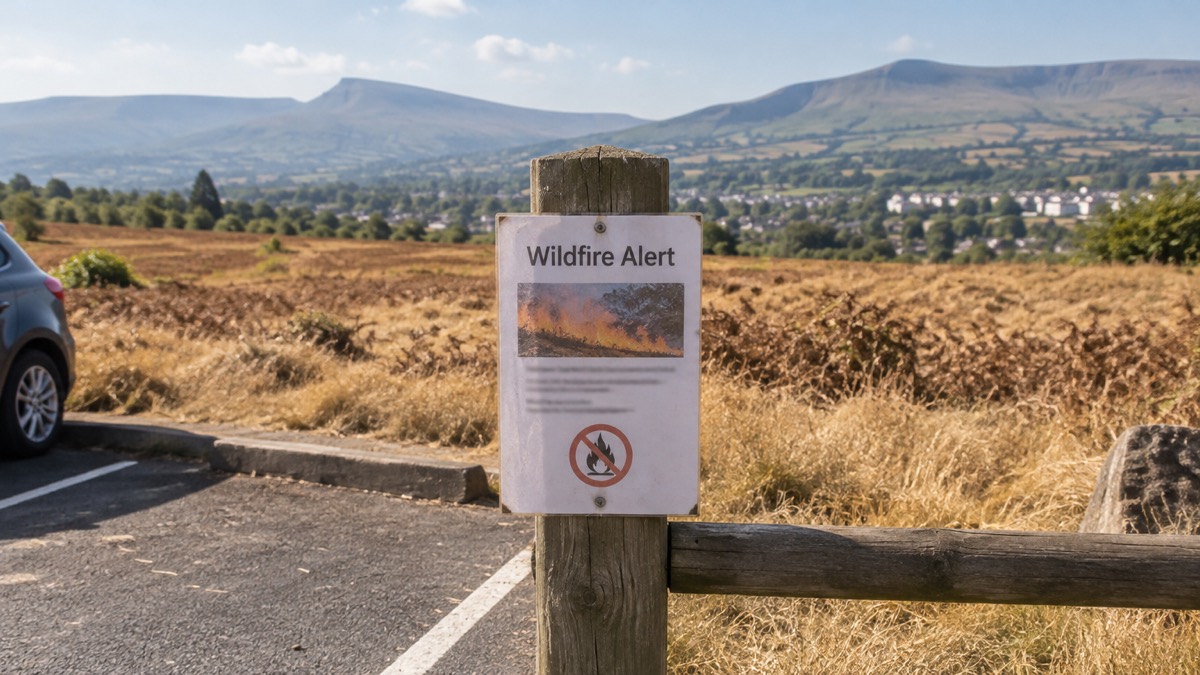
The National Fire Chiefs Council (NFCC) issued an amber wildfire alert on 2 April 2025, saying the Met Office had warned of heightened wildfire risk across most of England and Wales, southern Scotland and Northern Ireland1. The NFCC said the warning came as warm temperatures and dry conditions were forecast for the remainder of that week1.
Fire and Rescue Services had responded to 250 wildfire incidents so far in 2025, recorded on the National Resilience reporting tool1. By 4 April the NFCC put the figure at 286 wildfires recorded between 1 January and 4 April 2025, more than 100 above the number recorded in the same period in 2022, which it described as a record year for wildfires2. The earlier figure of 250 covered incidents up to 2 April1. For comparison, in the first part of 2024, up to 1 April, only 13 wildfires were recorded; 2024 was a wet year, but the NFCC said those conditions led to an accumulation of vegetation which can provide more fuel for fires to develop1.
The NFCC said dry conditions, strong easterly winds and increased temperatures were contributing to the heightened risk, and that the UK was still inside the permitted burn season in England, Scotland and Northern Ireland1. It said most wildfires in the UK are caused by human activity, including leisure activities and deliberate acts, and that the impact of climate change increases the risk and severity of wildfires1. Wildfires were traditionally limited to mainly rural areas, the NFCC said, but can now occur almost anywhere in the country, including crossing into the rural urban interface such as those seen in London and many other parts of the country in the summer of 20221.
On 4 April the NFCC said England and Wales had experienced more wildfires so far this year than in the same period in 2022, and that risks could rise further into May and June if dry conditions persist2. It said fire and rescue services do not receive any dedicated or protected funding for wildfire response, and that the costs must be absorbed through core budgets already under strain2.
"Wildfires have a devastating impact on communities, wildlife, and the environment. With the current conditions, we are urging the public to take extra precautions to reduce the risk of fires starting."
The NFCC's public safety advice, issued with both statements, is to avoid using disposable barbecues in open countryside, parks and moorland areas; not to discard cigarettes, matches or glass bottles, as they can ignite dry vegetation; and to follow local authority guidance on fire risks and restrictions1. It asks anyone who notices suspicious behaviour, or sees someone intentionally starting a fire, to contact the Police immediately or report the information anonymously to Crimestoppers on 0800 555 111, and to report any signs of fire immediately by calling 999 and asking for the Fire and Rescue Service1.
Why it matters for households
The alert covers most of England and Wales, southern Scotland and Northern Ireland, and applies while warm, dry and windy conditions last, with the NFCC warning that risks could rise further into May and June if dry conditions persist1. The NFCC says wildfires can now occur almost anywhere, including where built-up areas meet countryside, so households outside traditional rural areas are also in scope1. Its advice centres on preventing ignition from everyday sources such as disposable barbecues, cigarettes, matches and glass bottles, and on following local authority restrictions, including during the permitted burn season1. The guidance on wildfires and grass fires sets out risk and prevention in more detail, and sits within the wider heatwaves and drought section.
What happens next
The NFCC said it expected wildfire risks could rise further into May and June if dry conditions persist2. It has asked the government to keep funding for national wildfire roles under review, establish more consistent national data collection, improve joint working across departments, place greater emphasis on land management, and identify and fund specialist equipment and capabilities, following its wildfire position statement published in 20242. No further alert levels or dates have been announced1.
 Wildfires and Grass Fires





