The London Ambulance Service said on 6 January 2025 that recent analysis had identified dozens of neighbourhoods in the capital as "defibrillator deserts", where there is little or no access to a life saving device1. The service used the findings to set out its position that publicly accessible defibrillators should not be placed in locked cabinets, because locks create the potential for delay1.
The service responds to around 13,000 cardiac arrests a year1. It said cabinets with locks, faulty cabinets that do not open and incorrect codes could significantly affect whether a patient survives a cardiac arrest, and that the longer a patient goes without emergency life-support, the harder it is to restart the heart1. When a 999 call is made for someone in cardiac arrest, the emergency call handler can give the exact location of the nearest defibrillator to the caller1.
The service's figures on the number of devices in London differ between its pages. Its statement says there are over 9,000 defibrillators in the capital, with reported vandalism and theft amounting to less than 10 defibrillators per year1. A separate service page says around 7,000 defibrillators are registered on its database across London, and that this is not enough2. The statement also asks that devices be registered on The Circuit so they are visible to call handlers1.
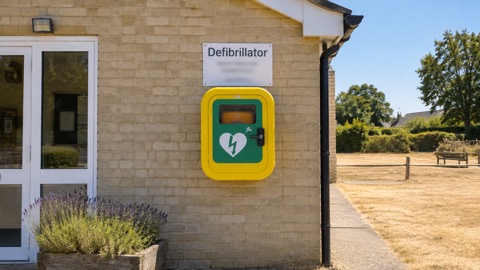
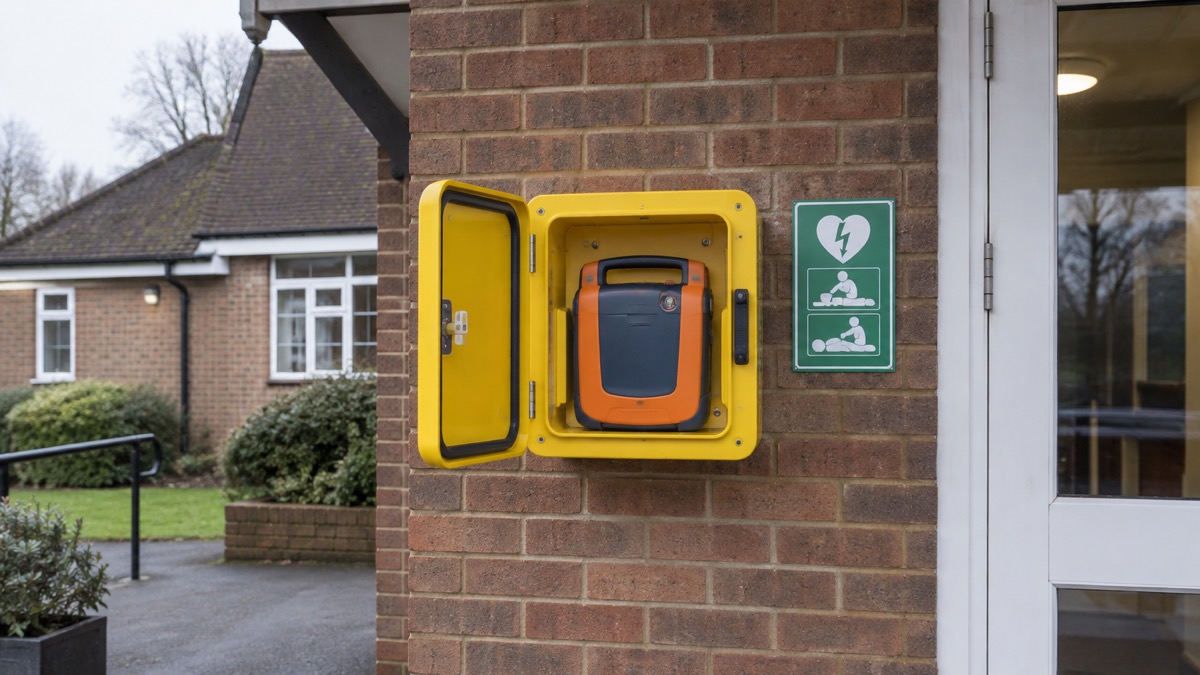
"Ensure your defibrillator is located in an accessible and unlocked cabinet, visible to the public, in a well-lit location."
The service adds that, if possible, an area covered by local CCTV will significantly reduce the possibility of a defibrillator being stolen or vandalised1. It quotes the Resuscitation Council UK as stating that, where circumstances allow, defibrillators should be placed in openly accessible (unlocked) cabinets, and that a decision to use a locked cabinet should be made only on the basis of careful risk assessment in that specific location1.
Why it matters for households
The service's guidance concerns publicly accessible defibrillators, including those bought and looked after by communities, parish councils, businesses and other site owners, rather than household devices. For anyone responsible for one, the service's position is that the cabinet should be unlocked and the device visible, well lit and, where possible, covered by CCTV1. It also advises registering the device on The Circuit so that 999 call handlers can direct callers to it1. The service states that a defibrillator gives clear spoken instructions when switched on and will only advise a shock if one is needed, so no training is required to use one2. Its advice for a cardiac arrest is to call 999, start chest compressions and ask someone to find a defibrillator2. Households wanting to find a nearby device can ask the call handler when they ring 9991; the service's pages do not describe any other public lookup for members of the public.
What happens next
The London Ambulance Charity is calling on Londoners to back its "London Heart Starters" campaign, which aims to fund and maintain additional defibrillators in the 150 communities where they are needed most1. The service also runs a defibrillator accreditation scheme offering guidance and support in buying, storing and using a defibrillator, and holds free pop-up training events across London2. No date has been reported for the completion of the campaign or for any change in the number of defibrillators in the areas identified.
Households and community groups responsible for a public device can read the site's guidance on locked or unlocked defibrillator cabinets, on finding the nearest public access defibrillator and on getting the code for a locked cabinet. Groups registering a device can follow the guide to registering and looking after a village defibrillator on The Circuit, and the first-aid hub and community hub carry related material.
Sources (2)
- Unlocked defibrillator cabinets allow immediate access in an emergency - London Ambulance Service NHS Trust, londonambulance.nhs.uk
- Defibrillators - London Ambulance Service NHS Trust, londonambulance.nhs.uk
 Public Access Defibrillators