London Ambulance Service said on 27 December 2024 that more than 12,000 Londoners will suffer a cardiac arrest in 2025, according to its forecast figures, as it published its annual cardiac arrest report for the financial year to the end of March 2024 and renewed its call for the public to learn CPR and how to use a defibrillator1.
The report, prepared by the service's Clinical Audit Research Unit, records that from 1 April 2023 to 31 March 2024 the service attended 12,242 patients in cardiac arrest across London. Of these there were 4,572 resuscitation attempts, with a bystander performing CPR at 65 per cent of recorded incidents, which the service says is the lowest figure for five years1. Survival from out-of-hospital cardiac arrest has returned to pre-pandemic levels at 9.8 per cent. The service attributes the improvement to call answering times falling from 42 seconds to 9 seconds, a 12 second decrease in the delivery of dispatcher-assisted CPR instructions, a reduction of over three minutes in the time taken to arrive on scene, and faster provision of CPR and defibrillation by clinicians1. The median time from the 999 call to delivery of dispatcher-assisted CPR instructions was 04:29, against 04:41 the previous year1.
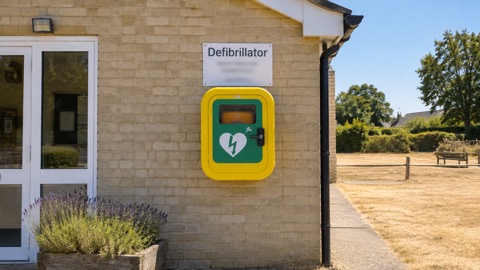
Where bystander CPR was provided, survival to 30 days after cardiac arrest was 9.3 per cent, compared with 4.4 per cent among patients without it. The service says bystander CPR doubles the chance of survival and that use of a defibrillator in the window before an ambulance arrives quadruples it1. Between 2023 and 2024, 40 patients had a public access defibrillator applied and were alive on arrival of the ambulance service1. The service says it trained 10,000 school children in CPR during 2024 and plans a similar number in 2025, and is calling on local businesses and organisations in 150 priority neighbourhoods across London to come forward if they can host a public access defibrillator. Analysis for its London Heart Starters campaign identified 150 neighbourhoods it describes as "defibrillator deserts", where there is little access to a life saving device, and the service says households in more deprived areas are more likely to be in greater need of additional defibrillators1.
"We need the public to get into the idea that learning CPR is a core life skill for everyone, including children, and civic society to get serious about getting defibrillators in the parts of the city that most need them."
The service's figures for the year to March 2024 are set out below.
| Measure | Figure |
|---|---|
| Patients attended in cardiac arrest, 1 April 2023 to 31 March 2024 | 12,242 |
| Resuscitation attempts | 4,572 |
| Resuscitation attempts with bystander CPR | 65 per cent (lowest for five years) |
| Survival to 30 days with bystander CPR | 9.3 per cent |
| Survival to 30 days without bystander CPR | 4.4 per cent |
| Overall survival to discharge, 2023-24 | 9.8 per cent |
| Median time from 999 call to dispatcher-assisted CPR instructions | 04:29 |
Why it matters for households
The forecast covers London only, and the service says a large proportion of cardiac arrests happen in the home or in public spaces1. Its figures indicate that the actions of someone nearby, before paramedics arrive, are associated with a markedly higher chance of survival, and that bystander CPR fell in the latest year1. The service asks Londoners to learn chest compressions and how to use a defibrillator through its London Lifesavers campaign, and asks businesses and organisations in its 150 priority neighbourhoods to consider hosting a public access defibrillator1. Professor Rachael Fothergill, Head of Clinical Audit and Research at the service, said it was disappointing that use of defibrillators and CPR by members of the public had been lower this year1. Our guides explain how to tell cardiac arrest and heart attack apart, how ambulance services prioritise 999 calls and response times and how to find the nearest public access defibrillator; the first aid hub lists the full set.
What happens next
The service says it plans to train a similar number of school children in CPR in 2025 as the 10,000 trained during 2024, and continues to seek hosts for public access defibrillators in its 150 priority neighbourhoods1. Its London Ambulance Charity Heart Starters campaign, launched in summer 2024, aims to install defibrillators in neighbourhoods that need them most1. No further dates have been reported.