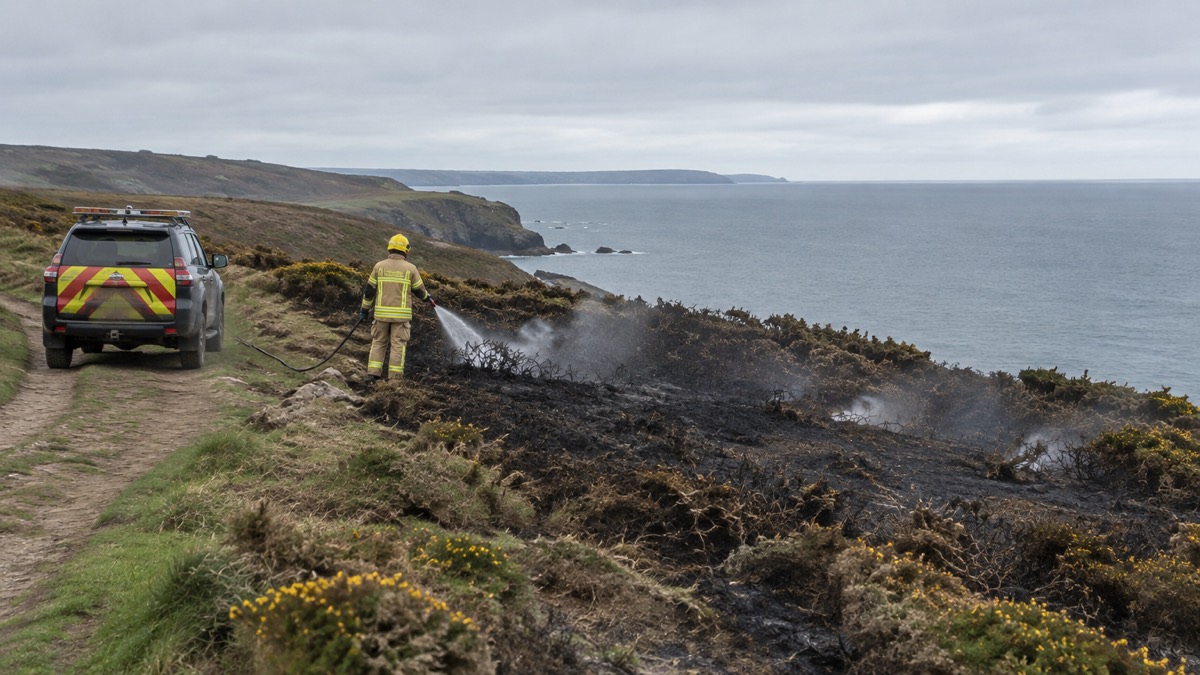
Welsh Fire and Rescue Services declared four major wildfire incidents during July and August 2026, at Conwy Mountain, Llanwonno Mountain, Llangynidr Reservoir and Rhandirmwyn, the Wales Wildfire Board has said in launching its annual #BurnToProtect campaign1. The announcement was published by North Wales Fire and Rescue Service on 1 October 20261.
The Board said Summer 2026 was Wales' hottest on record and included the driest July ever recorded, creating conditions in which wildfire could spread rapidly across the countryside1. Welsh Fire and Rescue Services received mutual aid from neighbouring English Fire and Rescue Services, and in South Wales military assistance was deployed to help support operations1. The Board said communities experienced disruption and uncertainty, farmers and landowners saw large areas of land affected, valuable habitats were damaged and, in some cases, families experienced the loss of property1.
Separate figures published by North Wales Fire and Rescue Service record that, from January 2022 to January 2024, fire and rescue services in Wales attended 5,111 grassfire incidents, 1,232 of them in the mid and west Wales service area2. The same page notes that over the last four years there have been early signs of plateauing in incident numbers2.
The Board is calling on farmers, landowners and rural communities to work with their local Fire and Rescue Service, Natural Resources Wales, farming unions and other partners on burns this season1. Controlled burning of heather, grass, bracken and gorse is permitted from 1 October until 15 March each year, extending until 31 March in upland areas1. Mid and West Wales Fire and Rescue Service states that it is illegal to burn between sunset and sunrise, that sufficient people and equipment must always be on hand to control the burn, and that breaking these rules can result in penalties of up to £1,0003. Anyone intending a controlled burn should have a Burn Plan in place and all appropriate precautions taken1.
"This summer has changed the conversation around wildfire in Wales."
The Board's safety advice, as published, is to notify the local Fire and Rescue Service before a controlled burn (North Wales: 01931 522 006)2; ensure sufficient people and suitable equipment are available to maintain control1; check weather conditions and wind direction before lighting any fire1; consider nearby homes, roads, livestock, habitats and wildlife1; never leave a fire unattended1; ensure the fire is fully extinguished before leaving and revisit the site to check for reignition1; and call 999 immediately if a fire escapes control, giving accurate location details3. Mid and West Wales Fire and Rescue Service asks anyone who sees a fire that looks out of control or illegally burnt to call Crimestoppers anonymously on 0800 555 111, or 101, and to call 999 in an emergency3.
| Incident declared | Period |
|---|---|
| Conwy Mountain | July and August 2026 |
| Llanwonno Mountain | July and August 2026 |
| Llangynidr Reservoir | July and August 2026 |
| Rhandirmwyn | July and August 2026 |
Why it matters for households
The four incidents fell in July and August 2026, and the Board's appeal concerns the burn season that opened on 1 October 2026 and runs to 15 March, or 31 March in upland areas1. Households in or near the affected areas, and in rural parts of Wales generally, are within the communities the Board describes as having faced disruption, land damage and, in some cases, loss of property1. The Board attributes the conditions behind the season to record heat and the driest July on record, and its guidance is addressed to farmers, landowners and rural communities rather than to households directly1. The Board states that wildfire resilience cannot be delivered by emergency services alone and depends on partnerships between land managers, public services, farmers, local communities and government1. Background on rising temperatures and drier summers is set out in the guide to why UK summers are getting hotter and drier, within the heatwaves and drought section.
What happens next
The #BurnToProtect campaign continues through the burn season, with campaign materials and guidance available through local Fire and Rescue Service websites1. The Board said the experience of the 2026 season will help inform future discussions on how Wales strengthens its approach to wildfire prevention, preparedness and long-term resilience3. No further dates have been reported.
Sources (3)
- After a summer Wales won't forget, landowners urged to #BurnToProtect - News - North Wales Fire And Rescue Service, northwalesfire.gov.wales
- Wildfire Wise - Keeping You Safe - North Wales Fire And Rescue Service, northwalesfire.gov.wales
- #BurntoProtect, mawwfire.gov.uk
 Why UK Summers Are Hotter





