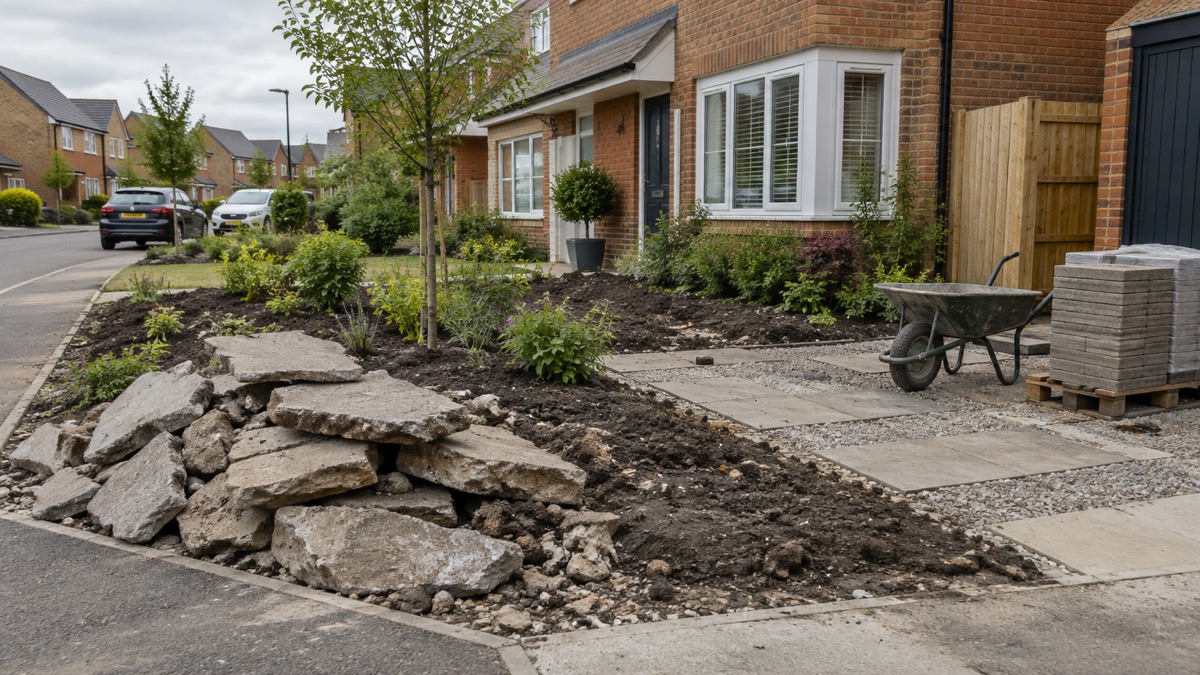
Flood Re published research on 19 May 2026 finding that millions of British homeowners could be "sleepwalking into a flooding crisis" by paving over their gardens, and is exhibiting a garden at this year's Chelsea Flower Show to demonstrate alternatives1.
The research, commissioned by Flood Re, reports that 82% of British garden owners believe their outdoor space would cope with heavy rainfall, while one in three (31%) do not realise that paving and other hard surfaces can increase flood risk, and just 3% say they consider flood risk when designing their garden1. Flood Re describes surface water flooding as one of the fastest-growing flood risks in the UK, occurring when rainfall overwhelms local drainage systems, and says it can happen anywhere, even far from rivers or coastlines and even at the top of a hill1. It gives the example that a 5mm rainfall event falling on a 20m² paved garden can generate around 100 litres of runoff, roughly a full bathtub of water, and that this is additional to runoff from roofs, gutters and everyday household use1. The average flood repair bill now exceeds £30,000, according to the same release1.
"There’s a real risk that households are sleepwalking into a flooding problem without realising it. Our ‘Flood Re: Contain the Rain’ garden shows how the choices we make in our outdoor spaces can either add to the problem or become part of the solution."
The "Flood Re: Contain the Rain" garden, designed by John Howlett, uses planting, permeable materials and integrated water storage to hold and slow rainfall1. Flood Re says impermeable paving is treated as near-total runoff in drainage design, while permeable surfaces and planted gardens slow, store and absorb rainfall at source1. Dr Peter Melville-Shreeve of the University of Exeter said in the release that hard surfaces "disrupt the natural hydrological cycle and stop water soaking in", a process he calls "urban creep"1. Flood Re is encouraging homeowners to check local flood maps, reduce unnecessary hard surfacing and incorporate features that help absorb and store rainwater1.
Why it matters for households
The release concerns surface water flooding, which differs from river and sea flooding in that it can occur away from rivers and coastlines, including at the top of a hill1. Households that have replaced lawns or borders with paving, or that live on streets where neighbours have, are the focus of the warning, because runoff from many gardens adds to the load on drainage systems already receiving water from roofs and household use1. Flood Re attributes the trend to more intense downpours linked to climate change1. The practical points it raises are garden design and awareness of local flood risk; its stated advice is to check local flood maps, cut unnecessary hard surfacing and add features that absorb and store rainwater1. The release does not give regional figures, a list of areas at particular risk, or any change to insurance arrangements.
What happens next
The Chelsea Flower Show runs with the "Flood Re: Contain the Rain" garden on display; the release gives no closing date for the exhibit1. No further dates or follow-up publications are set out in the release1.
Households can read more on the types of flooding, including surface water, on flooding as a household guide, on home insurance in a flood risk area and Flood Re, on flood alerts, flood warnings and severe flood warnings, and on who manages flood risk.
 Types of Flooding
 Home Insurance and Flood Re