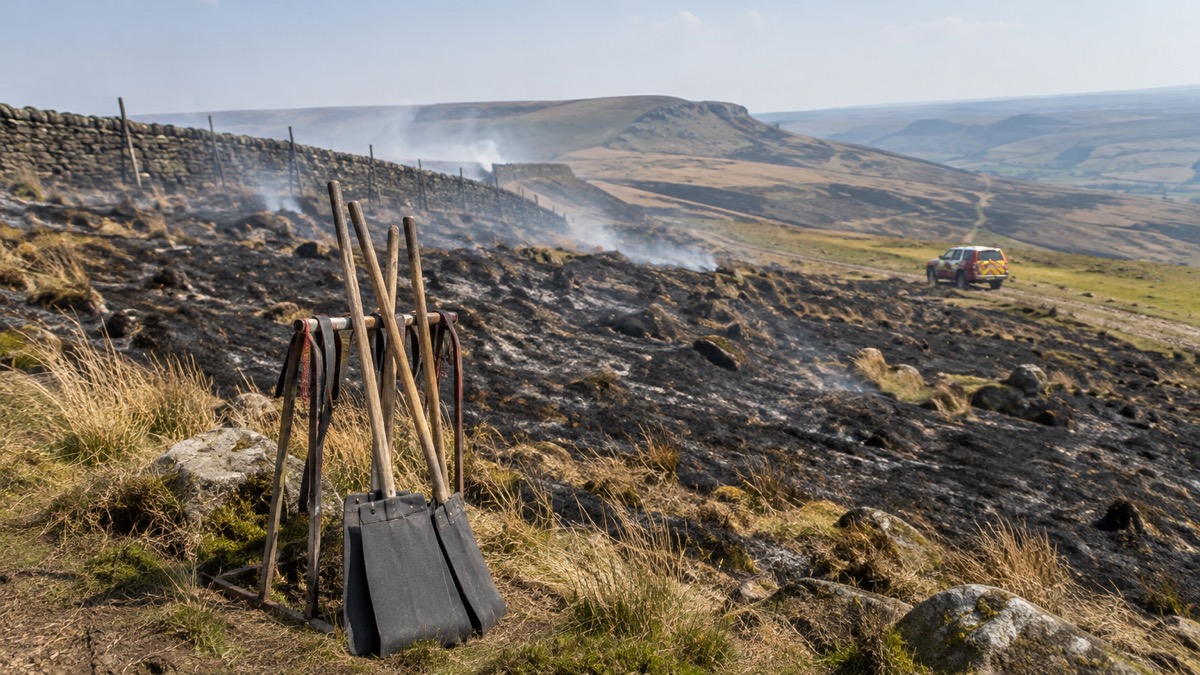
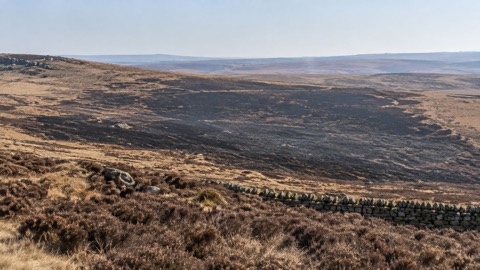
Fire services in England and Wales responded to 564 wildfires from January to June 2025, an increase from 69 fires in the same period of 2024, Communities Prepared reports1. The community resilience organisation describes 2025 as the UK's worst wildfire season on record, with around 66,000 football pitches worth of land burnt, 50 evacuations and injuries1.
The Environment Agency's drought management framework, updated on 8 April 2026, gives a higher figure for a longer period: as of 4 September 2025, fire and rescue services in England and Wales had responded to 996 wildfires, an increase from 994 in the drought of 2022, which it describes as previously the worst year on record for wildfires2. The two figures cover different periods and are not directly comparable.
Communities Prepared reports that properties have been lost to wildfire in the last five years, and that recent studies suggest 1.8 million homes are at higher risk at the rural-urban interface, where housing borders countryside1. It cites the 2018 Saddleworth wildfires as estimated to have cost the NHS a modelled £21.1 million, with a 165% increase in excess deaths during periods of excess PM2.5 exposure1. It states that ignitions in the UK are overwhelmingly related to human activity, through arson, accidents or other activities1.
"2025 saw the UK experience its worst wildfire season on record."
The Environment Agency's document sets the fire season in the wider context of drought. It records that rainfall at the end of 2025 brought most of the country to recovery in December, except for parts of the East and South, and that by 23 March 2026 the country had fully recovered from drought2. It notes that floods and droughts can occur at the same time more often, citing flash flooding in south west England after the 2025 drought, and that rainfall during a drought does not always mean the drought is over until groundwaters, reservoirs and rivers are fully replenished2.
Why it matters for households
The figures cover households across England and Wales, with the greatest exposure reported where homes border countryside. Communities Prepared advises households to clear excess dry leaves and debris from gardens, roofs and gutters and to store flammable materials safely, and states that anyone who sees signs of fire should call 999 immediately without hesitation1. It also asks the public to avoid barbecues, bonfires and disposable barbecues in local areas during heatwaves when out in the countryside1. The Environment Agency describes drought as a risk facing England on the National Risk Register and says more frequent and severe droughts are likely as the climate changes2. Its framework sets out how water companies manage supplies during drought, including temporary use bans, formerly known as hosepipe bans, under their own powers2. It records that between 1996 and 2026 there were 124 drought permits and 57 drought orders issued, with 2025 seeing the highest number of drought permits2. For households on private supplies, it estimates around 1 million users of some 40,000 private water supplies from streams, boreholes and springs, just over half of them domestic2. Where circumstances pose a danger to life or human health, it states that the local authority has powers to require the water company to provide an alternative supply, such as bottled water, at a cost to those supplied2.
What happens next
The Environment Agency says it carries out a light touch review of its drought plans annually in the spring, and a full update every five years or following major droughts2. It has not reported any further wildfire statistics beyond 4 September 20252. Communities Prepared calls for wildfire education and risk assessment to be included in local emergency and resilience planning, and for clear communication plans for fire alerts and evacuations run through local fire and rescue services1.
Sources (2)
- Wildfires in the British Isles: It’s time to get ready, Communities Prepared, communitiesprepared.org.uk
- Drought: how it is managed in England - GOV.UK, gov.uk
 Wildfires and Grass Fires





