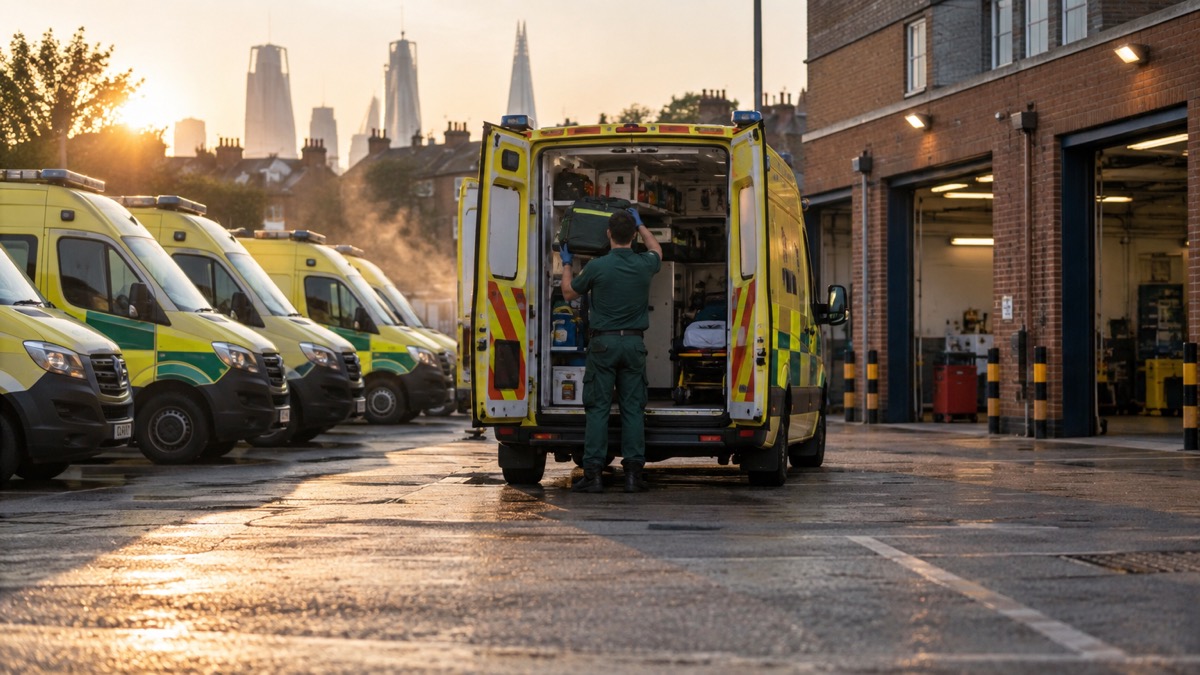
London Ambulance Service answered the highest number of 999 calls in its history on Friday 26 June, as the capital continued to endure extreme heat, the trust said in a statement published the following day1. Call handlers took 8,869 emergency calls during the day, and between 6pm and midnight they answered more than 500 calls an hour1.
The Service also responded to 688 Category 1 emergencies, another record for a single day; these are the most seriously ill patients, including people in cardiac arrest or who had stopped breathing1. As demand continued to rise, the Service declared a critical incident between 10pm and 1.30am, which has since been stood down1. It said demand was higher than during May's heatwave and the peak of the Covid-19 pandemic, despite bringing in more than 400 additional ambulance crews and increasing staffing across its 999 and 111 control rooms1.
Later figures put the week from 22 to 28 June at 53,342 calls to 999, with a record 4,181 Category 1 incidents2. An earlier statement said the June heatwave brought more than 53,000 emergency calls, surpassing demand seen during the peak of the Covid-19 pandemic, and that 600 additional ambulance crews were deployed across London3. The two accounts of additional crews differ: 400 in the statement of 27 June1, 600 in the statement of 13 July3.
Call handler Marcus Donnelly worked on the busiest day in the history of London Ambulance Service on 26 June3. He said:
"Calls were relentless, back-to-back. A lot of it was down to heat exhaustion. People with underlying health conditions were really struggling."
Call handler Asha Patel said she took 90 calls on the Friday and 93 on the Saturday, adding: "I have never gone above 60 calls on a 12-hour shift"3. Paramedic Mary Byrne said the Service was seeing an increase in patients experiencing dizziness, vomiting and lethargy3.
New analysis from the Met Office, Imperial College London and the London School of Hygiene & Tropical Medicine estimates that around 2,700 excess deaths occurred across England and Wales during the May and June heatwaves3.
Why it matters for households
The Service said the heat brought a rise in patients with dizziness, vomiting and lethargy, and that people with underlying health conditions were struggling3. It advised people to drink plenty of fluids, avoid the sun between 11am and 3pm, keep their homes as cool as possible and avoid excessive alcohol consumption, and encouraged people to check on neighbours, relatives and friends who may be more vulnerable to the effects of the heat3. Deputy Chief Paramedic Alison Blakely urged Londoners to stay hydrated and avoid strenuous activity such as running during the hottest parts of the day, as it puts extra strain on the heart and lungs3.
On when to seek help, the Service said people should only call 999 in a life-threatening emergency, and that anyone needing urgent medical advice should use NHS 111 or contact their GP3. It said that if someone is experiencing difficulty in breathing, confusion or a reduced level of consciousness, please call 999, and that anyone struggling in the heat can call NHS 111 to discuss their symptoms3. The site's guide on when to call 999 or NHS 111 for heat illness sets out these thresholds, and the heatwaves and drought hub covers wider household preparation for hot weather.
The Service also linked demand to the World Cup: 999 calls increased by 40 per cent following England's quarter-final victory over Norway, with a rise in incidents involving assaults, falls, bleeding injuries and unconscious patients2. Ms Blakely said alcohol, football tension and warm weather do not mix well, and that every ambulance sent to an avoidable injury or alcohol-related call is one that is not available for someone having a cardiac arrest, stroke or other life-threatening emergency2.
What happens next
No further dates have been announced. The Service said the critical incident declared on the night of 26 June has been stood down, and that it remained very busy1.
Sources (3)
- London Ambulance Service records busiest day in its history as extreme heat pushes 999 demand to record levels - London Ambulance Service NHS Trust, londonambulance.nhs.uk
- London Ambulance Service urges fans to stay safe ahead of England semi-final after 40% surge in 999 demand - London Ambulance Service NHS Trust, londonambulance.nhs.uk
- London Ambulance Service urges Londoners to keep safe as research reveals deadly impact of extreme heat - London Ambulance Service NHS Trust, londonambulance.nhs.uk
 Calling 999 for Heat Illness





