
Pramac is an Italian generator maker, based in Siena, whose portable sets are sold in the UK for job sites and construction work. For a household, that matters in one specific way: a Pramac set is a serious piece of outdoor, fuel-driven equipment, not a plug-in gadget. It can keep a freezer, a phone charger or a small tool running through a power cut, but only if you run it outdoors, well away from the house, and only if you have planned how to store and fuel it before the night you need it.
The safety rules are not optional. Official guidance is that generators must only be operated outdoors, at least 6 metres (20 feet) away from windows, doors and vents, and that partly open spaces, garages and sheds are unsuitable1. The Health and Safety Executive for Northern Ireland is blunt: do not use a generator indoors or in partially enclosed spaces, including homes, garages and crawl spaces, even those areas with partial ventilation2. A generator gives off poisonous fumes that can kill3.
If you are thinking about one, start with the Backup Power at Home guide to work out whether a generator is the right answer for your household at all, then come back to this page for what Pramac makes, how to run it safely and how to keep it ready between emergencies.
Who Pramac is and what it makes
Pramac's professional range is described by the maker as professional portable generators designed to withstand the rigours and intensity of job site applications and construction sites, and the category lists 24 models6. That is the frame to hold in your head: these are working sets, built for trades, and a household buying one is borrowing a tool designed for a different job.
The maker's own buying guidance says different types of fuel are used with its portable generators, petrol and diesel, and that choosing the right one comes down mainly to three points: usage, tension and power7. In plain terms, that means what you want to run, what voltage it needs, and how much power it draws at start-up as well as while running. The range also offers different soundproofing levels according to the model, which matters in a residential street7.
Pramac states that it ensures its products are compliant with emissions and noise regulations as applicable7. For a household, that is the difference between a set you can reasonably keep and run occasionally and one that will draw complaints from neighbours.
It is worth being clear about what a generator is for. Your electricity network operator explains that critical sites such as hospitals may have their own standby generators that start automatically if the public power supply fails8. A household set is not that. It is a manual, outdoor, fuelled appliance that you start yourself, plug appliances into directly, and refuel as it runs. That shapes everything below.
Pramac kit for UK households
Pramac's range divides into two broad uses that matter for preparedness: portable petrol sets you wheel out when the power goes, and standby sets that start automatically. The table sets out what each does for a household and who it suits.
| Kit type | What it does in an emergency | Who it suits | What to plan for |
|---|---|---|---|
| Portable petrol generator | A plug-in appliance with a UK domestic socket, used outdoors | Households wanting occasional backup for a freezer, lighting or small tools | Outdoor siting, fuel storage, manual starting and refuelling1 |
| Standby generator | A fixed unit in a sound attenuated aluminium enclosure | Households with a fixed installation and a qualified electrician involved | Professional installation; not a plug-in appliance3 |
The maker's portable range runs on petrol or diesel depending on the model7. For most households the practical questions are how long a tank lasts, how loud the set is and what outlets it offers, and those vary by model. The maker's guidance is to choose on usage, tension and power rather than on any single headline number7.
If you are still deciding whether a generator belongs in your plan at all, the Backup Power at Home guide sets out the alternatives, and Power Cuts: A Household Guide covers what to do in the first hours of an outage before any backup is running.
Portable petrol generators
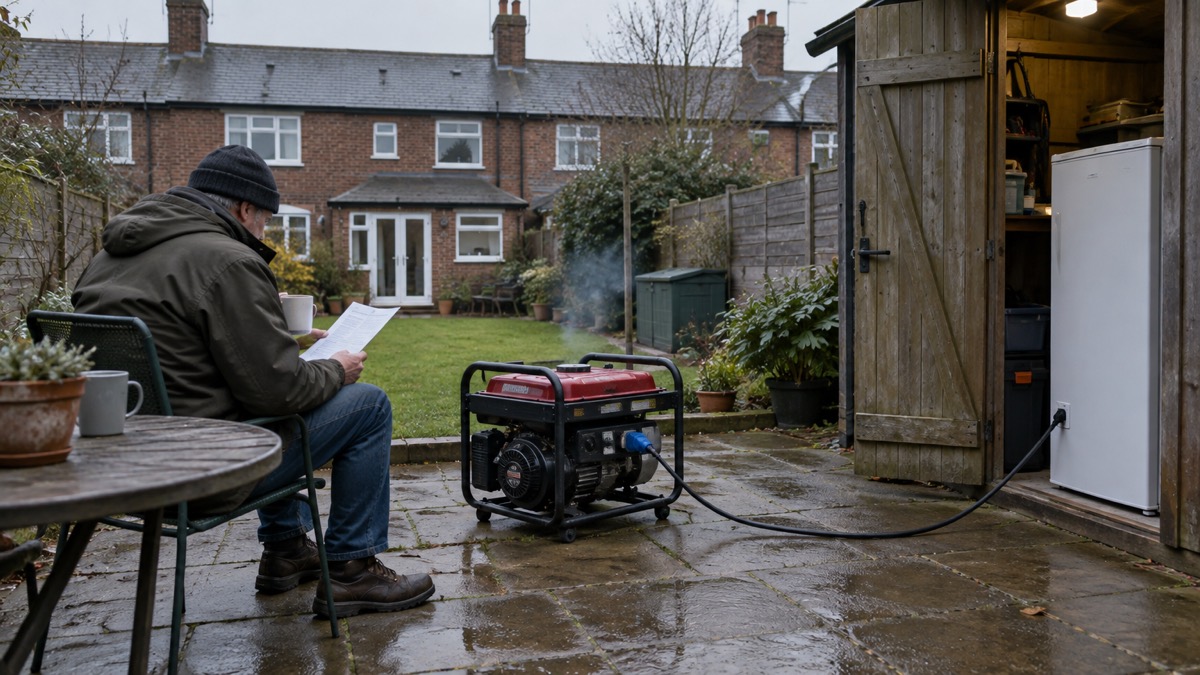
Portable petrol sets are the part of the Pramac range a UK household is most likely to consider. The maker's buying guide is the place to start: it says to focus mainly on usage, tension and power7. Usage means what you actually want to keep running, tension means the voltage your appliances need, and power means the load, including the surge when a motor or compressor starts.
The maker's portable petrol generator range, sold under the Briggs & Stratton name in the UK, gives a sense of the shape of these sets. The ProMax 7500EA has a starting output of 7500 watts, outlets of 2x 230V/16A and 1x 230V/32A, and a run time of 7h 5min9. The ProMax 9000EA has a starting output of 9000 watts and a run time of 6h 20min9. Those run times are the figure that decides an emergency: a set that runs for around seven hours needs refuelling more than once a day if you are running it continuously.
Pramac's own E4000 230/115V datasheet gives a different picture of a smaller set: an emergency standby power rating of 3.1 kW, with outlets of 2 x 2P+T CEE 115V 16A IP44 and 2 x 2P+T CEE 230V 16A IP4410. Note the 115V outlets: that is a site voltage, not a household one, and it tells you this set is built for tools rather than for a British three-pin plug.
What this means for a household is that you should match the set to the load before you buy, not after. Work out what you would want to run, check the voltage and the starting load, and compare that with the outlets and rating on the datasheet. If the numbers do not line up, the set is wrong for you whatever else it offers.
Standby generators for the home
A standby generator is the other model: instead of wheeling a set out and plugging in, the generator is fixed and starts itself when the mains fails. The clearest official picture of this comes from the electricity network operator, which explains that critical sites such as hospitals may have their own standby generators that start automatically if the public power supply should fail8. That is the behaviour a household standby set is trying to reproduce.
The difference for a household is that this is an installation, not an appliance. It involves fixed wiring, a changeover arrangement so the generator and the mains never meet, and an electrician. Nothing in the official guidance supports a household wiring a generator into its own circuits, and the safe assumption is that any connection to fixed wiring is a job for a qualified electrician.
Pramac's E4000 datasheet uses the term emergency standby power for its 3.1 kW rating10, which describes what the set can deliver in an emergency rather than a permanent installation. Read ratings carefully: a set described as standby power is not the same as a standby generator system.
For a household, the practical choice is usually between a portable set you run outdoors and plug into, and a professionally installed standby system. The Backup Power at Home guide covers the trade-offs, including what a household can realistically run and for how long.
Where a generator must never go
This is the section to read twice. A generator must be outside, because it will give off poisonous fumes that can kill people1. Do not use a generator indoors or in partially enclosed spaces, including homes, garages and crawl spaces, even those areas with partial ventilation2. Petrol or diesel generators and other fuel-driven equipment should never be brought indoors3.
The advice is consistent across nations and sources:
- Only operate generators outdoors, at least 6 metres (20 feet) away from windows, doors and vents; partly open spaces, garages and sheds are unsuitable1.
- Do not use a generator indoors or in partially enclosed spaces, including homes, garages and crawl spaces, even those areas with partial ventilation2.
- Never use a generator indoors, full stop11.
- Do not use any fuel-driven equipment, petrol and diesel generators or pumps, indoors12. The same advice is published in Welsh13.
- Never run a gas, petrol or diesel-powered generator, or a heater not designed for the purpose, inside a caravan, motorhome, tent or awning14.
- Petrol or diesel generators and other fuel-driven equipment should never be brought indoors15.
- After flooding, never bring petrol or diesel generators or other fuel-driven equipment indoors or into enclosed spaces; using these devices can be fatal, and outdoor equipment must not be used inside for drying, heating, cooking or power supply16.
The caravan and motorhome point catches people out on holiday and during a storm: an awning feels like outdoors, but the fire and rescue service treats it as an enclosed space for this purpose14. If you are sheltering in a vehicle or a tent, a generator is not part of the answer.
Running a generator safely in a power cut
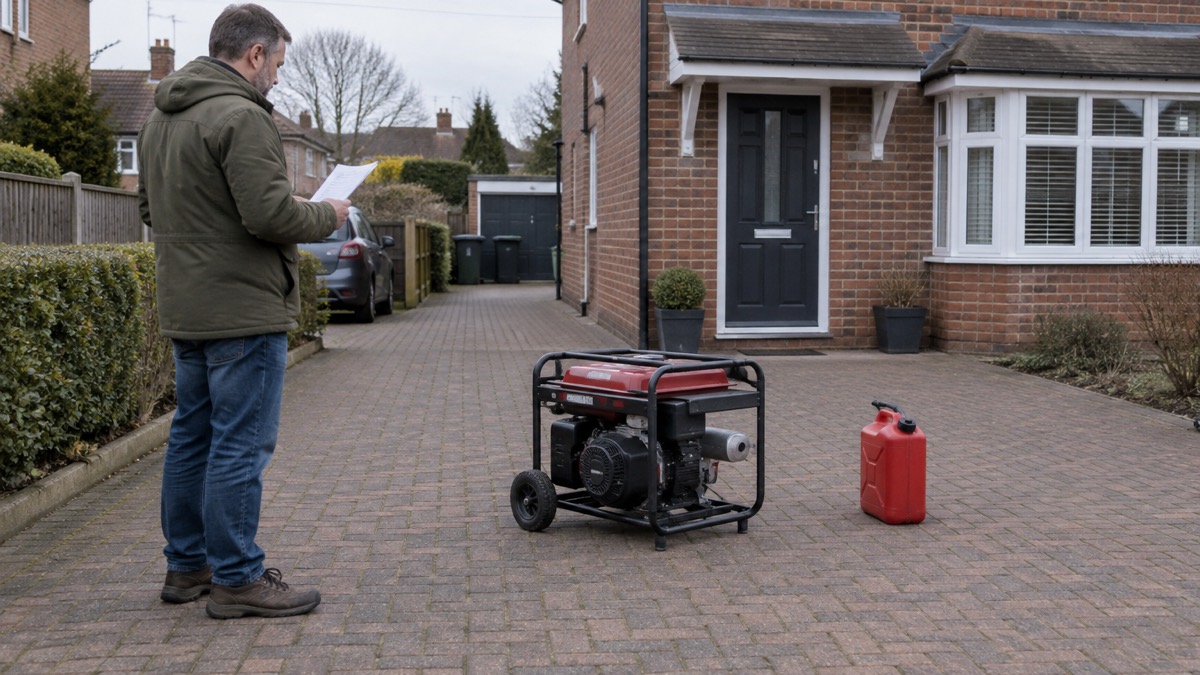
When the power goes, the order you do things in matters. Before you start the set, think about the household around it: the Met Office advises keeping important documents safe and handy during a power cut17, and in Northern Ireland official advice before strong winds includes making sure electric gates are open before a storm18, so you are not locked in or out when the power fails.
Then set up and run the generator by these steps:
- Site the set outdoors, at least 6 metres (20 feet) from windows, doors and vents, on ground where it will not tip, with no flammable materials close by1.
- Check the set is not subject to a recall before you use it5.
- Start it and plug appliances directly into its outlets, matching the voltage and load to the set's rating10.
- Refuel only when needed and let the set cool as the maker instructs; during sustained use, refuelling averages every two days4.
- Keep the set running only while you need it, and never bring it inside when you stop.
The refuelling figure is worth dwelling on. Ofgem's report on the network response to Storm Arwen records generators being refuelled when needed, on average every two days, and restarted should they trip4. That is the rhythm of a long outage: a set is not a fit-and-forget solution, it is a job you do every couple of days, in the dark, outdoors.
Storing fuel and looking after a generator between emergencies
Most of a generator's life is spent not running, and that is where households get caught out. A set that has sat in a shed for two years with old fuel in it is not backup power; it is a repair job waiting to happen.
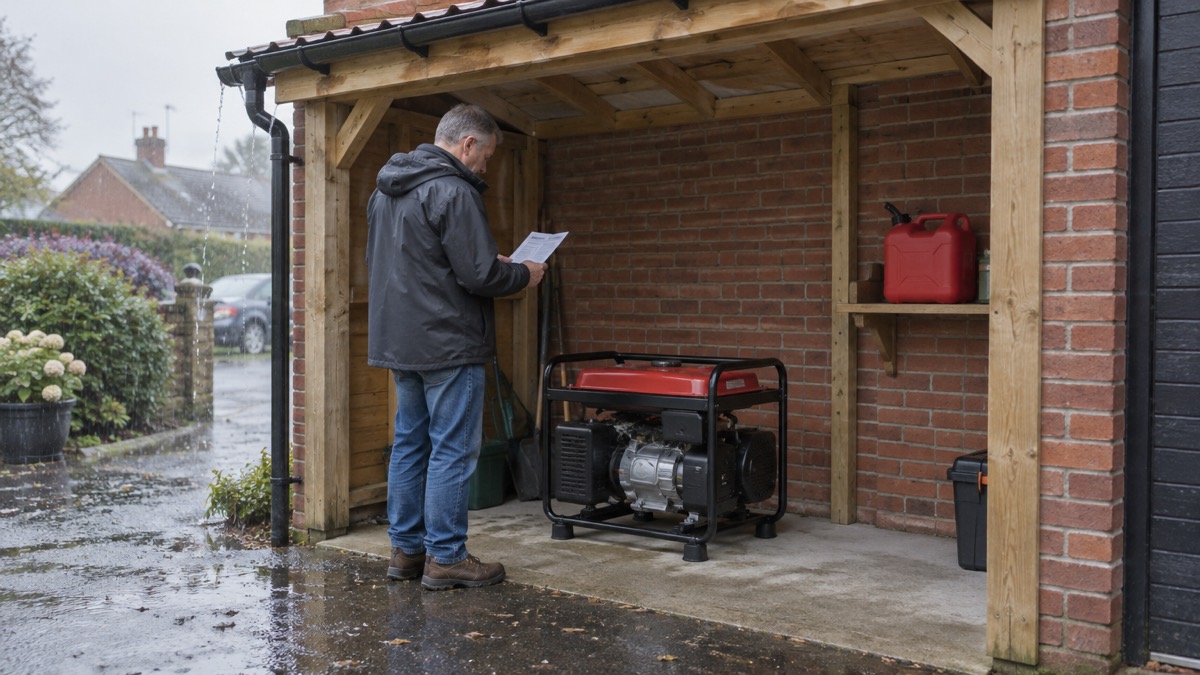
The maker's guidance is that its portable generators run on petrol or diesel depending on the model, and that the range offers different soundproofing levels according to the model7. Store fuel for the fuel type your set uses, in a suitable container, away from the house and away from any source of ignition, and never store it indoors. Keep the set itself outdoors or in a well-ventilated outbuilding, never in a space where fumes could reach living areas.
Between emergencies, work through this list:
- Check the set is not subject to a recall, and check again each time you bring it out5.
- Keep the maker's manual and the datasheet with the set, so you have the outlets, rating and run time to hand10.
- Note the run time for your model, so you know how often you will need to refuel: the ProMax 7500EA runs for 7h 5min and the ProMax 9000EA for 6h 20min9.
- Keep the fuel you need for at least a couple of days of running, given refuelling averages every two days4.
- Keep the set and its fuel out of any space that could flood, and never bring it indoors after a flood16.
The flood point deserves its own line. Official advice after flooding is explicit that petrol or diesel generators and other fuel-driven equipment should never be brought indoors or into enclosed spaces, and that using these devices can be fatal16. If floodwater is coming, move the set and fuel to higher ground outdoors, not into the house.
Support, servicing and warranty in the UK
Pramac states that it provides after sales service all over the world through dedicated service points7. For a UK household, that means the route to servicing and parts runs through the maker's service network, and the first step is to have your details ready.
When you register an appliance or ask for support, you will typically need the model name or number, the serial number and the purchase date19. Note all three down when the set arrives and keep them with your household documents, alongside the manual and datasheet.
Registering matters beyond warranty administration. Fire and rescue services advise registering electrical items with the manufacturer so you are informed of any safety recalls20, and registering white goods means manufacturers can contact you about faults or recalls22. The same logic applies to a generator: if the maker knows where the set is, they can tell you if something is wrong with it.
Be careful who you deal with. Official guidance on websites imitating government services says to search on GOV.UK to find official government services and phone numbers23. Treat unsolicited emails or messages offering servicing, parts or warranty work with suspicion, and verify contact details before you send anything.
Safety notices and recalls
The Office for Product Safety and Standards issues recalls and alert notices on its website5, and fire and rescue services point households there to check appliances24. Electrical Safety First also lists recalls and safety notices22. Manufacturers issue product recall notices if an electrical appliance could develop a fault, including a risk of electric shock or fire19.
For a generator, check three times: before you buy, especially secondhand; when you bring it out at the start of an emergency; and once a year as part of your household's routine checks. If your model is not listed as recalled it should be safe to use, but if you have concerns about its safety, contact the retailer or manufacturer19.
Recalls are not hypothetical. In May 2025 the Office for Product Safety and Standards issued an urgent safety warning affecting heat pump tumble dryers from eight brands: Baumatic, Candy, Caple, Haier, Hoover, Iberna, Lamona and Montpellier24. That is the kind of notice a registered owner gets told about directly, and the reason registration is worth the five minutes.
Carbon monoxide alarms are part of this picture too. A product safety report from 2022 covers an unbranded carbon monoxide alarm for domestic use with an LCD ppm display, powered by 3x1.5V AA batteries, notified by Local Authority Trading Standards and originating in China25. The lesson for a household is to buy alarms from a known source and check them against the recall lists, because an alarm that does not work is worse than none: it gives false confidence.
Sources (25)
- Safe use of heaters and generators, Armagh City, Banbridge and Craigavon Borough Council, 2026
- Safety tips for using a portable generator in an emergency, Health and Safety Executive for Northern Ireland, 2025
- Prepare your property for flooding, GOV.UK, 2009
- Interim report on the review into the networks' response to Storm Arwen, Ofgem, 2022
- Electrical items, London Fire Brigade, 2026
- Professional generators category, Pramac Generators, 2026
- Pramac buyers guide, Pramac Generators, 2023
- Why do you use generators?, UK Power Networks, 2026
- Portable petrol generators, Briggs & Stratton, 2026
- Pramac E4000 230/115V 50Hz datasheet, Pramac Generators, 2023
- Carbon monoxide, Public Health Wales, 2026
- Carbon monoxide safety, Mid and West Wales Fire and Rescue Service, 2026
- Diogelwch carbon monocsid, Mid and West Wales Fire and Rescue Service, 2026
- Caravan, motor home and campervan safety, Humberside Fire and Rescue Service, 2026
- Flooding advice, Scottish Borders Council, 2026
- How to recover from flooding, GOV.UK, 2023
- What to do in a power cut, Met Office, 2026
- Strong winds weather warning information and advice, nidirect, 2026
- Electrical safety at home, Scottish Fire and Rescue Service, 2025
- Maintain appliances and recalls, Greater Manchester Fire and Rescue Service, 2026
- Electrical fire safety, Greater Manchester Fire and Rescue Service, 2026
- White goods, Cheshire Fire and Rescue Service, 2026
- Report suspicious emails, websites and phishing, GOV.UK, 2026
- Maintain appliances and recalls, Greater Manchester Fire and Rescue Service, 2026
- Product safety report: carbon monoxide alarm 2112-0591, GOV.UK, 2022
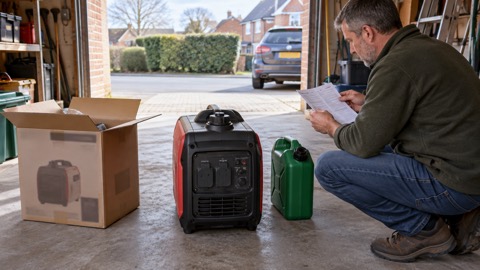 Pramac P3500i