A key safe is a lockable box fixed to an outside wall that holds a key, with a code set by you so that anyone you have shared the code with can get in1. Keyguard is a maker of key safes for UK homes, and its Keyguard Digital XL is named in NHS guidance as an example of a key safe that is police approved and meets the British Loss Prevention Standard LPS 1175, tested to the same standard as domestic door locks2.
For a household getting ready for an emergency, that matters at the point where access is the problem. If someone falls at home, NHS Inform advises making sure a family member or neighbour has a spare key so people can get to you quickly, or leaving a spare key in a police-approved key safe that anyone you have shared the code with can open3. Ambulance guidance in Wales goes further: make sure someone trusted has a key or you have a key safe outside, and make sure emergency services are aware of the code4.
So the short answer is that a key safe is a small, fixed piece of household kit that solves one specific failure: the door that cannot be opened from the inside, or the key that is not where the person who needs it can reach it. It does not replace an emergency plan, a grab bag or a smoke alarm. It sits alongside them, and it only works if the code is known to the right people before the day it is needed.
What to do
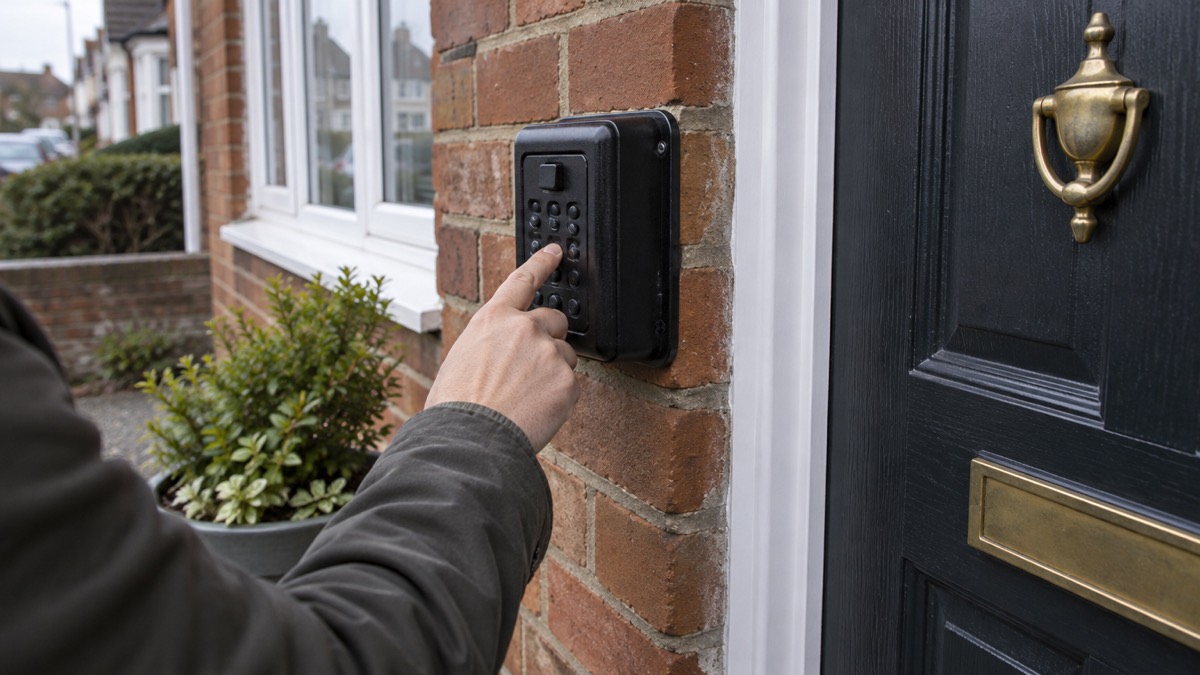
Start with the access question, because everything else about a key safe follows from it. Who might need to get into your home when you cannot open the door yourself, and how would they do it today? If the honest answer is "nobody could", a key safe is one of the simplest fixes available to an ordinary household.
NHS Inform's advice on what to do if you fall puts it plainly: ensure a family member or neighbour has a spare key so people can get to you quickly, or leave a spare key in a police-approved key safe, a secure box with a combination lock kept outside your home that anyone you have shared the code with can access3. That is the whole case in one sentence. The key safe is the version of the spare key that does not depend on a neighbour being in, or on a hidden key staying hidden.
Then decide who holds the code. Ambulance guidance in Wales advises making sure someone trusted has a key or you have a key safe outside, and making sure emergency services are aware of the code4. In practice that means telling your named contacts where the safe is and what the code is, and keeping that information current if you change it.
The rest of the household plan should still stand on its own. A key safe helps someone reach you; it does not tell them what you need when they get in. Keep the two together: the code with your emergency contacts, and your medication, contacts and plan where a helper can find them. Our guide to extra help in an emergency covers the wider arrangements for older, disabled and medically dependent households, and home emergencies covers what to do when something goes wrong inside the house.
What you need
The kit itself is small: a lockable box, a fixing, and a code. What decides whether it does its job is the standard it meets and where it is fitted.
NHS guidance for keeping safe and warm at home advises buying a key safe that is police approved and meets the British Loss Prevention Standard LPS 1175, tested to the same standard as domestic door locks, and names the C500, P500 and Keyguard Digital XL as examples2. Police guidance in Scotland, on doorstep crime, says to consider getting a key safe that meets the Sold Secure gold standard, and to keep it out of sight5. Both point the same way: an approved model, fitted where it cannot be seen from the street.
| What to check | What the guidance says | Who says it |
|---|---|---|
| Approval | Police approved and meeting British Loss Prevention Standard LPS 1175, tested to the same standard as domestic door locks2 | NHS guidance |
| Examples named | C500, P500, Keyguard Digital XL2 | NHS guidance |
| Security standard | Sold Secure gold standard5 | Police Scotland |
| Position | Keep it out of sight5 | Police Scotland |
| What it holds | A key, with a code set to it, so anyone you have shared the code with can get in1 | NHS guidance |
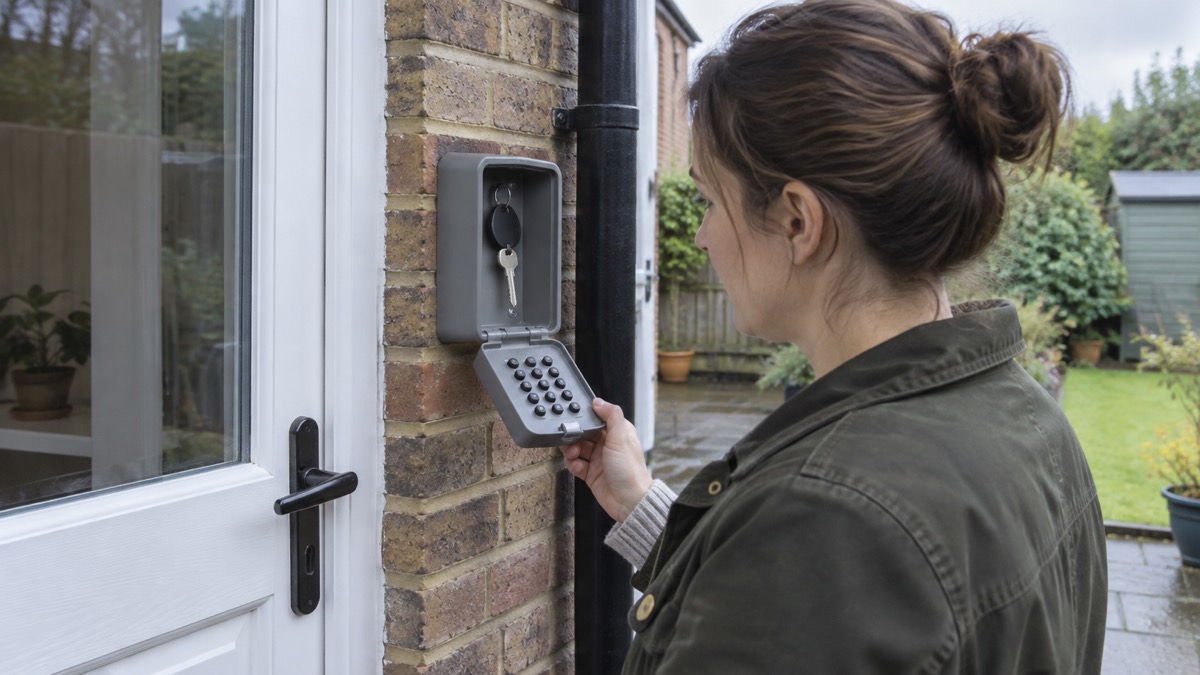
The Keyguard Digital XL is the model with its own page on this site: the Keyguard Digital XL Key Safe sets out what it is and how to use it. For the wider question of locks, doors and keeping a home secure through a disruption, our home security guide covers the ground a key safe sits within.
Two practical points decide whether the fitting works. First, the safe has to be reachable by the person who needs it, which usually means at a height and in a place that suits a carer or a neighbour, not tucked somewhere only you can get to. Second, the code has to be memorable without being guessable. The National Cyber Security Centre's advice on passwords uses three random words as a way to make something both strong and easy to remember, and the same principle applies to a code you may have to give over the phone in a hurry6. Its wider guidance on staying secure online recommends a password manager to help create and remember passwords7.
Staying safe
A key safe is a security product, so the safety advice around it is about who knows the code and where the box is fitted. Police Scotland's doorstep crime guidance is the clearest single source: ignore the door if you are not sure who it is, lock your doors and keep them locked, use a door viewer, window or camera to check who is there, and use a door chain or bar8. A key safe does not change any of that. It gives access to people you have chosen; it does not make an unannounced caller trustworthy.
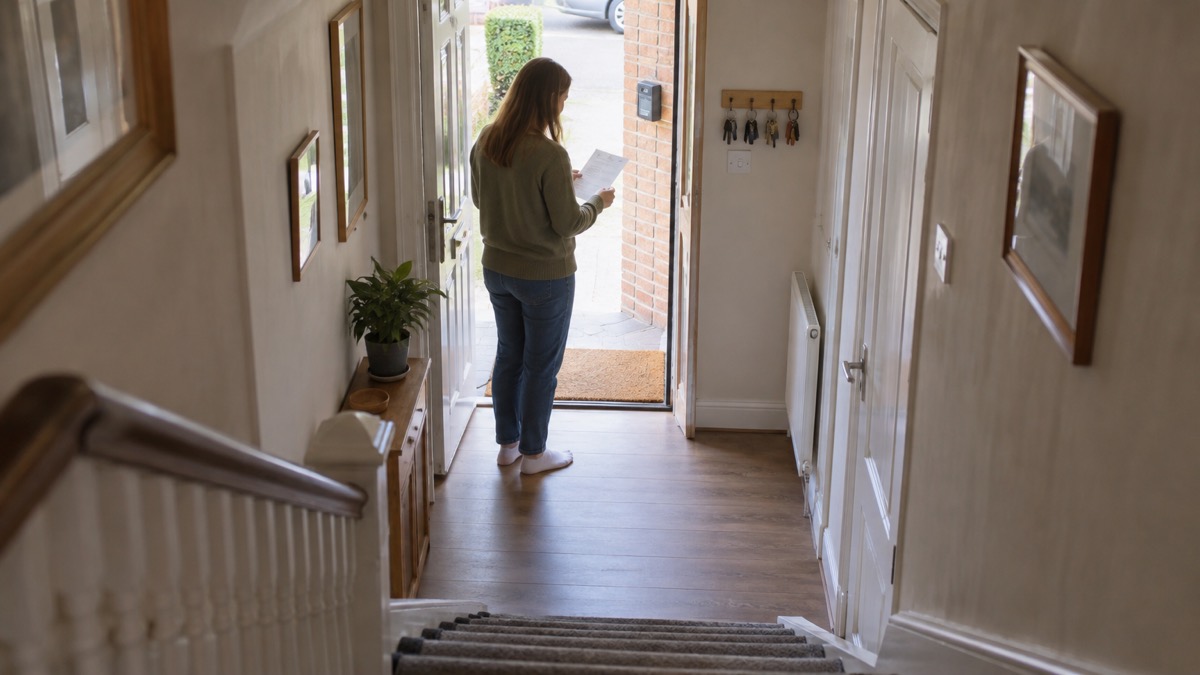
Fire and rescue services add a second layer, about keys inside the home. Guidance for residents in flats operating a stay safe policy advises keeping doors and window keys accessible, avoiding keeping them in the kitchen because this is where most fires in the home start, and keeping hallways and doorways free from clutter, including communal areas, reporting discarded rubbish to your landlord or management agency9. The same principle appears in fire safety advice for parents and child carers: keep door and window keys where everyone can find them10. Northern Ireland Fire and Rescue Service, issuing a safety plea after two house fire fatalities in one day, advised households to keep escape routes clear and keys close by to windows and doors to ensure quick access in an emergency11.
Scotland's fire service adds a night-time routine: make sure the main door keys are to hand12. That is the inside-the-door counterpart to the key safe outside it, and the two should be set up together so that neither depends on the other failing.
There is a further point for anyone whose key safe is part of a wider arrangement, such as a business premises or a building with a linked fire alarm. Guidance for businesses that have closed advises planning routine inspections and making sure keyholders are nominated and their details are up to date, particularly important where a fire alarm is linked to an Alarm Receiving Centre13. For a household, the equivalent is keeping the list of code holders current.
Where Scotland, Wales and Northern Ireland differ
A key safe is a product, so the same model works the same way across the UK. What differs is the advice and the law around it, and some of that is devolved.
Fire safety guidance is published separately by each nation's fire and rescue service, and the wording differs. England's services, such as Greater Manchester Fire and Rescue Service, publish flat safety and landlord responsibilities guidance9. Scotland's service publishes its own guide to fire safety12. Northern Ireland Fire and Rescue Service issues its own safety pleas and advice11. Read the guidance for where you live alongside the product instructions.
Other household arrangements that touch on emergency planning are devolved too. Building regulations for storing oil at home differ in Wales, Scotland and Northern Ireland14. Private water supplies in Scotland are governed by legislation that differs by type of supply15. Weather-Health Alerts cover England only, because this is a devolved responsibility in Scotland, Wales and Northern Ireland16. Travel information is published separately: Traffic Scotland has equivalents for England, Wales and Northern Ireland through their own websites17.
Power arrangements differ as well. The official report into the 9 August 2019 power disruption sets out the Low Frequency Demand Disconnection scheme, under which total demand disconnection is 60% in England and Wales, 40% in Southern Scotland and 40% in Northern Scotland19. The same report gives the demand disconnected at Stage 6 as 7.5% in England and Wales, 10% in Southern Scotland and 10% in Northern Scotland19. None of this changes how a key safe works, but it is the kind of difference that matters when a household is planning for a power cut, and our guide to power cuts covers the household side.
For a household putting a plan together, the practical answer is the same in all four nations: fit an approved key safe out of sight, keep the code with the people who need it, keep keys and escape routes clear inside, and check the fire safety guidance published for where you live.
Sources (19)
- Equipment, Devon and Somerset Fire and Rescue Service, 2026
- Keeping safe and warm at home, NHS Devon, 2023-11
- What to do if you fall, NHS Inform, 2026-04-30
- Some of the reasons people call 999, Welsh Ambulance Service, 2026-10-29
- Break-in and housebreaking - Police Scotland, Police Scotland
- Three random words, National Cyber Security Centre, 2021-12-21
- Top tips for staying secure online, National Cyber Security Centre, 2021-12-21
- Rogue traders and doorstep crime, Police Scotland, 2026-11-02
- Fire safety information for residents living in flats operating a stay safe policy, Greater Manchester Fire and Rescue Service, 2026-10-29
- Fire safety for parents and child carers, Dorset and Wiltshire Fire and Rescue Service, 2021-01-04
- NIFRS issues safety plea following two house fire fatalities in one day, Northern Ireland Fire and Rescue Service, 2025-12-12
- Your guide to fire safety, Scottish Fire and Rescue Service, 2023-11-03
- Coronavirus update January 2021, North Yorkshire Fire and Rescue Service, 2021-01-07
- Storing oil at your home, GOV.UK, 2026-10-29
- Private water supplies, Drinking Water Quality Regulator for Scotland, 2026-10-28
- What is the difference between weather health alerts and severe weather warnings?, UK Health Security Agency, 2026-01-08
- Drive safely in winter weather, Met Office, 2026-10-28
- Drive safely in winter weather, Met Office, 2026-10-26
- GB power disruption 9 August 2019: final report, Department for Business, Energy and Industrial Strategy, 2020-01
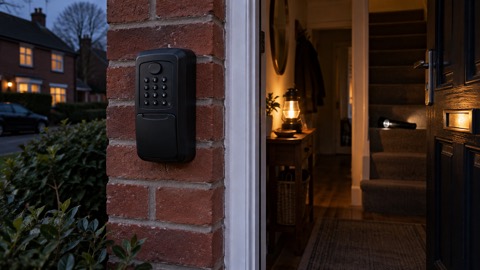 Keyguard Digital XL Key Safe