
igloohome makes smart locks that replace or sit over the lock you already have: a Retrofit Lock that attaches to the inside of a door, a Padlock for gates, sheds and stores, and a Keypad accessory that adds PIN code entry. For a household preparing for emergencies, the question is not whether the lock is clever but whether it still lets you in when the power is off, the broadband is down or your phone is flat. The maker's answer is reassuring: the Retrofit Lock needs no Wi-Fi connection to work, and PIN codes and Bluetooth keys open the door at the lock itself1.
The practical points are these. The Retrofit Lock runs on 4 AA alkaline batteries and the Padlock on a CR2 lithium battery, with a 9V alkaline battery able to give the Padlock emergency power1. Both give an audio and visual alert when the batteries run low, so you can change them before they fail1. The Retrofit Lock is designed for wooden doors and fits inward-swinging doors, left or right, and it retrofits over existing keys or thumbturns without changing your lock set1.
What follows sets out each piece of kit by what it does for a household getting ready for, or getting through, a power cut, storm, flood or outbreak, then covers batteries, offline access, codes and spare keys, access for family and carers, and support and warranty.
Smart deadbolts and door locks
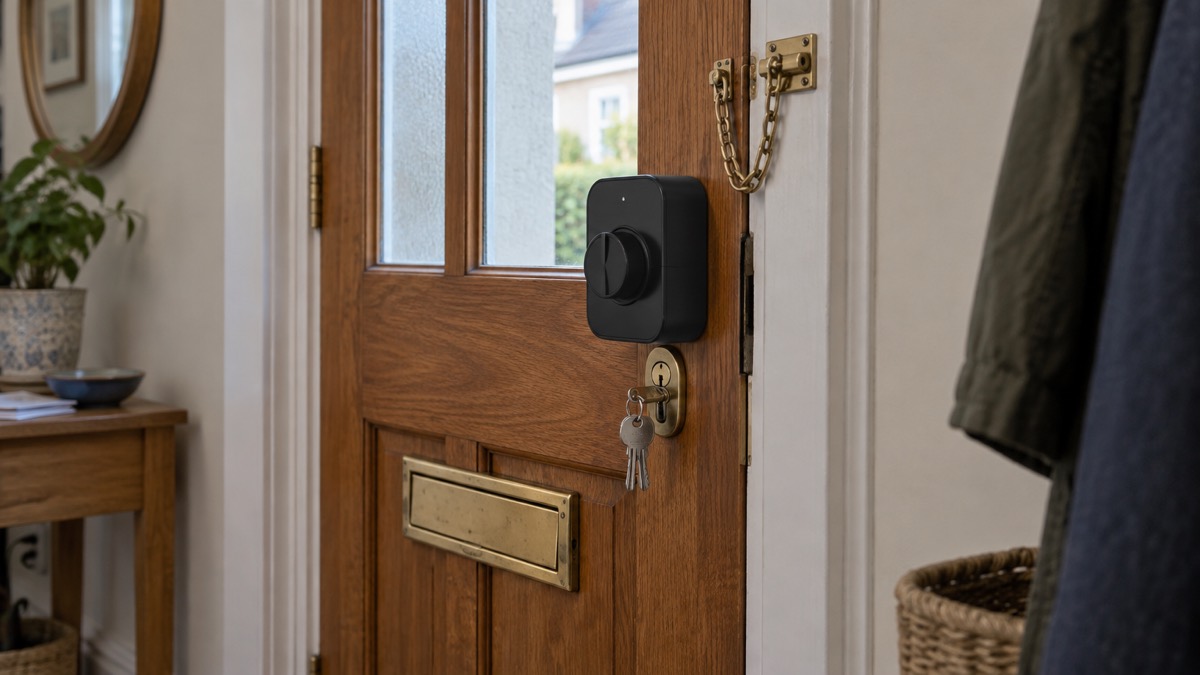
The Retrofit Lock is the maker's answer to the problem most households face: a front door with a lock already in it, and no wish to change the lock set. It attaches to the lock on the inside of the door, with no heavy drilling involved, and needs no modification on the outside1. It is designed for wooden doors and fits inward-swinging doors, left or right, and it can be retrofitted over keys and thumbturns without adapters1. The cassette compatibility is single or double throw1.
For emergency planning, the useful part is the range of ways in and out. Entry is by Bluetooth keys, existing keys, or PIN codes through the Keypad accessory; exit is by a multi-function button, thumbturn or Bluetooth keys1. That matters when a phone is lost, flat or left at work: the existing key still works, and so does the thumbturn. The lock also has an obstruction alarm that sounds if the bolt tongue cannot be extended or retracted fully, which tells you the door has not actually locked1.
The maker's features that bear on a household plan are the automatic ones. Auto Lock locks the door the moment it closes, ensured by a magnetic sensor, and Night Mode locks the door automatically at a set time during the night1. Schedules can set times for the lock to unlock or lock automatically, and schedules disable Auto Lock during those set times1. Auto Unlock opens the door when you return home1. The volume is adjustable from level 0 (mute) to 5 (loudest)1. The lock uses Bluetooth and algoPIN technology1.
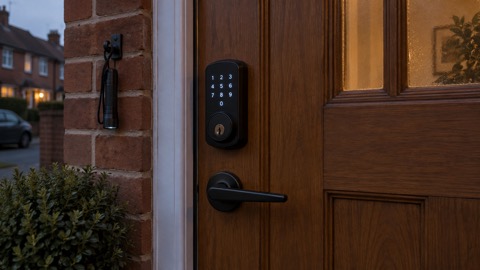
The maker also lists the Deadbolt 2S as a separate product; its own page is the place to check its specifications. For the wider question of locks, keys and keeping a home secure through an emergency, see the home security guide. Fitting window locks to accessible windows reduces the chances of being burgled, according to police advice, because it slows an intruder down3. A smart lock is one layer, not a substitute for the rest.
Smart padlocks
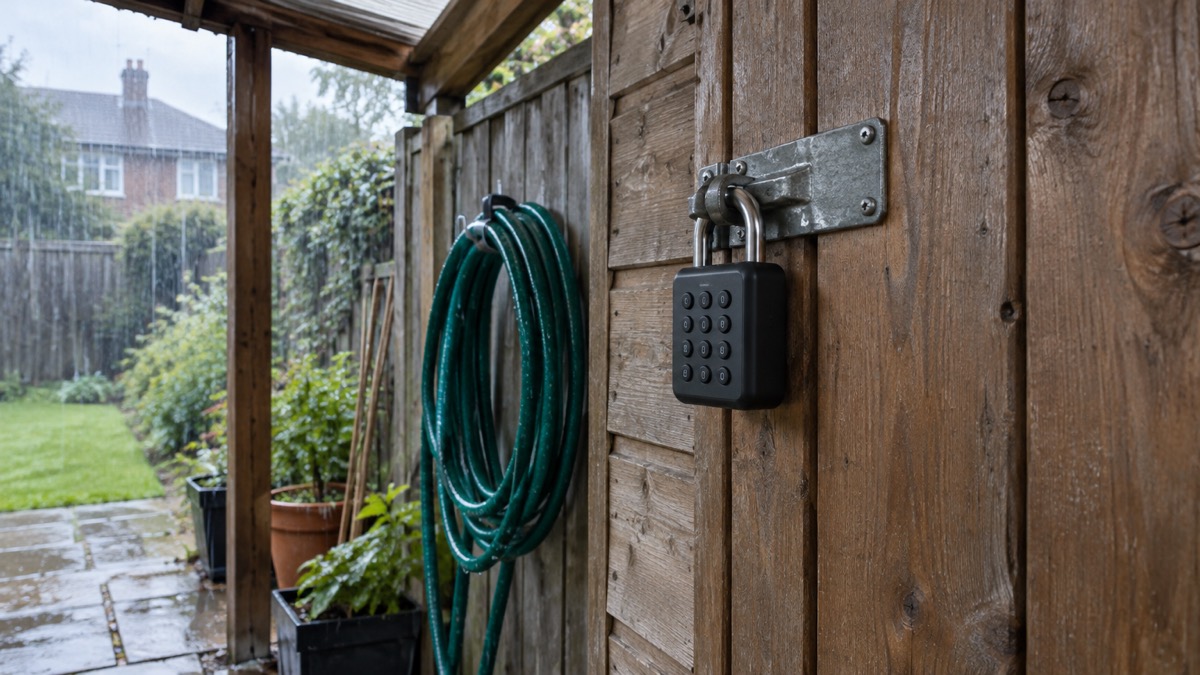
The igloohome Padlock is a smart padlock with PIN code and Bluetooth access, built with a hardened steel shackle and a body of zinc alloy and stainless steel2. It is the piece of kit for the shed, the gate, the bike store or the outside cupboard, the places where a household keeps the things it would rather not lose in a storm or a flood. The maker says it does not require the user to download an app to unlock it, so a PIN code is enough for a family member or neighbour2.
Access is by PIN code or Bluetooth key, and the maker says you can send PIN codes and Bluetooth keys from wherever you are through the mobile app2. Bluetooth key unlock logs are updated in real time remotely2. The padlock has Auto Lock, and the maker offers retained or removable shackle configurations, with an interchangeable shackle sold separately as an accessory for a more customised fit2.
The limit is weather. The maker advises installing the Padlock under sheltered areas and not exposing it to wet weather conditions2. The silicone case adds protection from weather elements, scratches and dust, but the maker says it is not recommended to be used in outdoor settings or if the device is subject to heavy rainfall2. The Padlock carries an IP66 rating, yet the maker's installation advice still points to a sheltered spot2. In a storm, that matters: Lancashire's prepared guidance is to secure outdoor items such as bins, garden furniture and trampolines so they are not blown into roads or through windows4. A padlock on a shed door is part of that same routine of checking what is outside before bad weather arrives.
Smart key boxes and PIN code access
igloohome's PIN code entry comes through the Keypad accessory, which pairs with the Retrofit Lock for easy PIN code access1. The Padlock has PIN code entry built in2. For a household, this is the practical version of the spare key under the mat: a code that can be changed, shared and withdrawn without cutting a new key.
The maker builds in some protections. On the Padlock, the keypad is disabled after several incorrect PIN code attempts to ensure your assets are always secure2. The maker also offers a decoy PIN code: you can throw off onlookers by entering decoy digits before the actual passcode2. For hosts, the Padlock can synchronise an Airbnb listing calendar with an igloohome account so PIN codes are automatically created for guests2.
The emergency planning point is that a code is only as good as the plan behind it. The government's advice for disabled people and carers is to make arrangements with someone you trust to be able to access your home in an emergency, such as giving a family member, carer or trusted neighbour a spare key5. A PIN code given to that person does the same job, provided they know it before the emergency, not during it. Write the plan down, tell the person where the code is kept, and check it still works.
Opening a lock when the phone or internet is down
This is the question that decides whether a smart lock belongs in an emergency plan. The maker states the Retrofit Lock needs no Wi-Fi connection for the lock to work, and describes it as total freedom from needing a Wi-Fi connection1. Wi-Fi is required only when using the Bridge, which takes the lock online so all activities can be viewed on demand 24/71. PIN code activity logs are updated when you sync the app and the lock in Bluetooth range, and Bluetooth unlocks are updated in real time remotely1.
So the order of events in an outage is straightforward:
- Open the door with the existing key, the thumbturn, a PIN code or a Bluetooth key, none of which depend on your broadband1.
- If you want to see activity remotely, the Bridge needs Wi-Fi, so it will not report while the broadband is down1.
- If your phone is the problem rather than the network, the existing key and thumbturn still work1.
The government's guidance on phone and broadband outages makes a related point for the rest of the household: if your landline is not working, try your mobile, and if your mobile network is down but you have a working internet connection you may still be able to make calls over Wi-Fi by enabling Wi-Fi Calling6. If you have medical or personal alarm devices that use phone or internet connections, check with the provider or manufacturer how they work if the network is down6. The same discipline applies to a smart lock: know its offline route before you need it. For the wider picture, see staying informed and in touch and the guide to power cuts.
Batteries: checking, replacing and what happens when they run flat
Both products warn you before the batteries fail. The Retrofit Lock has intuitive audio and visual alerts that prompt you to change the batteries when they run low1. The Padlock lets you know when to change batteries before they run out with an intuitive alert2. The Retrofit Lock takes 4 AA alkaline batteries; the Padlock takes a CR2 lithium battery, with a 9V alkaline battery for emergency power1.
| Product | Battery type | Low battery warning | Emergency power |
|---|---|---|---|
| Retrofit Lock | 4 AA alkaline1 | Audio and visual alerts1 | Not stated by the maker |
| Padlock | CR2 lithium2 | Intuitive alert2 | 9V alkaline battery2 |
Fire and rescue services advise regularly checking batteries for any damage or wear and tear7. They also say to check for signs of damage like swelling, leaks or strange smells and to stop using damaged batteries immediately8. If a battery shows signs of failure, turn off the device, unplug it from the power source and remove it from your home7. Batteries that are not fully charging, take a very long time to charge or are used up faster than normal can be a sign that a battery is failing7. For a lock, that means a battery that suddenly drains fast is a warning, not an inconvenience.
Keep a spare set of the right batteries in the house, and note the type on your household plan. The maker's app is free on the App Store and Google Play, and it lets you track the dates and times at which visitors enter your home1. For the wider question of what to keep ready, see the emergency kit guide.
Keeping access codes and spare keys safe
A smart lock changes where the spare key lives, but it does not change the fire safety rule about keys. Fire and rescue services are consistent: keep door and window keys in a safe but accessible place near the exit they fit, never leave keys in locks, and make sure everyone knows where they are9. Keep door and window keys where everyone can find them10. In a flat, keep door keys where everyone you live with can find them easily12. Avoid keeping keys in the kitchen, because this is where most fires in the home start13. Tell guests where the door and window keys are kept11, and tell overnight guests where the keys are kept14.
A PIN code does not replace that rule. If the door opens by code, everyone in the household still needs to know how to get out without a phone, and visitors need to be told. Practise the escape plan regularly and keep door and window keys where everyone you live with can find them, such as on hooks behind curtains or boxes on window sills15. The same logic applies to the code: write it somewhere secure, tell the people who need it, and change it when someone leaves the household or no longer needs access.
The maker's own protections help here. The Padlock disables its keypad after several incorrect PIN code attempts2, and the decoy PIN code lets you enter decoy digits before the actual passcode to throw off onlookers2. The Retrofit Lock's obstruction alarm sounds if the bolt tongue cannot be extended or retracted fully, alerting you to an obstruction1. For the wider subject, see the home security guide.
Setting up and managing access for family, carers and neighbours
The strongest emergency planning advice in this area is not about locks at all: make arrangements with someone you trust to be able to access your home in an emergency, such as giving a family member, carer or trusted neighbour a spare key5. A smart lock makes that easier to manage, because access can be given by PIN code or Bluetooth key and withdrawn without changing the lock1.
For households with care needs, the arrangements go further. Carers of home oxygen users should be given fire safety advice and supported to implement it16. When caring for an emollient user, risk information should be shared appropriately with family members and others who provide care or services to the person17. Adult social care managers are advised to identify points of higher risk of injury, such as entrances and exits, and prioritise these for clearance or gritting in ice and snow18.
Neighbours matter too. The Comhairle asks that family, neighbours and friends living nearby assist and support elderly and vulnerable people19. The Snow Code says that if your neighbour will have difficulty getting in and out of their home, offer to clear snow and ice around their property, especially if they are elderly or disabled and depend on social care services which need to reach them20. After a storm, make sure vulnerable neighbours or relatives are safe and help them arrange repairs if required4. During an outage, plan with your neighbours or community about who could assist you, for example identifying someone who could drive you to get help in an emergency6.
A smart lock fits into that plan as one way to give a trusted person access without handing over a key that can be copied. Decide who needs access, give them a code or key, write down who has it, and review it. For more, see extra help in an emergency and community resilience.
Support, warranty and safety notices
The Retrofit Lock carries a 2 year warranty and the Padlock a 1 year warranty1. The Retrofit Lock is certified CE, UKCA, FCC and RoHS2; the Padlock is certified CE, FCC and IP661. Both are designed in Singapore and made in China1. The igloohome mobile app is available on the App Store and Google Play for free1.
The maker's product pages do not list a support phone number or email address, so use the igloohome website and app for support and warranty claims, and keep your proof of purchase. Fire and rescue services advise registering products with the manufacturer for safety updates, recalls and warranties21. That is worth doing for any lock that controls access to your home.
The safety notices that matter most are the maker's own installation limits. Both the Retrofit Lock and the Padlock are advised to be installed under sheltered areas, not exposed to wet weather conditions1. The Padlock's silicone case is not recommended for outdoor settings or heavy rainfall2. The Retrofit Lock is designed for wooden doors and inward-swinging doors1. Follow those limits: a lock that takes water is a lock that fails when you need it.
"Advised to be installed under sheltered areas, not to be exposed to wet weather conditions."
For the wider context of keeping a home secure and ready, see the home security guide and getting started.
Sources (21)
- Retrofit Lock, igloohome, 2026-11-02
- Padlock, igloohome, 2026-11-02
- Window security, Avon and Somerset Police, 2026-11-02
- Storms and gales, Lancashire Prepared, 2026-10-29
- Advice for disabled persons and carers, UK Government, 2026-10-20
- Phone and broadband outages, UK Government, 2026-10-12
- Lithium batteries, Surrey County Council, 2026-10-28
- Battery safety, Greater Manchester Fire and Rescue Service, 2026-10-29
- Escape, Fire Kills, 2026-03-25
- Bedtime route and escape plan, North Yorkshire Fire and Rescue Service, 2026-03-27
- Celebrating safely, Greater Manchester Fire and Rescue Service, 2026-10-29
- Know your escape plan, Greater Manchester Fire and Rescue Service, 2026-10-29
- Fire safety information for residents living in flats operating a stay safe policy, Greater Manchester Fire and Rescue Service, 2026-10-29
- Plan your escape, Staffordshire Fire and Rescue Service, 2026-10-29
- Home fire action plan, Surrey County Council, 2026-08-24
- Additional advice for carers, Greater Manchester Fire and Rescue Service, 2026-10-29
- Caring for an emollient user, Greater Manchester Fire and Rescue Service, 2026-10-29
- Supporting vulnerable people before and during cold weather, UK Government, 2025-09-24
- Storm Boelo Amber Weather Warning | Comhairle nan Eilean Siar
- Snow code, Derbyshire County Council, 2026-10-29
- E-bikes, Cheshire Fire and Rescue Service, 2026-09-30
 Deadbolt 2S