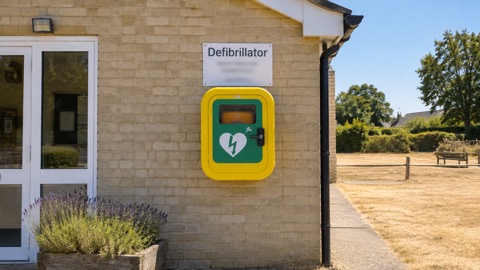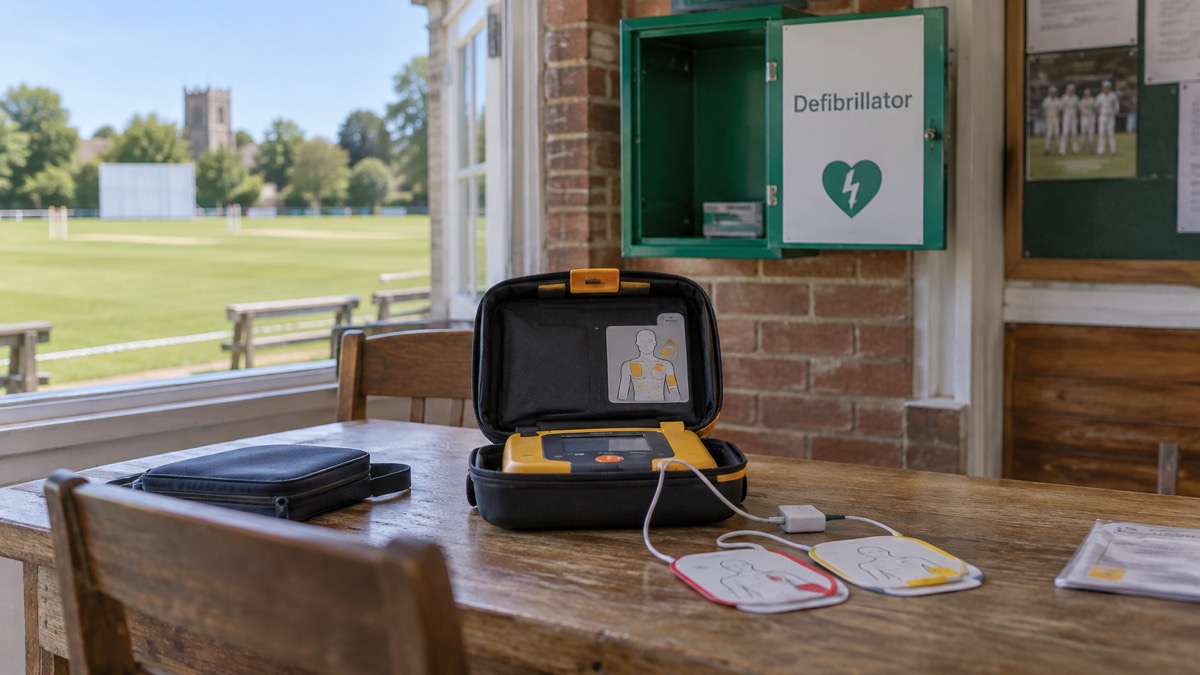
Public access defibrillators were used in just one in ten out of hospital cardiac arrests where the devices were available, according to research presented at the British Cardiovascular Society Conference in Manchester and published by the British Heart Foundation (BHF) on 6 June 20231. The study drew on data from the East of England Ambulance Service and The Circuit, the national defibrillator network developed by the BHF, which maps defibrillator locations across the UK so that emergency services can direct bystanders to the nearest device in the event of a cardiac arrest1.
Researchers from the Essex Cardiothoracic Centre, part of Mid and South Essex NHS Foundation Trust, and Anglia Ruskin University analysed defibrillator density, the number of cardiac arrests and how often defibrillators were used from April to September 20221. In that six-month period 1649 cardiac arrests occurred in the East of England; a public access defibrillator was available within 500m in 1302 cases (79 per cent), but the device was used in only 132 of them (10 per cent)1. The study was funded by the East of England Cardiac Network1.
The research also found fewer defibrillators in more deprived areas than in the most affluent. Overlaying defibrillator density and cardiac arrest data with the 2019 index of multiple deprivation showed Luton, the most deprived area in the East of England, had the lowest rate in the region at 16 defibrillators per 100,000 people, against a mean for the East of England of 72 per 100,0001.
| Measure | Figure |
|---|---|
| Cardiac arrests in the East of England, April to September 2022 | 1649 |
| Cases with a public access defibrillator within 500m | 1302 (79 per cent) |
| Cases where the defibrillator was used | 132 (10 per cent) |
| Defibrillators per 100,000 people, Luton | 16 |
| Defibrillators per 100,000 people, East of England mean | 72 |
The BHF reports that there are more than 30,000 deaths from out of hospital cardiac arrests in the UK each year, and that fewer than one in ten people currently survive; it says prompt CPR and defibrillation can more than double someone's chances of survival1. Judy O'Sullivan, the BHF's Director of Innovation in Health Programmes, said:
"We also know there are thousands of unregistered defibrillators which means their location is not known to the ambulance services. We are calling upon everybody who owns or looks after defib to register it on The Circuit today, this could help save someone's life."
The researchers say the findings underline the need for better education and awareness around defibrillators so that they are used more frequently1. Known reasons for low use given by the BHF include not having enough bystanders available at the scene, difficulty in accessing a defibrillator when it is needed, and fear of using it1. Dr Thomas Keeble, Consultant Cardiologist at Essex CTC and Associate Professor at Anglia Ruskin University, said the low numbers suggested much more needed to be done to promote awareness and education around CPR and defibrillation, and that far fewer defibrillators in the most deprived areas should prompt further discussion about more consistent and effective placement in communities1.
Why it matters for households
The figures cover the East of England only, and the study period ran from April to September 2022; no equivalent breakdown for other UK regions is given in the announcement1. For households, the practical points concern whether a device near a cardiac arrest is known to the ambulance service and whether bystanders are willing to use it. The BHF says thousands of defibrillators are unregistered, so their location is not known to ambulance services, and asks anyone who owns or looks after a defibrillator to register it on The Circuit1. Its cited reasons for low use include difficulty accessing a device at the time it is needed and fear of using it1. Guidance on finding the nearest public access defibrillator and on what defibrillators do and how to use one sits within the site's first-aid section.
What happens next
Dr Simon Walsh, Medical Director at the East of England Ambulance Service Trust, said the trust had been working with The Circuit to maximise the number of maintained public access defibrillators on its computer aided despatch system, and that since September 2022 it had added a further 1,534 to the database1. He said the trust had also expanded its community first responder and staff responder schemes to increase the likelihood that someone can locate the nearest public access defibrillator to a patient in cardiac arrest, and that it continues to work with the Essex Cardiothoracic Centre and other partners in the East of England to improve outcomes1. No further dates for publication of the full study or for new defibrillator placements have been reported1.
 Public Access Defibrillators
 Defibrillators (AEDs)