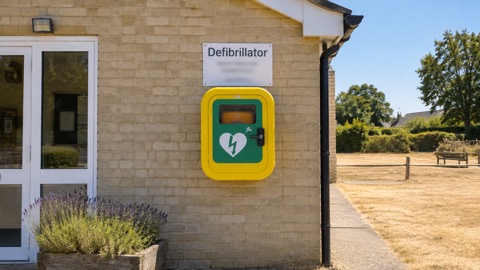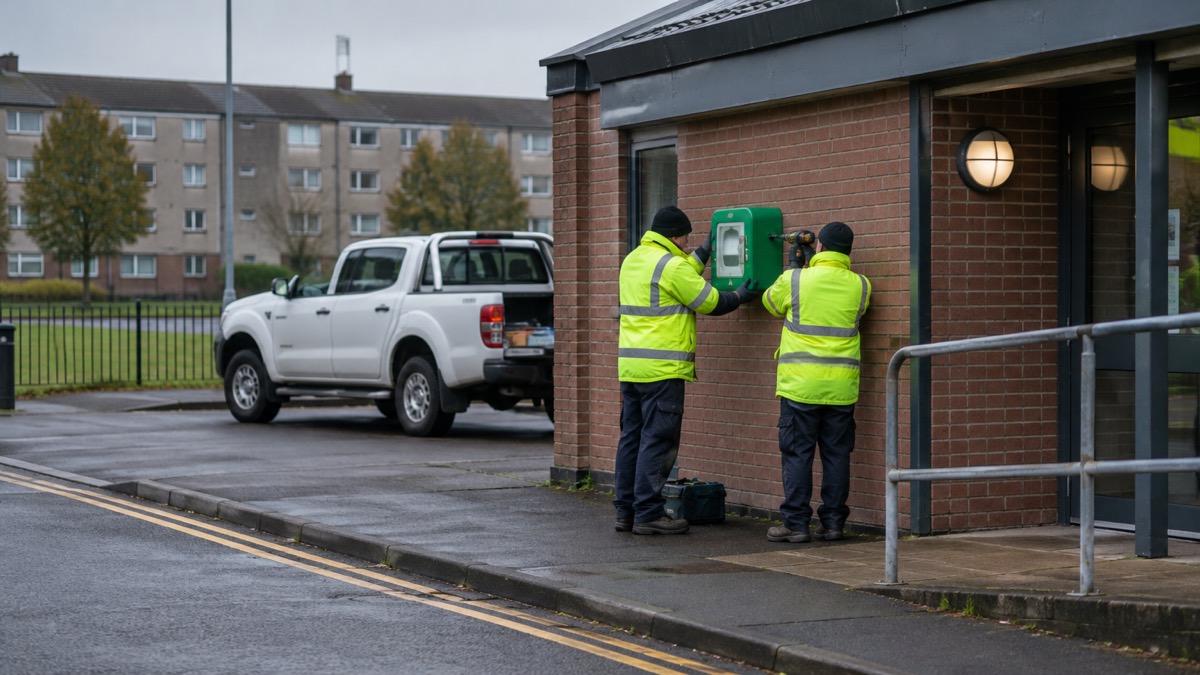
Research supported by the British Heart Foundation (BHF) has found that in the most deprived areas of England and Scotland, the nearest 24/7 accessible defibrillator is on average a round trip of over a mile, or 1.8km1. The study, described by the BHF as one of the biggest ever to look at defibrillator access, was published in the journal Heart and presented on 28 August 2023 at the European Society of Cardiology Congress in Amsterdam1.
Researchers used data from The Circuit, the national defibrillator network, to calculate the median road distance to a defibrillator with unrestricted public access across Great Britain's 1.7 million postcodes, and studied the relationship between that distance and an area's level of deprivation1. Across Great Britain, a public access defibrillator is on average 726 metres away from the centre of any given postcode along the road network1. People living in the most deprived areas of England and Scotland are on average 99 and 317 metres further away from their nearest 24/7 defibrillator than those in the least deprived areas, respectively1. In Wales, there was no link between defibrillator location and deprivation, but in England and Scotland the more deprived an area is, the further it is on average from a 24/7 accessible defibrillator1.
The BHF reports that nearly three in 10 out-of-hospital cardiac arrests happen at the weekend and four in 10 between 6pm and 6am in England, and that every minute of delay between a cardiac arrest and defibrillation reduces the chance of survival by up to 10 per cent1. There are over 30,000 out-of-hospital cardiac arrests each year in the UK, with a survival rate of less than one in ten1.
Dr Chris Wilkinson of Hull York Medical School, who led the research, said:
"Making existing defibrillators accessible to the public 24/7 would make a big difference to the average distances people need to travel in an out-of-hours emergency, and would improve equality of access which can help save lives."
The BHF says anyone can use a defibrillator without training, that the device checks the heart rhythm and will only tell you to shock if it is needed, and that you cannot shock someone accidentally1. It reminds the public to call 999 immediately if they see someone having a cardiac arrest1. The BHF and its partner organisations are encouraging anyone with a defibrillator to register it so that the device is visible to ambulance services1. The Circuit was developed by the BHF in partnership with Resuscitation Council UK, St John Ambulance and the Association of Ambulance Chief Executives, and aims to map all public access defibrillators in the UK so ambulance services can direct bystanders to the nearest one in the event of a cardiac arrest1.
St John Ambulance told the BHF that its latest research found 47 per cent of people still do not know where to find their nearest defibrillator1. In Hartlepool, the charity DS43 Community Defibrillators, set up by Pam and Bill Shurmer in memory of their son Danny, who died of a cardiac arrest in 2021 aged 43, aims wherever possible for everyone in the town to be within a 350m radius of their nearest defibrillator1.
Why it matters for households
The findings mean that in the most deprived areas of England and Scotland, someone needing a defibrillator outside normal hours faces an average round trip of more than a mile to reach one that is accessible at all times1. Because four in 10 out-of-hospital cardiac arrests in England happen between 6pm and 6am, access outside daytime hours matters1. The BHF's guidance is that bystanders should call 999 immediately and that no training is needed to use a defibrillator1. Households can check where their nearest device is using the site's guide to public access defibrillators, and the guide to defibrillators and how to use one sets out what the device does; the first aid hub lists the site's related guides.
What happens next
The BHF and its partner organisations are asking anyone with a defibrillator to register it with The Circuit immediately so that ambulance services can see it1. No further dated steps have been reported.
 Public Access Defibrillators
 Defibrillators (AEDs)