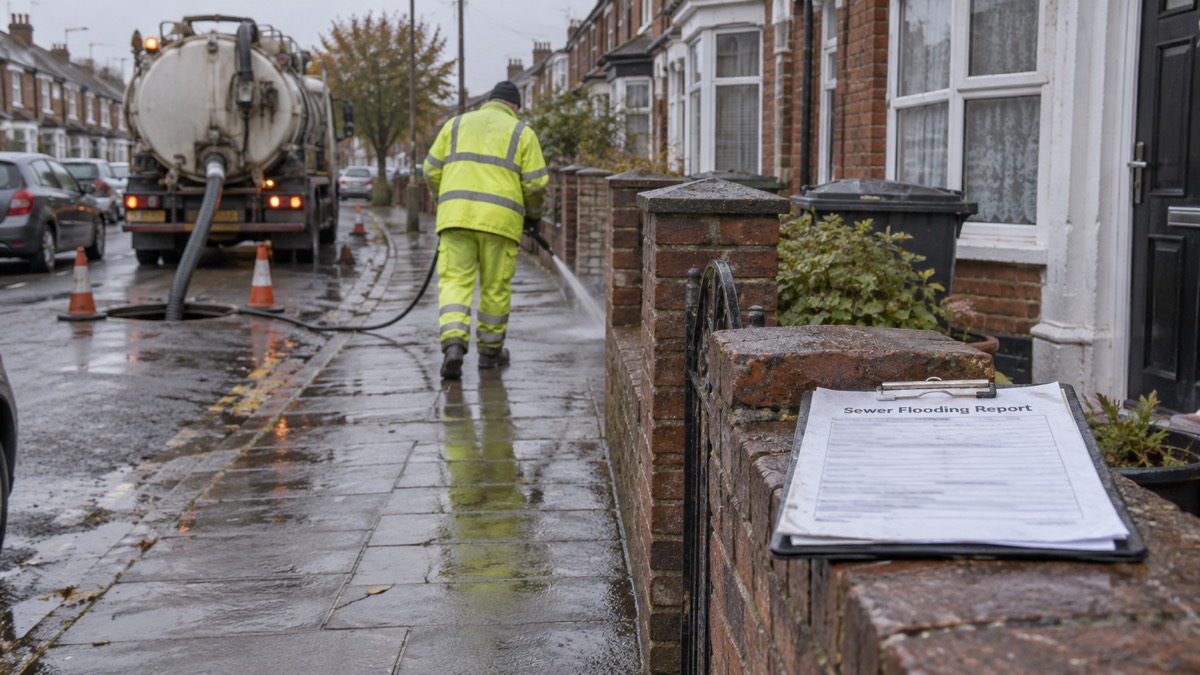
Ofwat and CCW published a joint update report in November 2024 on customers' experiences of sewer flooding in England and Wales. It is the second time the two bodies have commissioned research into the subject, following a 2022 study, and it calls on wastewater companies to do more for customers who have had multiple incidents1.
The research was carried out by Thinks Insight between 26 April and 16 August 2024, with a break in June for the General Election campaign. Sixty-one people took part, some in more than one stage: one to one interviews with 50 participants, workshops with 24 and a task activity with 11. Recruitment covered ten wastewater companies in England and Wales, and the interviews were with people who had sewer flooding between January 2023 and March 20241.
The report says there have been some improvements since 2022, with more positive comments about company communications and internal clean up services introduced. It says companies appear fairly quick at fixing problems that seem straightforward. But it finds that more positive experiences tended to be limited to those with one-off incidents and clear, easy to fix problems, while those facing the most impactful or multiple incidents were often the worst served. That group were a majority of participants1.
The report sets out the Guaranteed Standards Scheme payments that apply when effluent enters a customer's property from a sewerage company's asset1:
| Incident | Payment |
|---|
The customer must claim within three months of the incident. The report lists exceptions, including exceptional weather conditions, industrial action by the company's employees, the actions of the customer, and a defect, inadequacy or blockage in the customer's own drains or sewers1.
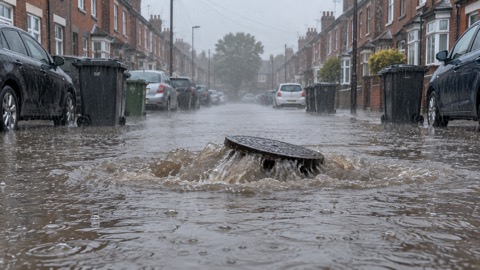
On responsibility, the report states that wastewater companies are responsible for the public sewers, while the drains and any private sewers carrying household waste are normally the householder's or landlord's responsibility. Local authorities are responsible for highways drainage on the roads they maintain, and in England the Highways Agency is responsible for drainage on trunk roads and motorways1.
Why it matters for households
The report concerns households in England and Wales that have had internal or external sewer flooding, and its findings on communication, support and payment apply to how companies deal with those customers. It says customers with repeated incidents reported emotional stress, sleepless nights, worries about health impacts from exposure to sewage, particularly for those with children, and financial consequences including being unable to sell their homes and increases in insurance premiums1. The report calls on companies to ensure communications are consistent, empathetic and transparent, to provide clean up support promptly and thoroughly, and to make Guaranteed Standards Scheme payments quickly and fully with an explanation of what the payment represents1. Households can read the site's guides to sewer flooding causes and who is responsible, Guaranteed Standards Payments for sewer flooding and who to report flooding to.
What happens next
The report says that in 2025 Ofwat will assess companies' compliance with licence condition G, which sets out principles of customer care, with respect to sewer flooding, and will update its published guidance to enforcement against sewer flooding. It also says a performance commitment on external sewer flooding has been introduced for the next period (2025-30), alongside an existing commitment on internal sewer flooding, and that companies under enhanced monitoring will be required to publish a service commitment plan outlining when and how customers will receive the service they expect1.
Sources (1)
- ofwat.gov.uk, ofwat.gov.uk
 Sewer Flooding Responsibility