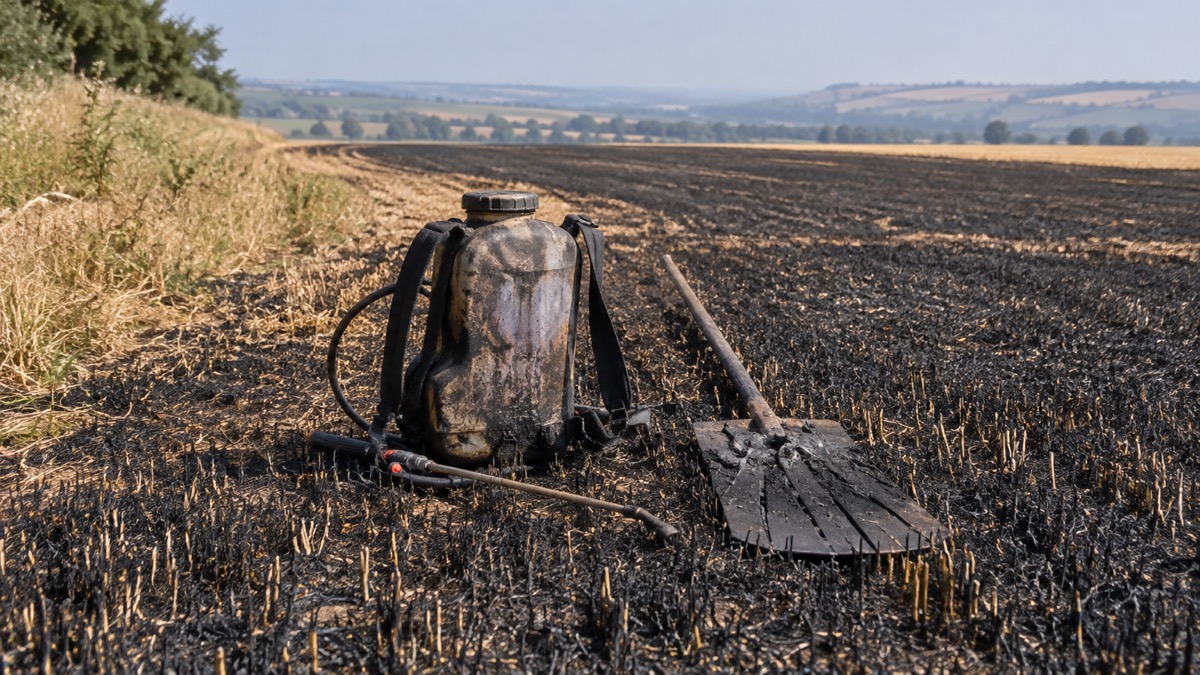
Dorset & Wiltshire Fire and Rescue Service (DWFRS) attended 277 grassland, woodland and crop fires during July 2026, the service said on 11 August 2026. That makes July its second busiest month for these types of incident in the last five years, behind only August 2022, when it dealt with 2891.
The service also said its crews had assisted with wildfires in Suffolk and Hampshire, most recently in the New Forest off the A31 in the week of the announcement. It said fires during dry spells spread quickly and can be extremely difficult to extinguish, and that they have a lasting impact on the environment and wildlife which can take decades to recover1.
The figures were published as the service warned of a fifth heatwave of the summer. Area Manager Marc House said:
"The figures are reflective of how challenging this summer has been, but we are very grateful to the vast majority of people who have followed our advice and avoided activity that could lead to a fire starting. With no sign of rain in the coming days, and another heatwave due, we all need to remain cautious to reduce the risk of fire."
| Measure | Figure |
|---|---|
| Grassland, woodland and crop fires attended by DWFRS, July 2026 | 277 |
| Same category, August 2022 (busiest in five years) | 289 |
| Rank of July 2026 in the last five years | Second busiest |
Why it matters for households
The service's warning covers behaviour outdoors and in gardens during dry, hot conditions, and applies to residents across Dorset, Wiltshire, Bournemouth, Christchurch and Poole, as well as anyone visiting heathland, countryside or coast in the region1. DWFRS advises people to avoid using barbecues, campfires or camping stoves, especially on heathland or in open spaces, and says that if they are used, coals and fire pits should be doused with water and remnants not disposed of until they are sure they are cold. It advises extinguishing smoking materials properly and not throwing cigarette ends on the ground or out of car windows, and taking litter home1.
The service also advises against having a bonfire at home during these high-risk conditions, and says that at the beach people should not set off flares, have campfires or light barbecues, as these can easily lead to gorse and foliage on cliffs catching fire. It says fireworks and sky lanterns can easily cause fires in very dry conditions and asks people not to use them1.
If a fire is seen in the countryside, the service advises getting to a safe place and calling 999 immediately to report it to the Fire & Rescue Service, using What3Words to give an accurate location and as much detail as possible. Anyone who sees suspicious fire setting behaviour in progress is asked to call 999 and ask for the Police, or to report it anonymously to Crimestoppers on 0800 5551111.
For general background on dry and hot conditions, see the heatwaves and drought hub.
What happens next
The service said another heatwave was due in the week of 11 August 2026 and that there was no sign of rain in the coming days, and it asked people to remain cautious to reduce the risk of fire1. No further figures or forecasts beyond that period have been reported.





