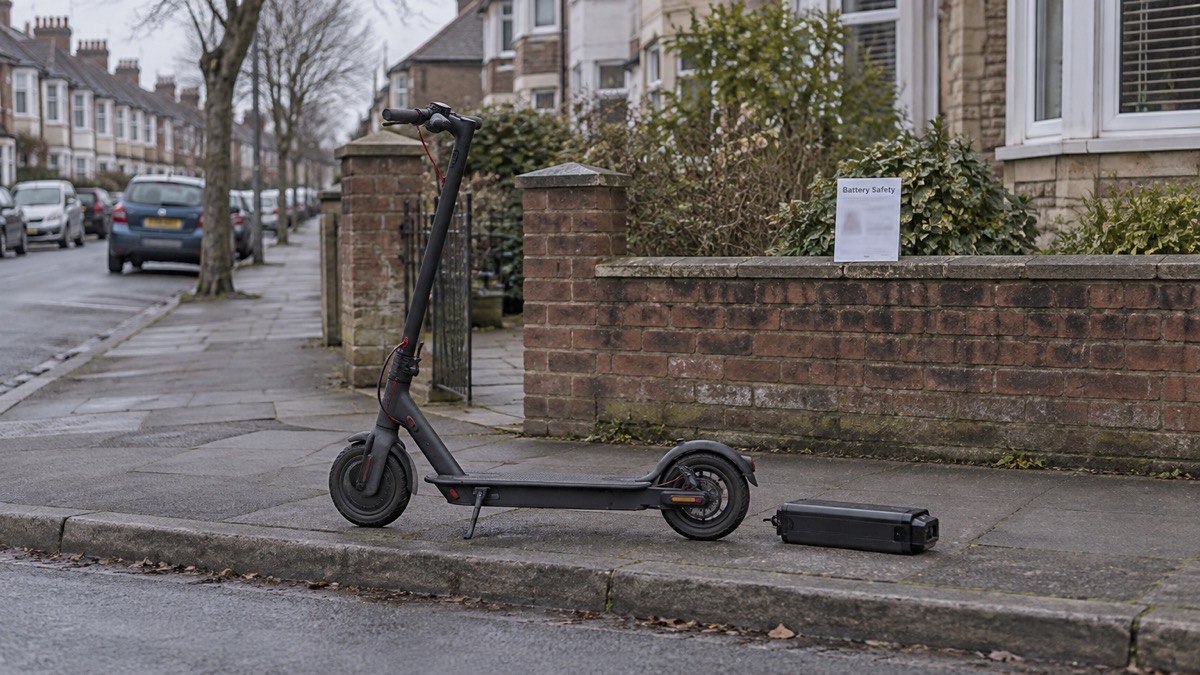
The Department for Transport published guidance on battery safety for e-scooter users, and a parallel document for e-cycle users, on 1 February 2024. Both apply to England, Scotland and Wales1. The e-scooter guidance says the government is aware that a significant number of privately owned e-scooters have been purchased and used, and that "the fire services have reported a significant number of battery fires involving privately owned e-scooters"1.
The guidance sets out the legal position alongside the fire advice. Only e-scooters participating in official rental e-scooter trials may be used legally on roads; other e-scooters are classed as powered transporters and cannot be used legally except on private land with the permission of the landowner. Illegal use could bring a fine, penalty points on a licence and impoundment of the e-scooter1. For e-cycles, riders must be at least 14, with no licence, special equipment or insurance needed, provided the machine meets rules including a maximum continuous rated power of 250 watts and a motor cut-off speed of 15.5 mph2. Modifying an e-cycle beyond those limits makes it an unregistered motorbike in law, with the same potential fine, penalty points and impoundment, and the rider is unlikely to be covered by insurance2.
The documents state that the advice comprises guidance from the National Fire Chief's Council, the London Fire Brigade (including its #ChargeSafe campaign) and the Bicycle Association1. On charging and storage, the guidance says not to charge an e-scooter where it could prevent safe escape from the home, to avoid escape routes and communal areas of multi-occupied buildings, and, if possible, to store and charge in a shed or garage separate from the home. It says fire and rescue services recommend heat alarms rather than smoke alarms for garages or kitchens, with working smoke alarms in other rooms1. It advises using only the supplied or manufacturer-authorised charger, not overcharging, not charging while asleep or away from the home, not covering chargers or battery packs, and not overloading sockets or extension leads1.
The guidance lists warning signs of a failing battery: extreme heat to the touch, bulging, lumps or leaks, hissing or cracking sounds, a strong or unusual smell, and failure to fully charge or longer charge times. If a battery shows these signs but is not smoking, the advice is to turn off and unplug the charger and, if possible, move the e-scooter or battery outside away from people, pets and combustible materials. If it is smoking or on fire, the guidance says to raise the alarm, get out, stay out and call 999 immediately1.
"Do not leave batteries on charge while you are asleep or away from the home."
Why it matters for households
The guidance concerns privately owned e-scooters and e-cycles kept and charged in homes, including in flats and houses in multiple occupation, where escape routes and communal areas are named as places to avoid for storage and charging1. It applies from publication on 1 February 2024 across England, Scotland and Wales1. The Department for Transport advises owners to buy replacement batteries and chargers only as genuine items authorised by the manufacturer, warning that third-party items that may not be safe or compatible could put life at risk or destroy a home, and to look for CE or UKCA marking when buying, with particular care over second-hand, refurbished or converted machines1. It advises that damaged batteries should be replaced and not charged or used, and that waste batteries should not go in household waste or normal recycling because they can cause fires in bin lorries and at recycling and waste centres; the manufacturer or importer must offer a free take-back service1. The guidance also covers e-cycle conversion kits, noting that DIY installations have sometimes damaged the kit and that the person who installed it is liable for the product's safety, even if a private individual2.
What happens next
No further dates or steps are given in the published guidance beyond its publication on 1 February 20241. The documents direct readers to report a faulty battery, once an incident is resolved and everyone is safe, to Citizens Advice in England and Wales or Advice Direct Scotland in Scotland, and to the manufacturer or seller1. Households wanting more on safe charging and storage can read the guide to e-bikes and e-scooters, and the wider home emergencies and UK preparedness sections cover related risks.
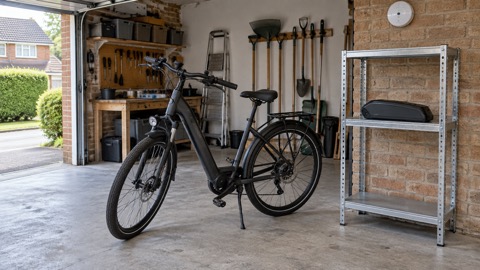 E-bike Charging Safety