The Fire Kills Campaign monthly briefing pack for June 2026, subtitled "Outdoor fire safety", was issued by the National Fire Chiefs Council (NFCC) for use by fire and rescue services in England1. It sets out seasonal safety messages covering barbecues, camping, caravans, boats and wildfire prevention, together with awareness dates falling in June1.
The briefing pack states that it is sent to over 220 recipients across all fire and rescue services in England1. It notes that warmer weather brings people outdoors into gardens and the countryside, and with it seasonal risks, and that the summer months provide a focus on fire safety in the countryside, camping, barbecues and on inland waterway and coastal boats1. On barbecues, it observes that they cause very few accidental dwelling fires in England, and suggests that messages may be better focused on carbon monoxide, with incidents reported of barbecues used in enclosed spaces resulting in carbon monoxide poisoning1.
"Fire can destroy a tent in less than 60 seconds."
The outdoor messages include keeping barbecues well away from sheds, fences, trees, shrubs and garden waste, never using petrol or paraffin to start or revive a barbecue, and emptying ashes onto bare garden soil rather than into dustbins or wheelie bins1. For caravans it advises not blocking air vents, turning off all appliances before leaving or going to bed, and never using a cooker or heater while the caravan is moving1. For boats, it advises checking and maintaining fuel, gas and electrical systems regularly, and states that if in doubt people should not fight a fire themselves but get out, stay out and wait for the fire and rescue service1.
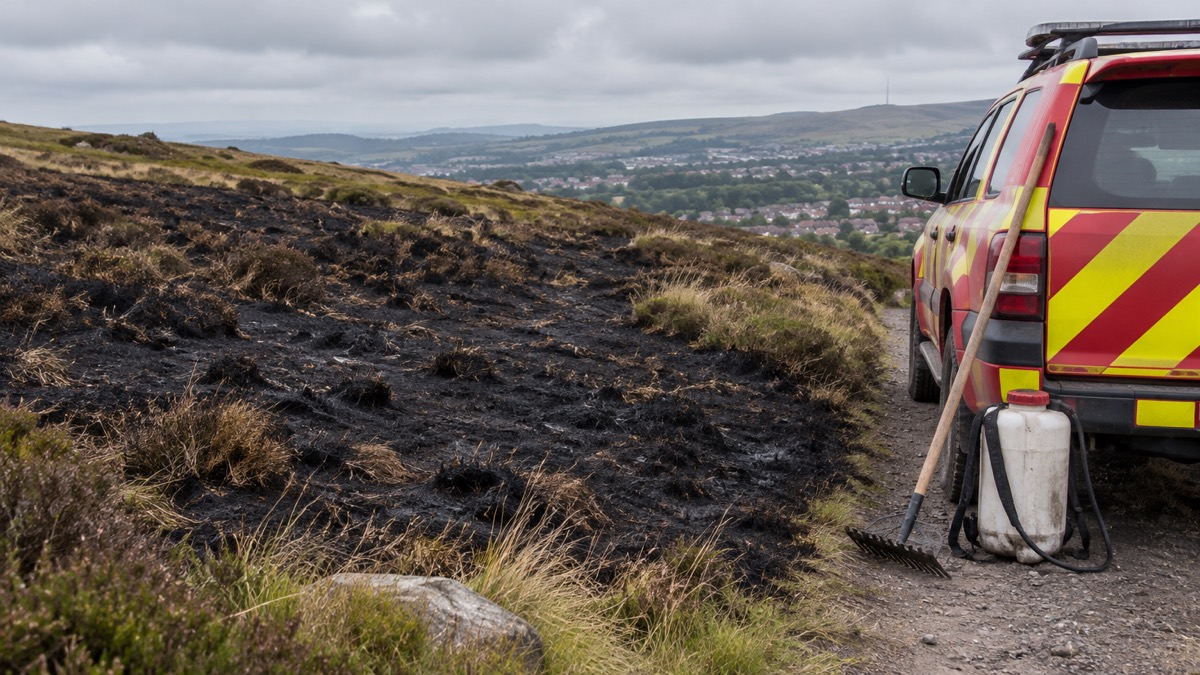
Its advice includes not lighting fires in the countryside or other open spaces, using barbecues only in designated areas where permitted, ensuring smoking materials are fully stubbed out, taking rubbish home especially glass bottles, and following local guidance and signage where access restrictions are in place1. If a wildfire is spotted, it advises moving to a safe location, calling 999 immediately rather than assuming someone else has reported it, giving an accurate location using the Ordnance Survey app or what3words, not attempting to tackle the fire, and following the advice of emergency services and local authorities, including any instruction to evacuate or stay indoors with windows closed1. It also recommends that people do not use sky lanterns, as there is no control over them once set off1.
The contents page gives Child Safety Week as 1 to 8 June, while the section on it says the week runs from 2 to 8 June1.
Why it matters for households
The briefing pack is issued to fire and rescue services rather than to households directly, and sets out the messages services may promote locally during the warmer months1. For households, the practical subjects are outdoor cooking and camping during summer, caravan and boat use, and the risk of wildfire in dry weather, with the carbon monoxide risk from barbecues used in enclosed spaces identified as a particular concern1. It advises that anyone who spots a wildfire should call 999 and follow instructions from emergency services and local authorities, including to evacuate or stay indoors with windows closed1.
What happens next
Households in England can find summer heat guidance in the heatwaves and drought hub.
Sources (1)
- Fire Starts when your attention stops, nfcc.org.uk