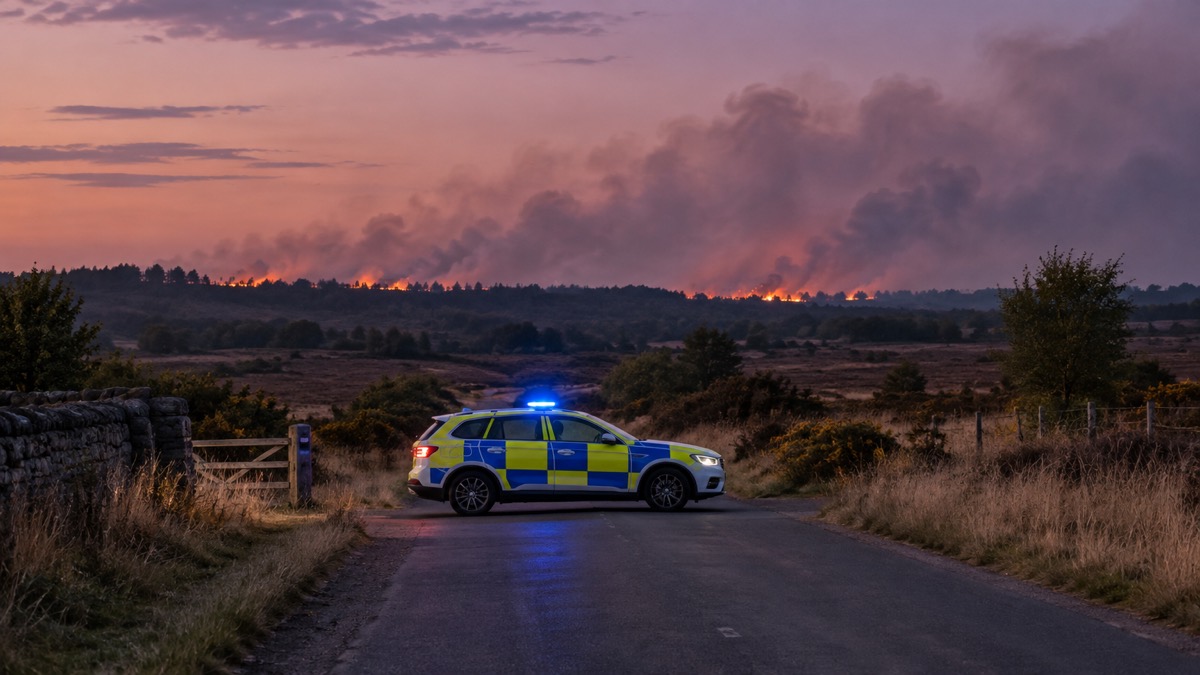
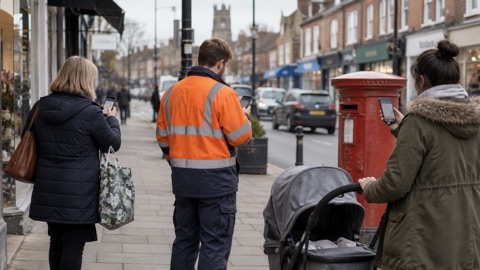
The UK government sent an Emergency Alert to phones across England and Wales on Friday 14 August 2026, warning of a very high risk of wildfires nationally and telling recipients not to light anything that could spark a fire, including disposable barbecues, firepits, garden incinerators and fireworks1. The Cabinet Office said the alert would go out on a rolling basis from approximately 19:001. The government's alert pages record a Welsh-language alert sent to Wales at 6:57pm and an alert sent to England and Wales at 7:01pm, both stopping at 11:00pm that day; surrounding areas might also have received it2.
The alert text told residents, landowners and visitors to avoid any activity that could start a fire, warning that "Even a small flame can rapidly develop into a major wildfire placing lives, homes, businesses and emergency responders at risk", and urged people to report signs of fire immediately by calling 9992. The Cabinet Office described it as "the most extensive use of the UK's Emergency Alert system in response to an active incident"1.
Alongside the alert, the government announced a temporary nationwide ban on the sale of disposable barbecues, with retailers informed they must be removed from sale immediately; the measure stays in place while the heightened wildfire risk continues1. Around 100 military personnel were deployed in South Wales to support response and recovery, with a further 100 deploying that evening1. The Prime Minister visited Stourbridge to meet residents affected by wildfire damage, and the government said a number of firefighters were taken to hospital as a result of incidents the previous day1. The measures followed a COBR meeting chaired by the Prime Minister earlier that week1.
The London Standard reported that West Midlands Fire Service declared a major incident on Thursday as a wildfire spread across more than 500 acres and destroyed 19 homes in Stourbridge, one of several blazes that week4. It also reported that England saw its driest July on record, with no meaningful rain in London, and that millions in London are under a hosepipe ban4.
"It has also been fantastic to see how the public have responded following Friday's emergency alert"
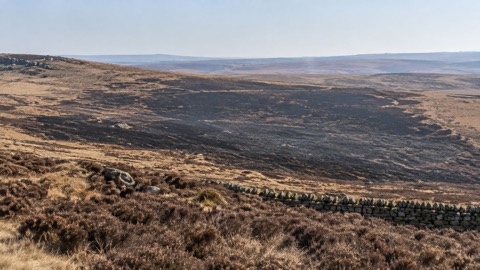
On 17 August the National Fire Chiefs Council said fire and rescue services in England and Wales had responded to 1,132 wildfires between 1 January and 16 August 2026, surpassing the 1,017 total for the whole of 2025, while incident numbers were beginning to reduce5.
Why it matters for households
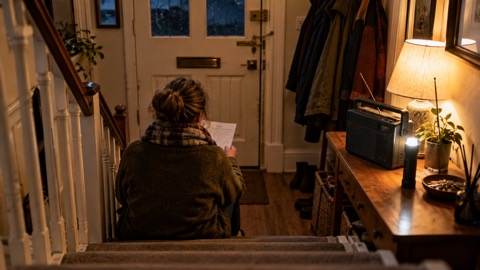
The alert applied to phones in England and Wales, with surrounding areas possibly included2. The government's safety guidance, issued with the alert, asks people not to light fires or open flames in the countryside or other open spaces including parks, moorland and wooded areas; never to leave a household barbecue unattended and to ensure it is fully extinguished; to dispose of smoking materials carefully and never throw cigarette ends from vehicles; to take litter home, particularly glass bottles, which can intensify sunlight and increase fire risk; and to call 999 immediately on seeing signs of a fire1. The government has also asked insurers to process claims as quickly as possible for affected households and businesses, and the Bellwin Scheme remains available to help local authorities with exceptional recovery costs in the worst hit areas1. The wildfire guide sets out prevention and response in more detail, and the heat and drought hub covers the wider conditions.
What happens next
The disposable barbecue ban remains under review and will stay in place while the heightened wildfire risk continues1. Later this year ministers will convene a national wildfire summit with fire chiefs, the National Fire Chiefs Council, the Fire Brigades Union and other partners1. The Secretary of State for Housing, Communities and Local Government has written to councils in England reminding them of powers to restrict activities that increase fire risk, including Public Spaces Protection Orders limiting barbecues, campfires and open fires in vulnerable areas1. The Standard reported forecasts of a chance of rain in London from the week beginning 17 August, with BBC Weather predicting up to a 58% chance on Sunday 23 August4. The NFCC's chair said conditions remain exceptionally dry in many parts of the country and urged everyone to remain vigilant and avoid any activity that could start a fire5.
Sources (5)
- Emergency Alert to be sent to England and Wales as Government steps up wildfire response with funding, military support and BBQ ban - GOV.UK, gov.uk
- Emergency alert - GOV.UK, gov.uk
- Emergency alert - GOV.UK, gov.uk
- London set for rain as record summer draws to end: Will it save capital's parched parks? | The Standard, standard.co.uk
- Wildfire Update: Continued Vigilance Needed - NFCC, nfcc.org.uk
 Wildfires and Grass Fires
 Emergency Alerts
 Official Warnings and News
 When You Get an Alert