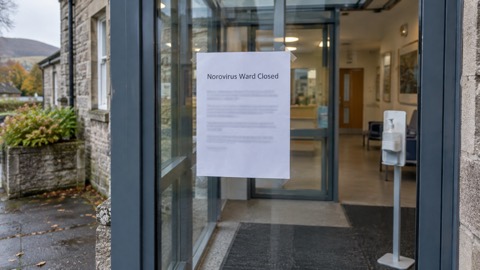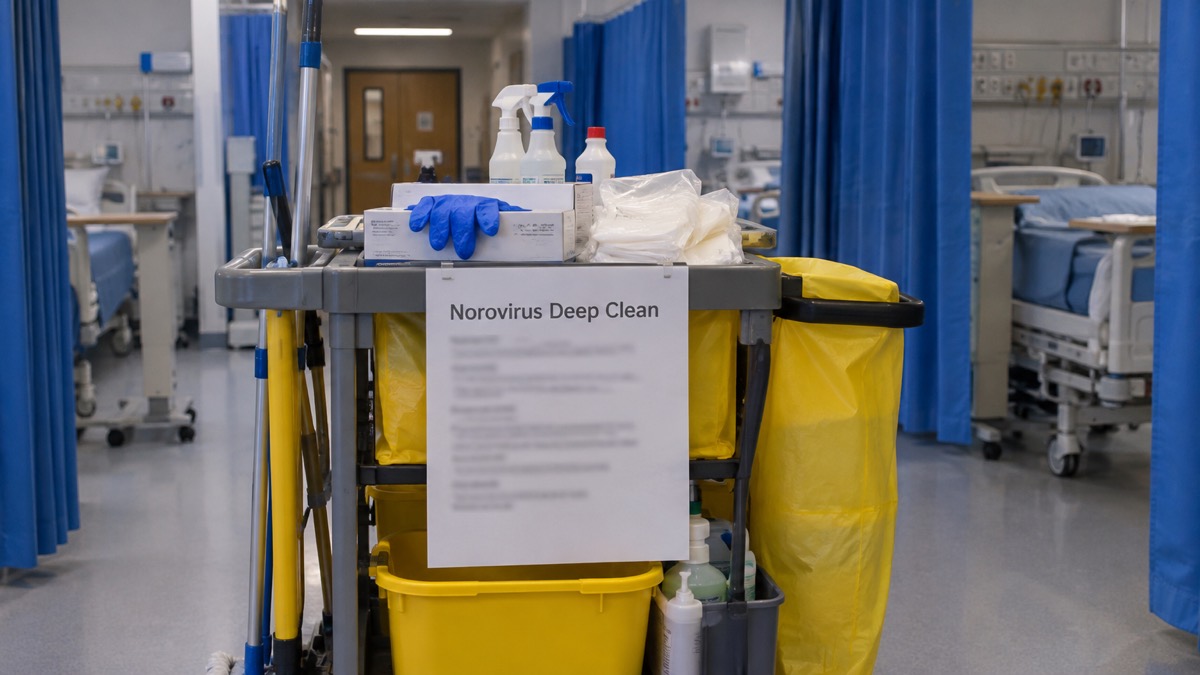
NHS England reported on 6 February 2025 that hospitals in England had their busiest week of the winter so far, as the number of patients in hospital with norovirus continued to rise. The figures come from NHS data published that day1.
An average of 961 patients a day were in hospital with norovirus last week, up 7% on the week before and 69% higher than the same period last year, when the figure was 570 for the week ending 4 February 20241. There were an average of 98,101 patients in hospital each day for the week, higher than at any point so far this winter, and around 96% of adult hospital beds were occupied, also a record for this winter1. Almost one in seven beds (13,776) were taken up by patients who did not need to be in hospital and were well enough to be discharged, a record high for this winter1.
Other winter viruses continued to circulate. More than 2,462 patients were still hospitalised with flu on average each day last week, including 122 in critical care, while an average of 952 patients a day were in hospital with COVID-19, a slight decrease on the previous seven days (995), and 18 children a day were in hospital with RSV, down from 28 the previous week1.
| Measure (week reported 6 February 2025) | Figure | Comparison |
|---|---|---|
| Patients a day in hospital with norovirus | 961 | Up 7% on the week before; 69% higher than 570 in the week ending 4 February 2024 |
| Average patients in hospital each day | 98,101 | Highest so far this winter |
| Adult hospital bed occupancy | Around 96% | Record for this winter |
| Beds taken by patients well enough to be discharged | 13,776 (almost 1 in 7) | Record high for this winter |
| Patients a day in hospital with flu | More than 2,462, including 122 in critical care | Flu rates have dropped since last month's peak |
| Patients a day in hospital with COVID-19 | 952 | Slight decrease on 995 the previous seven days |
| Children a day in hospital with RSV | 18 | Decrease from 28 the previous week |
Professor Julian Redhead, NHS National Clinical Director for Urgent and Emergency Care, said:
"Hospitals are continuing to treat hundreds of patients who are ill with the highly infectious and unpleasant norovirus bug, with the rate of cases at the highest level recorded for this time of year since 2020."
NHS England said its leaders had put in place a series of measures this winter, including upgraded 24-hour co-ordination centres, support for frequent users of A&E services, strengthened same day emergency care and more care in the community1. It also said new analysis to be presented at its board meeting that afternoon showed NHS acute productivity had grown by 2.4% in the first seven months of the financial year, with a 6.3% increase in acute activity against a 3.9% increase in spending adjusted for growth1.
Why it matters for households
Norovirus is a stomach bug that causes vomiting and diarrhoea and, while it can be very unpleasant, it usually gets better in about two days, according to NHS England1. It says people with norovirus can usually treat it at home by drinking lots of fluids, getting plenty of rest and taking paracetamol if they are in discomfort1.
Amy Douglas, Epidemiologist at the UK Health Security Agency, said norovirus cases are "way above what we would usually see at this time of year" and that having had norovirus does not mean a person will not get it again1. The UK Health Security Agency's advice, as reported, is that people with diarrhoea and vomiting should avoid visiting people in hospitals and care homes, should not return to work, school or nursery until 48 hours after symptoms have stopped, and should not prepare food for others in that time1. It advises washing hands with soap and warm water and using bleach-based products to clean surfaces, and notes that alcohol gels do not kill norovirus1. It also warns that norovirus infections can cause dehydration, especially in young children and older or immunocompromised people, so it is important to drink plenty of fluids during illness1. Further detail is in the guide to norovirus symptoms and how long it lasts, and the UK Health Security Agency page covers its alerts and outbreak advice.
Professor Redhead said that while pressures on hospitals remain high, it is vital people continue to use NHS services in the normal way, using 111 and 111 online for advice and support for health conditions and only using 999 or attending A&E in life-threatening emergencies1.
What happens next
NHS England said the new productivity analysis was to be presented at its board meeting on the afternoon of 6 February 20251. Weekly urgent and emergency care situation reports continue to be published by NHS England1. No further dates have been reported.
 Norovirus Symptoms and Spreading