
Bosch is a maker of power tools, garden tools and home appliances, and many UK households already own some of its kit. On a preparedness site the useful question is narrower than the catalogue: what can a Bosch tool or battery do for you when the power goes off, and how do you keep it safe and ready between emergencies? The short answer is that cordless tools and their batteries are useful for light, for small jobs and for charging a phone, but they are not a substitute for a planned backup power supply, and their lithium-ion batteries need storing and charging with care.
Before a storm or a cold snap, charge every battery you own and check your torches and spares. The Met Office's own power cut advice is to have torches and batteries, candles and matches or lighters, and a mobile phone power pack ready in advance, because people cope better with power cuts when they have prepared for them1. Bosch batteries fit that picture as a top-up, not the foundation.
What Bosch makes for UK households
Bosch's household products sit in the same broad family as the rechargeable lithium-ion devices found in most UK homes. Fire and rescue services describe these as batteries that can be recharged and range from mobile phones, vaping devices, e-bikes and scooters, vacuum cleaners, tablets, iPads and ear pods7. Cordless power tools, garden tools and appliances such as vacuum cleaners belong to that group, and the safety advice that applies to lithium-ion batteries applies to them too.
That matters for preparedness because the risks are not only about fires in use. Cheap electrical products have destroyed far too many homes across the UK, with cases where people have lost their lives8. The lesson for a household is not to avoid rechargeable kit, but to buy from makers with proper support, register what you buy, and follow the maker's own instructions for charging, storing, disposing of and replacing batteries and chargers9.
Bosch also makes white goods and home appliances. For those, the same registration and recall discipline applies: register the appliance so the manufacturer can contact you about faults or recalls, and check for recalls or safety notices on the Electrical Safety First website5.
Bosch kit that helps in a power cut
Cordless tools earn their place in a power cut in a few specific ways. A torch or work light that runs on a tool battery gives you light without hunting for AA cells. A radio or phone charger that runs from a tool battery keeps you in touch. And a cordless drill or multi-tool lets you make small repairs, shut off a valve housing or secure a loose fitting without mains power.
Official power cut guidance is consistent about the essentials: a torch and spare batteries, a wind-up or battery-powered radio tuned to local news, a power bank or solar charger, an analogue phone, warm clothes and blankets, and non-perishable food11. The Met Office adds candles and matches or lighters to that list2. Bosch batteries can back up the torch and charging side of that kit, but they do not replace the radio, the blankets or the food.
| What you need in a power cut | What Bosch kit can do | What it cannot do |
|---|---|---|
| Light | A work light or torch on a charged tool battery | Run indefinitely; batteries drain |
| Phone charging | A USB adapter on a tool battery, where the maker supplies one | Replace a dedicated power bank for long outages |
| Local news | Nothing directly | Replace a battery or wind-up radio |
| Small repairs | Cordless drill or multi-tool | Replace a wrench or pliers for turning off utilities1 |
If anyone in the household depends on powered medical or assistive equipment, such as ventilators, oxygen concentrators, electric wheelchairs, hoists, communication devices or feeding pumps, plan separately: some of that equipment may stop working in a power cut12. See the guide to extra help in an emergency for the arrangements that apply.
Battery tools and lights: what they do in an emergency
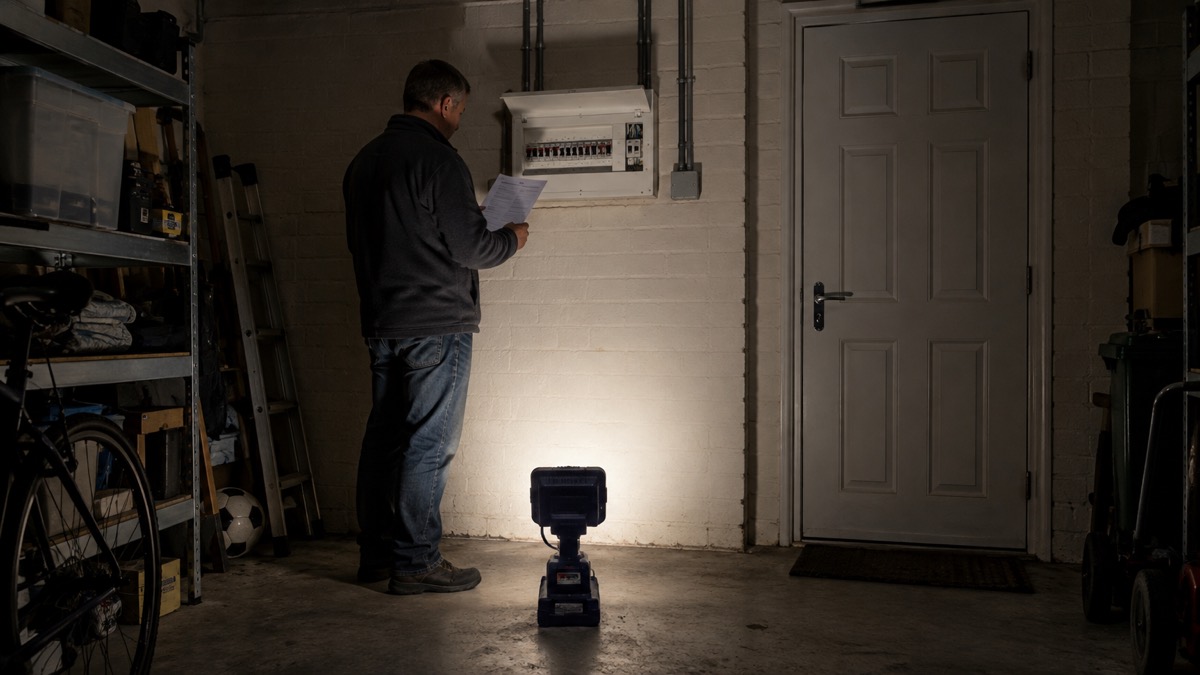
Emergency kit lists from official sources almost always include a battery-operated torch and spare batteries, or a wind-up torch13. Some add a waterproof torch with spares checked regularly, and suggest considering a wind-up model14. A cordless tool battery and light can serve as that torch, provided the battery is charged and the light is to hand rather than in a locked shed.
The limits are worth being honest about. Tool batteries are designed for short bursts of high drain, not for days of continuous light, and they cannot be recharged without mains power. A power bank or solar charger is the official recommendation for keeping a phone alive11, and a car radio is an alternative source of local news11. Keep a battery jump lead set in the car as well: official car emergency kit lists include jump leads, a reflective warning sign, a map, a snow shovel, and some food and a warm drink in a flask15.
Charging and storing Bosch batteries safely
Lithium-ion batteries are safe when treated properly and dangerous when they are not. The fire and rescue services' advice is consistent across the UK: keep batteries in a cool, dry place and away from metal objects like keys or coins, which can cause a short circuit3. Avoid storing, using or charging batteries at very high or low temperatures16. Store spare batteries safely so they cannot contact other metal objects17.
Where you charge matters as much as how. Wherever possible, charge or store batteries in a secure outbuilding, shed or garden area9. Do not block your exit with charging batteries or with e-bikes and e-scooters: if a fire breaks out, you will not be able to leave safely16. Unplug the charger once the battery is fully charged18.
Winter is the time to check your stock. During winter months a car battery drains more quickly with the additional use of electrical items such as heaters, lights and the heated rear windscreen19, and the same principle applies to any battery you are relying on: cold and heavy use flatten it faster. Recharge spares before a forecast cold snap rather than during it.
Using Bosch kit safely during an emergency
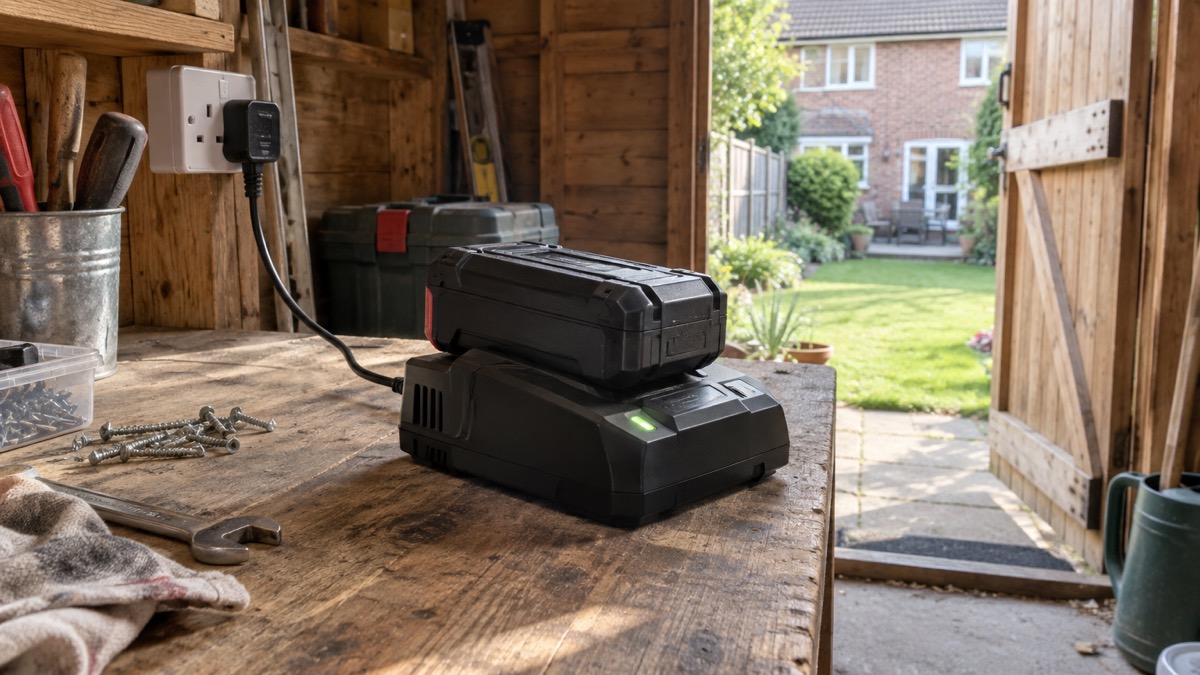
In an emergency, keep the maker's instructions to hand and follow them. Fire and rescue services advise always following the manufacturer's instructions when charging, storing, disposing of or replacing batteries and chargers9. That covers the charger you use, the battery type you fit and how long you leave it on charge.
Keep spare batteries at home in the event of an emergency, and keep jump leads in your car20. If you have pets, add pet care items to your kit as required21. If you use a generator to recharge anything, remember that generators produce carbon monoxide: never run one indoors, in a garage or in a shed, and follow the manufacturer's instructions for its use.
Safety notices and recalls
Manufacturers issue product recall notices if an electrical appliance could develop a fault, including a risk of electric shock or fire6. You can check the list of recalled items on the Electrical Safety First website, which explains what to do with your recalled appliance6, and on the government's product safety pages22.
Recent official notices show how specific a recall can be. A product recall was issued for Bull and Cygnus Fire Alarm Detection Systems, identified by NCU serial numbers ranging from XAB.2410.01.0001/17518/06.00 to XAB.2410.01.0528/17518/06.0022. A safety notice was issued for the Bauer Electric Hot Water Bottle, model number CHB-006, with instructions for the fuse to be replaced or the item returned to the retailer23. The pattern is the same each time: a model number, sometimes a batch or serial range, and a clear corrective action.
Warranty and registering your product
Registering a product takes a few minutes and pays back twice: it validates warranties and it lets the maker contact you with safety information or a recall9. Fire and rescue services advise registering e-bikes, e-scooters and mobility scooters with the manufacturer to validate any warranties and to be informed of safety recalls24, and the same logic applies to any rechargeable appliance or tool.
To register, you will typically need the model name or number, the serial number and the purchase date6. Have those to hand before you start. Register electrical items with the manufacturer to be informed of any safety recalls25.
Spare parts availability varies by product and age. One maker states that even if a model is no longer produced, spare parts remain available for at least ten years26, but that is a commitment for that maker's own products, not a general rule. Ask Bosch support about parts for your specific model before assuming a repair is possible.
Bosch support in the UK
For support, start with the maker's own documentation for your product, then the retailer you bought it from. For safety questions, the official route is the recall lists: check the Electrical Safety First website and the government's product safety pages6.
Disposing of old batteries is part of support too. Dispose of batteries and items containing batteries at household waste recycling centres or recycling points4. Do not put old batteries or electrical items in any household bin, including recycling bins4. If in doubt, always take damaged or end-of-life batteries to your local household waste recycling centre9. When crushed or punctured these batteries can cause fires in bin lorries and recycling and waste centres27. Many shops have collection points9, and all local authorities in Wales provide battery recycling facilities at their household waste recycling centres27.
For the wider picture, see the guides to power cuts, emergency lighting, backup power at home and the emergency kit your household should keep ready.
Sources (27)
- Power cut advice, Met Office, 2026
- Amber warning for further snow in Scotland, Met Office, 2026
- Battery safety, West Yorkshire Fire and Rescue Service
- Be battery aware, Greater Manchester Fire and Rescue Service
- White goods electrical fire safety, Cheshire Fire and Rescue Service, 2026
- Electrical safety, Scottish Fire and Rescue Service, 2025
- Lithium-ion batteries, South Wales Fire and Rescue Service, 2026
- Reminder not to cut corners with electrical safety this Christmas, Wiltshire and Swindon Prepared, 2026
- E-bikes, e-scooters and mobility scooters, Greater Manchester Fire and Rescue Service, 2026
- White goods safety leaflet, London Borough of Bromley
- Power cuts, West Yorkshire Prepared
- Disabled people and carers, Ready Scotland
- Emergency kit, Ready Scotland
- Emergency pack, Lancashire Prepared
- Emergency kit, Ready Scotland
- Batteries and charging safety, Essex County Fire and Rescue Service
- Fire safety tips: smoking, vaping and e-cigarettes, Warwickshire County Council
- Lithium-ion batteries, Scottish Fire and Rescue Service, 2025
- Winter car checks, Nottinghamshire County Council, 2026
- Emergency kit checklist, Neath Port Talbot Council
- Get help and advice in an emergency, Lincolnshire County Council
- Product recall for Bull and Cygnus Fire Alarm Detection System, GOV.UK, 2026
- Bauer Electric Hot Water Bottle safety notice, Office for Product Safety and Standards, 2025
- E-bikes and e-scooters, Greater Manchester Fire and Rescue Service, 2026
- Electrical fire safety leaflet, Greater Manchester Fire and Rescue Service, 2026
- Water-Sack | ORTLIEB, ORTLIEB Sportartikel GmbH
- Lithium battery fire safety, Mid and West Wales Fire and Rescue Service, 2026
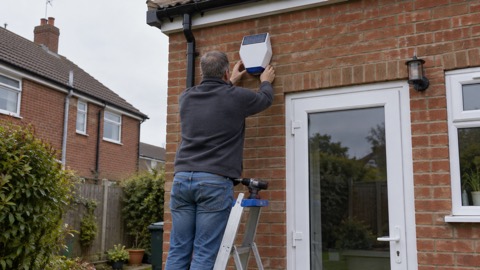 Bosch Smart Home Outdoor Siren