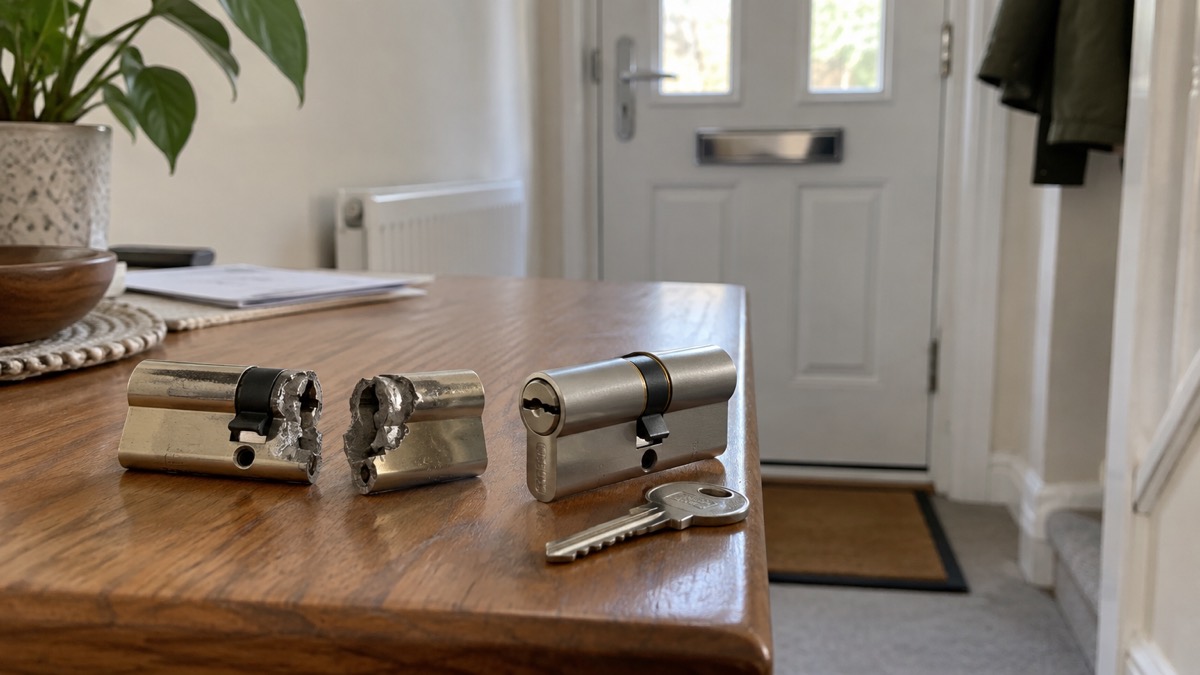
ABS makes door lock cylinders for UK homes, and its named product for households is the ABS Ultimate Series Anti-Snap Cylinder. A cylinder is the part of a euro-profile lock that the key goes into, and the anti-snap name refers to its design against snapping, a method used to break cylinders. That is the whole of what ABS makes for the household market in the material available here: it is a security hardware maker, not a supplier of power stations, water filters or food stores.
That matters for how you use this page. If you are preparing a household for a power cut, a flood, a storm or an outbreak, a door cylinder is not the thing that keeps you going. It is the thing that lets you lock up properly when official advice tells you to leave, and that gives you one less thing to worry about when the lights go out and the street is dark. The rest of this page sets out what the cylinder is, how to fit it into a household plan, the safety habits that go with it, and where the four nations differ.
The short answer: what ABS is and what it does for a household
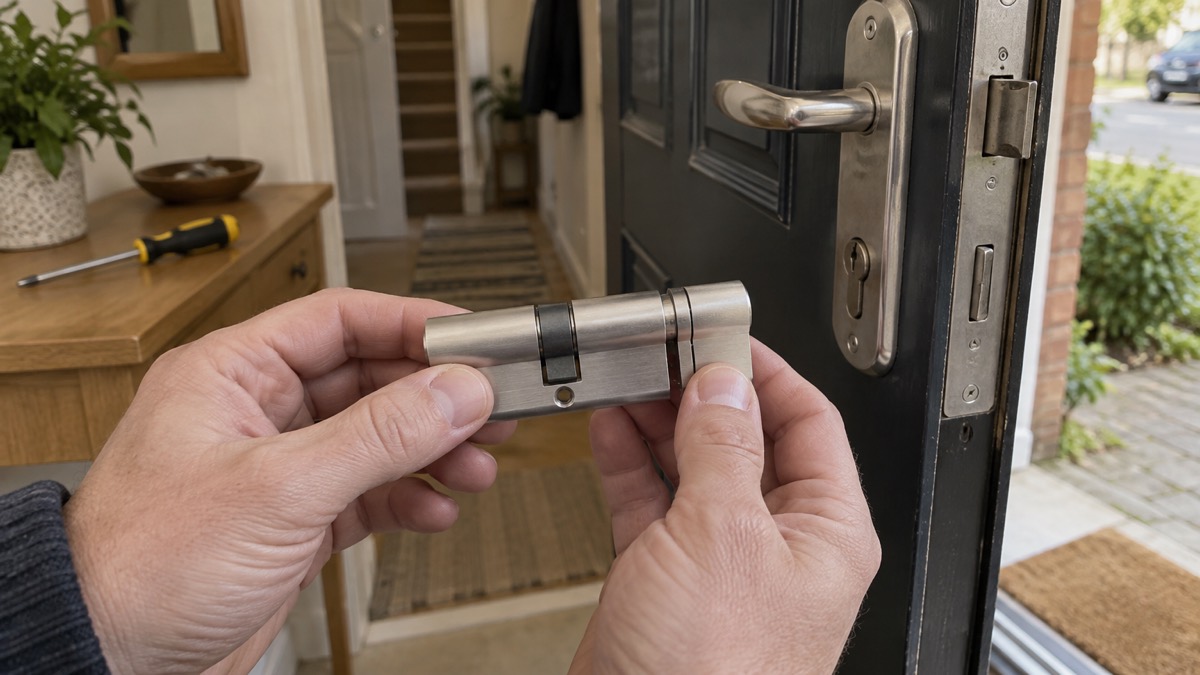
ABS is a maker of door lock cylinders. Its product for UK households is the ABS Ultimate Series Anti-Snap Cylinder, a cylinder designed to resist snapping. In a home, the cylinder is the small barrel the key turns in, set into the door furniture. When it fails, the door can be opened without a key, which is why the design of this one part matters more than its size suggests.
For emergency preparedness, the cylinder belongs in the security section of your plan, alongside lighting, routine and neighbour awareness. The Home Security: A Household Guide sets out the wider picture, and the Getting Started: Preparing Your Household for an Emergency page shows where security sits among the other jobs. The honest framing is this: a good cylinder is one layer. It does not replace a door that closes properly, a spare key kept sensibly, or the habit of checking the door before a storm.
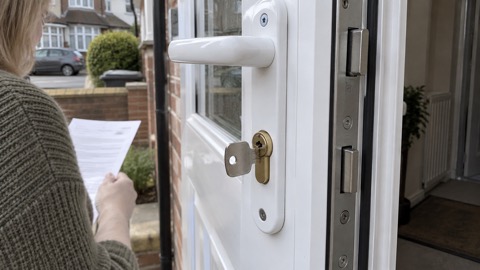
The reason security deserves a place in a preparedness plan is that emergencies change how a home is used. You may leave in a hurry, return to a dark street, or have tradespeople and neighbours in and out after a flood. Official guidance for households advised to leave is specific: turn off electricity, gas and water supplies if you are advised to do so, lock all doors and windows, take pets with suitable carriers, leads, muzzles and food, and inform the emergency services where you have gone and how you can be contacted2. A cylinder that turns smoothly and a key you can find in the dark make that instruction achievable rather than stressful.
What to do now: check the door before you need it
The time to find out that a lock is stiff, or that the only key is on a hook in a dark hallway, is not during a power cut. Work through the door as part of your household check, in daylight, and fix what you find.
- Open and close the door several times. It should close squarely without lifting or forcing. A door that has dropped puts strain on the cylinder.
- Turn the key fully both ways. It should move smoothly. If it catches, investigate before it fails.
- Check the spare key is in a known place that is not under the mat or in the porch. Tell everyone in the household where it is.
- Look at the outside of the door in the evening. Is the approach lit? If not, plan a torch or battery lantern for the hallway and porch, covered in Emergency Lighting at Home: Torches, Lanterns and Candles.
- Clear the escape route inside. Fire and rescue services advise making sure exits are kept clear4.
That last point is not a security nicety. It is a fire safety instruction, and it applies whether or not you change your cylinder. The same official bedtime routine advice says to make sure exits are kept clear4. A door that is hard to open because boxes are stacked behind it is a hazard in a fire, a flood or any evacuation.
What you need: the cylinder and the habits around it
The kit itself is simple. You need a cylinder that fits your door, the right key or keys, and the knowledge of how to use them under pressure. The ABS Ultimate Series Anti-Snap Cylinder is the ABS product for this job. Beyond that, the household needs a few low cost items that support the door rather than replace it.
| What it does | Why it matters in an emergency | Where to read more |
|---|---|---|
| Anti-snap door cylinder | Resists snapping, a method used to break cylinders1 | Home Security |
| Spare key in a known place | Lets you lock up if advised to leave2 | This page |
| Torch or battery lantern by the door | Lets you find the lock in a power cut | Emergency Lighting |
| Battery powered radio | Keeps you tuned to your local station for official advice5 | Staying Informed |
| Clear exit route | Fire and rescue advice: keep exits clear4 | Home Emergencies |
The battery powered radio is worth a word. The Keep Safe Keep Well winter safety campaign advises keeping a battery powered radio tuned in to your local station, along with spare glasses, pencil, paper, a pen knife and a whistle at home5. That is a small kit that sits naturally beside the door check: if the power goes, you can still hear what is happening and whether you need to leave.
Staying safe: the habits that matter more than the hardware
No cylinder makes a home safe on its own. The safety advice that matters most in an emergency is about people and routes, not locks. Fire and rescue services are consistent on this: keep escape routes clear so you can evacuate quickly and safely, and never block emergency access to the building or hydrants so firefighters can get their engine as close as possible and reach a water supply3. If you live in a flat, follow your building's evacuation strategy and keep communal routes clear3.
A safe and well visit is the practical route to advice. Many councils and fire and rescue services offer one, and it can cover home security as well as fire safety3. Ask your local service. It is free advice from the people who respond to emergencies, and it is the right way to check a door, a hallway and a plan together.
Away from the door, the same principle applies: know what to do before you need it. If someone collapses, the ambulance service advice is to think DRS ABC: Danger, Response, Shout for help, Airway, Breathing, Compressions7. The First Aid at Home: A Household Guide covers this in full. If someone has a seizure in a wheelchair, put the brakes on, leave any seatbelt or harness on, support them gently and cushion their head, but do not try to move them8. If you are on a motorway and cannot safely exit, stay in your vehicle with seatbelts and hazard lights on and call 9999. These are the moments when a prepared household behaves calmly, and a door that locks properly is part of getting home safely afterwards.
Where Scotland, Wales and Northern Ireland differ
Most of the advice on this page is UK wide, but a few points change by nation, and it is worth knowing which apply to you.
- Legislation on offensive weapons. The Criminal Justice Act 1988, Section 139, has a version that extends to England and Wales only and a separate version for Northern Ireland only10. If you are checking what is legal to carry, read the version for your nation.
- Fire safety at home. Northern Ireland's fire and rescue service publishes its own summer safety advice, including checking that a gas barbecue is in good working order before use11. Follow the guidance from your own nation's fire and rescue service.
- Water safety. Fire and rescue services across the UK publish water safety advice, and the message is consistent: do not enter water to rescue someone12.
- Ambulance and NHS routes. In Wales, NHS 111 Wales is the route for urgent advice, and it publishes its own safety guidance13. In Northern Ireland, the Public Health Agency publishes public health advice14.
For a household plan, the practical step is to note which nation's service you would call and where its advice lives. The How the UK Prepares for Emergencies: A Household Guide sets out the wider picture, and the Extra Help in an Emergency page covers households that need more support.
Support, warranty and safety notices
ABS is the maker of the ABS Ultimate Series Anti-Snap Cylinder, and the product page is the place to check the specification and any fitting instructions for your door. Keep the paperwork that comes with the cylinder, including any warranty information, with your household documents. If you are fitting it yourself, follow the maker's instructions for your door type, and if you are unsure, use a qualified fitter.
There are no recalls or safety notices for ABS products in the material available here. If a notice is issued, it will come from the maker or from the relevant safety body, and the product page is where to check. The wider safety notices that matter to a household are the ones covered elsewhere on this site: battery fires from rechargeable bikes and scooters, which means keeping escape routes clear6; carbon monoxide and fire risks in the home, covered in Home Emergencies; and the general advice to keep exits clear and emergency access unblocked3.
"Keep escape routes clear so you can evacuate quickly and safely."
Sources (14)
- ABS Ultimate Series Anti-Snap Cylinder, SafePrepared, 2026
- Preparing for an emergency, Bristol City Council, 2026
- Apply for a safe and well visit, Warwickshire County Council, 2026
- Bedtime routine, Greater Manchester Fire and Rescue Service, 2026
- Keep Safe Keep Well Winter Safety Campaign 2024-2025, NHS Western Isles, 2024
- Battery fires, Devon and Somerset Fire and Rescue Service, 2026
- Cardiac arrest, North West Ambulance Service, 2024
- What to do if someone has a seizure (fit), NHS, 2023
- Driving on motorways, National Highways, 2026
- Criminal Justice Act 1988, Section 139, legislation.gov.uk, 1988
- Fire and summer safety advice, nidirect, 2026
- Water safety advice, Greater Manchester Fire and Rescue Service, 2026
- Safety accidents, NHS 111 Wales, 2023
- COVID-19 still with us, Public Health Agency, 2023
 ABS Ultimate Series Anti-Snap Cylinder