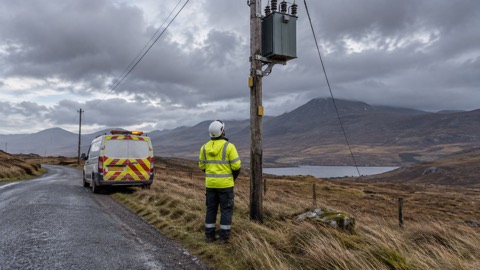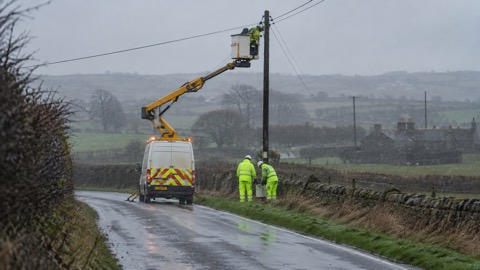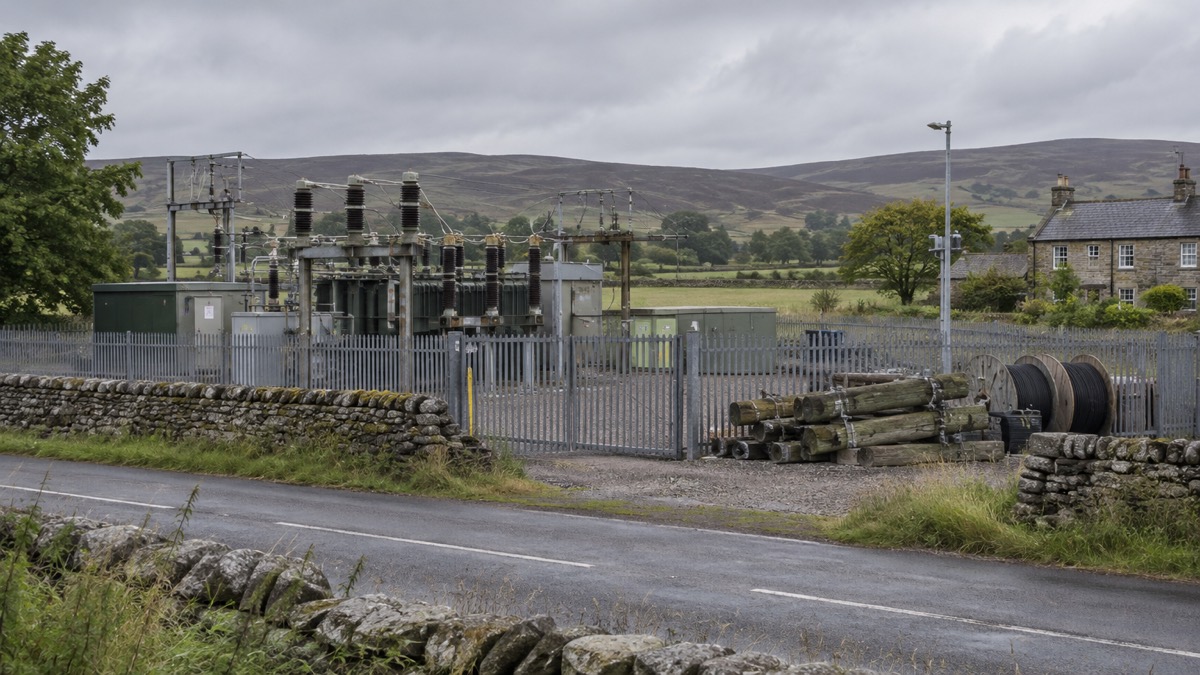
Ofgem published the GHD technical review of the distribution network operators' preparedness and response to Storm Arwen on 22 April 2022. The review sets out an independent assessment of the operators' preparedness and their response to restoring customers after the storm1.
A rare red weather warning for coastal areas in the northeast followed, with gusts expected in excess of 80 mph1. Gusts reached 109 mph in the northern parts of Scotland, and the top lowland gust was recorded at Brizlee Wood in Northumberland at 98 mph1.
Just under one million homes lost power, and over 100,000 homes suffered several days without power. The total number of customers affected was over 950,000, with the greatest impact in the northern parts of the UK. Four distribution companies, across six licence areas, were severely impacted1.
| Operator | Customers interrupted | Final customer restored |
|---|---|---|
| Scottish Power | 189,133 | 02 December |
| Scottish & Southern Electricity Networks | 143,749 | 06 December |
| Northern Powergrid | 280,867 | 08 December |
| Electricity North West | 74,983 | 04 December |
| UK Power Networks | 19,552 | next day for final 22 |
| Western Power Distribution | 243,930 | all but one by end of day 3 |
The review records that Scottish Power restored 87.4% of interrupted customers within 24 hours and 99.99% by 29 November, deploying up to 311 mobile generators. Scottish & Southern Electricity Networks had restored all but 54 customers by 3 December. Northern Powergrid restored 98% by 30 November, reducing to 39 customers by 6 December. Electricity North West had 443 customers off supply by 1 December1.
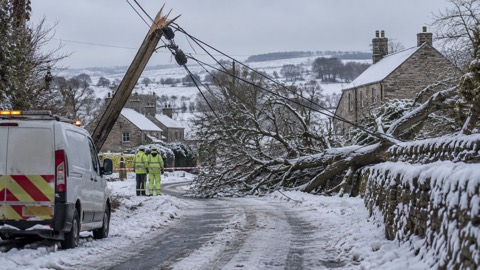
On the condition of network assets, the review found that the proportion of damaged poles rated at health index 4 or 5 varied between companies from 13% to 38%, and that 50% to 80% of damaged poles were over 40 years old. It concluded that poles aged over 40 years may be more susceptible to failure in abnormal weather than is currently understood, while recognising the link as tenuous because networks in the affected areas were built around the same time1.
Why it matters for households
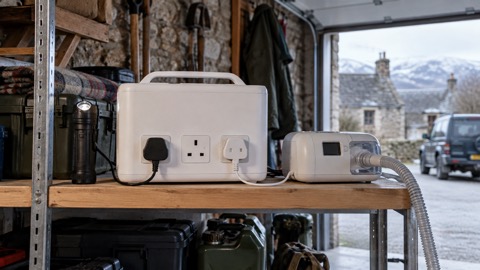
The review covers the four operators whose networks were worst affected, in eastern Scotland, northern England and north Wales, and the timescales over which their customers were reconnected. It records that some households were without power for up to twelve days after the storm, and that over 100,000 homes suffered several days without power1. It also raises a question over older wooden poles, which it says may be more susceptible to failure in abnormal weather, and recommends that operators investigate whether this is the case and develop policies to test weakened poles1. The review does not set out advice to households.
What happens next
The review recommends that the operators investigate and understand whether older poles are more susceptible to failure, and, if so, develop the necessary policies to test for weakened poles1. No further timetable is given in the review.
Households can read more on storms and the electricity network, what happened during Storm Arwen, extra help from network operators during long outages and how Britain's electricity network is run.
Sources (1)
- ofgem.gov.uk, ofgem.gov.uk
 Storms and the Electricity Grid
 Storm Arwen 2021