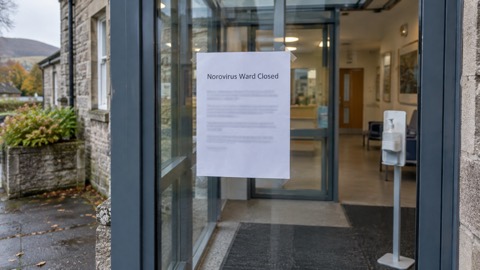
NHS England said on 30 January 2025 that the number of beds taken up by norovirus patients had reached its highest level so far that winter, with an average of 898 people a day in hospital with the virus last week1.
The figures come from the weekly winter data published on the NHS England website1.
Other seasonal viruses showed different trends in the same week. Flu pressure continued to fall, with an average of 3,019 patients a day in hospital with flu, down 21% on 3,833 the week before but still over a third higher than 2,226 the same week last year. There was also an average of 995 patients a day in hospital with Covid-19, and 28 children in hospital with RSV, down from 29 the week before but 41% higher than the 20 patients last year1.
| Measure (last week) | Average per day | Change |
|---|---|---|
| Norovirus patients in hospital | 898 | Up 15% on 784 the week before; 30% higher than 688 a year earlier |
| Flu patients in hospital | 3,019 | Down 21% on 3,833; over a third higher than 2,226 a year earlier |
| Covid-19 patients in hospital | 995 | Not reported |
| Adult beds occupied | 96% | Not reported |
| Patients medically fit for discharge | 13,426 | More than 1 in 7 available beds |
Pressure on hospital capacity remained high, with an average of 96% of adult beds occupied and a total of 97,567 patients in hospital each day. An average of 13,426 patients a day were in hospital despite being medically fit for discharge, taking up more than one in seven available beds. Emergency services continued to manage high demand, with 91,275 ambulances arriving at A&E, similar to last year's 90,079, while total hours lost to handover delays fell to 22,413, down around a third on 33,480 the same week in 20241.
Professor Julian Redhead, National Clinical Director for Urgent and Emergency Care, said:
He added that hospitals remain close to capacity, with almost a fifth of beds filled due to seasonal viruses and delayed discharges to settings such as social and community care1.
Why it matters for households
Norovirus causes diarrhoea and vomiting, and the NHS England figures show more people in hospital with it than at any other point that winter, with cases also well above the same week a year earlier1. Professor Redhead said that with the higher than usual levels of norovirus it is important to remember to wash hands frequently with soap and water, and to avoid close contact with others if there are any symptoms1. The guide to norovirus symptoms, how long it lasts and stopping it spreading sets out what to expect and how it spreads; the health emergencies hub covers related alerts.
On access to care, Professor Redhead said the public can help by continuing to only call 999 or visit A&E in a life-threatening emergency, or using NHS 111 for other conditions1. The same statement notes that hospitals remain close to capacity, with almost a fifth of beds filled by seasonal viruses and delayed discharges1.
What happens next
NHS England said that Friday 31 January 2025 is the last day those eligible can get a winter Covid-19 vaccine at local services or walk-in sites, with flu vaccinations continuing to be delivered until 31 March1. Professor Redhead urged anyone eligible who has not yet had a Covid jab to get to a walk-in service that day or the next1. The NHS has delivered more than 29 million Covid, flu and RSV vaccinations since the start of the rollout in September1. The latest weekly winter data is published on the NHS England website1.
Sources (1)
- NHS England » NHS norovirus pressure hits winter high, england.nhs.uk
 Norovirus Symptoms and Spreading