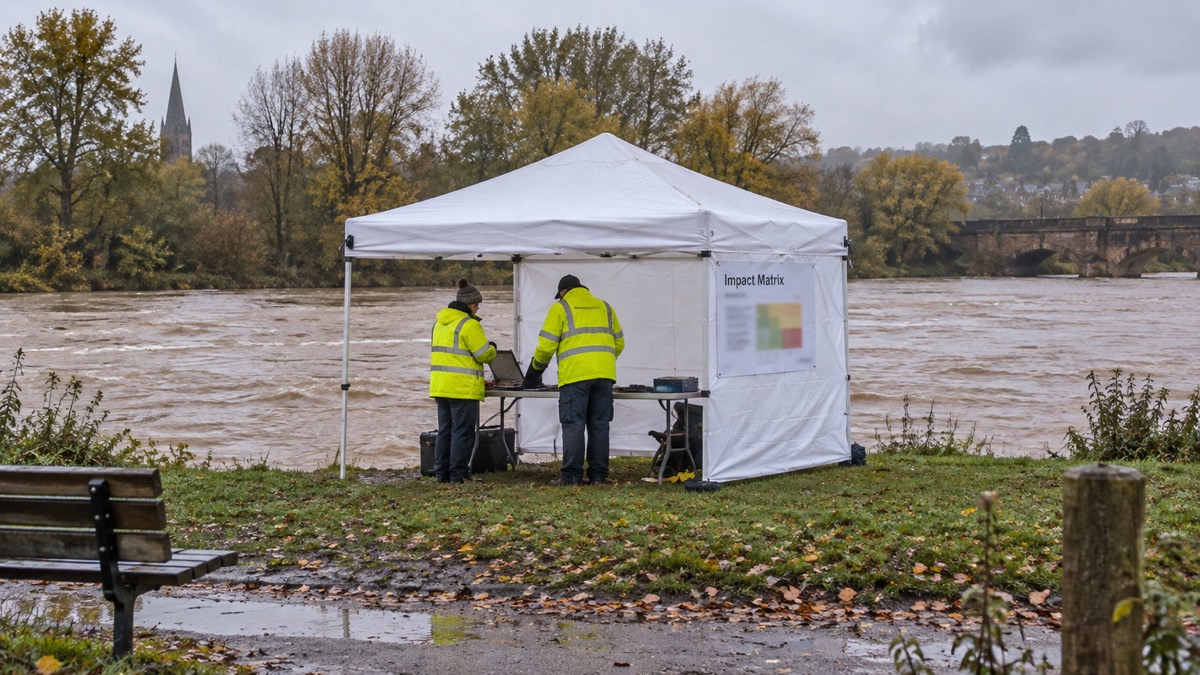
The Met Office, the UK's four hydrological agencies and the Flood Forecasting Centre have introduced a new harmonised matrix for the National Severe Weather Warning Service (NSWWS) and Flood Guidance Statements, the Met Office said in updates dated 1 October 2026. The change, in force as of October 2026, brings consistency between the two systems and includes a change to the impact level terminology1.
"The Met Office, the UK’s four hydrological agencies, and the Flood Forecasting Centre have introduced a new harmonised matrix for NSWWS and Flood Guidance Statements to bring consistency and improve user decision making. This includes a change to the impact level terminology."
The Met Office has not published the new impact level terms in the pages setting out the change. Its existing guidance describes four impact levels, very low, low, medium and high, and says each warning is assigned one of them to clarify the expected severity1. The same pages state that the matrix shown in the Met Office's warnings video has "slightly changed" and direct readers to the weather warnings guide for more detail3. The specific wording of the revised terminology has not been reported.
Warnings remain colour-coded yellow, amber and red, based on a combination of the impact the weather may have and the likelihood of those impacts occurring4. The Met Office says the matrix is available in the "Further Details" section of every warning and shows the assessed combination of impact and likelihood1. It provides warnings up to seven days ahead for rain, thunderstorms, wind, snow, lightning, ice, extreme heat and fog4.
| Impact level (as previously published) | Description given by the Met Office |
|---|---|
| Very low | Minimal disruption, with only isolated impacts1 |
| Low | Some short-lived disruption, manageable under normal conditions1 |
| Medium | Noticeable disruption with potential danger to life and strain on emergency services1 |
| High | Widespread and prolonged disruption, significant danger to life, and major impacts on infrastructure and services1 |
The Met Office moved from threshold-based to impact-based warnings in 2011, and has since added categories including the thunderstorm warning in 2018 and the extreme heat warning in 20211. It says warnings are not based on the weather alone but on the potential impacts and how likely those impacts are to occur1. Factors considered include the time of day, the time of year, how unusual the weather is for the region, outdoor events and ongoing sensitivities such as saturated ground or weakened structures2.
Why it matters for households
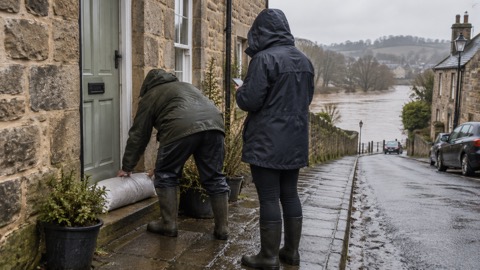
The change affects how the impact of severe weather and flooding is described in official warnings, so the terms households see in a Met Office warning or a Flood Guidance Statement may differ from those used previously. The Met Office says the aim is consistency and improved decision making for users1. Its published guidance on the warning colours is unchanged: for a yellow warning it advises people to check the details of the forecast and consider steps to minimise impacts; for amber, to change plans that could be affected and take action to protect themselves and their property; and for red, to take direct action to keep themselves and others safe, avoid travelling where possible and follow the advice of the emergency services and local authorities3. The Met Office says yellow and amber warnings cover a range of impact levels and likelihoods, so it is important to read each warning to know what level of impact to expect in a chosen warning area4. Warnings are available through the Met Office app and website, social media, email alerts, TV and radio, RSS and the NSWWS API4. Flood warnings in England are separate from the Met Office system and can be received through the free flood warning sign-up service; the Flood Guidance Statement and five-day forecasts set out the outlook before warnings are issued, and the flood warnings guide explains the difference between Flood Alerts, Flood Warnings and Severe Flood Warnings.
What happens next
The Met Office directs readers to its weather warnings guide for the revised matrix and terminology3. No date has been given for further publication of the new impact level terms beyond the October 2026 change.
Sources (4)
- How are weather warnings categorised? - Met Office, metoffice.gov.uk
- Met Office weather warnings: How and why they are issued - Met Office, metoffice.gov.uk
- When and why do we issue warnings - Met Office, weather.metoffice.gov.uk
- Weather warnings guide - Met Office, weather.metoffice.gov.uk
 Flood Guidance Statement
 Flood Alerts and Flood Warnings