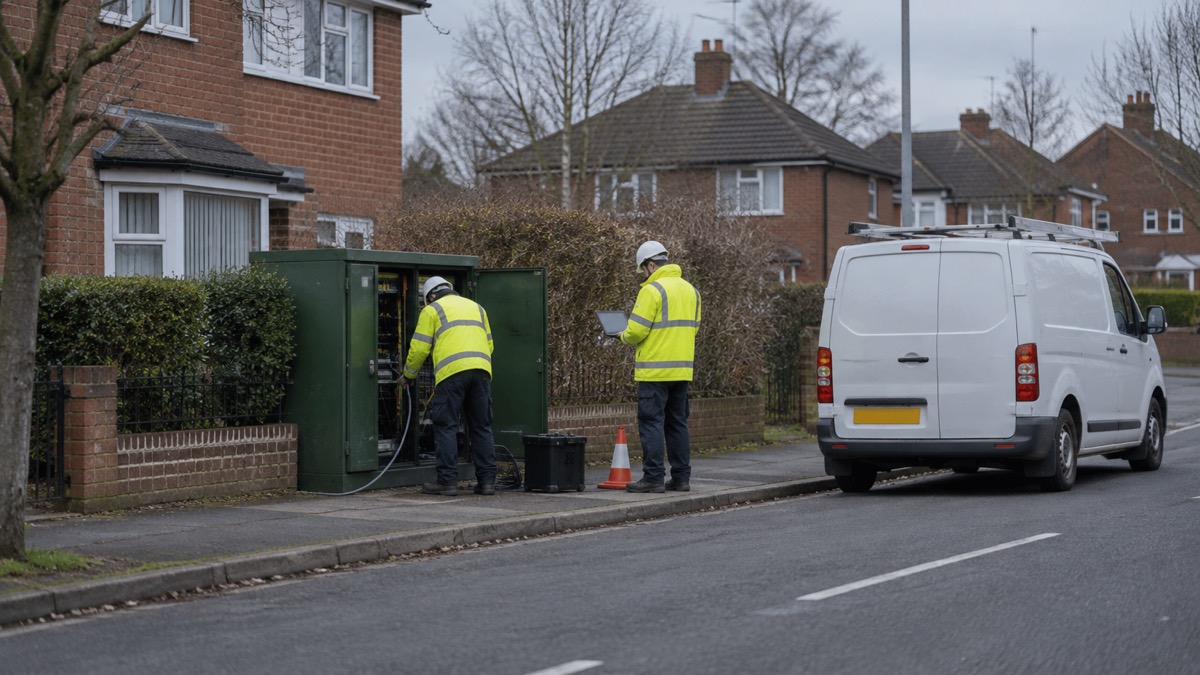
The UK's major communication providers signed a voluntary agreement with government in December 2023 committing to safeguards for vulnerable customers, including telecare users, when they are moved onto digital services, according to a government action plan published on 11 February 20251. The agreement sits within the wider retirement of the analogue landline network, also known as the public switched telephone network (PSTN), which BT Group announced its intention to retire in 20171.
Upwards of 2 million people in the UK use telecare, most commonly personal alarm pendants or buttons, and most of these devices have historically relied on the analogue landline network1. The government plan states that devices designed to operate on analogue landlines have a higher rate of failure when connected to digital telephone landlines, and that there have been serious incidents, including a small number of fatalities, where telecare devices have failed to work properly after the switchover1. The plan sets out four outcomes, the first being that no telecare user will be migrated to digital landline services without the communication provider, the customer or the telecare service provider confirming that the user has a compatible and functioning telecare solution in place1.
Several bodies and dates sit alongside the December 2023 agreement. The Telecare Action Board (TAB) was established in January 2024, with BT Consumer leading its formation1. The network operator charter was developed in March 2024, and Ofcom introduced an incident reporting framework in spring 2024 to monitor the nature and volume of incidents, providing its first report to DSIT in July 20241. Which? updated its telecare guide in August 2024 to remind consumers that an analogue telecare system may not function as intended, and the Minister of State for Social Care and the Minister of State for Data Protection and Telecoms jointly wrote to directors of adult social services in September 20241.
"In December 2023 the UK's major communication providers signed a voluntary agreement with government to protect vulnerable customers when they are moved onto digital services"
The plan states that most customers can expect their telephone lines to have made the switch by the end of January 2027, and that the digital upgrade is broadly expected to be fully completed in 20271. It applies to England only, but notes that the digital phone switchover will affect all devolved nations1. The plan supersedes the existing DHSC Telecare stakeholder action plan first published in December 2022 and updated in September 20231.
| Date | Development |
|---|---|
| December 2023 | Major communication providers sign voluntary agreement with government |
| January 2024 | Telecare Action Board established, led in formation by BT Consumer |
| March 2024 | Network operator charter developed |
| Spring 2024 | Ofcom introduces incident reporting framework |
| July 2024 | Ofcom provides first report to DSIT |
| August 2024 | Which? updates telecare guide |
| September 2024 | Ministers write to directors of adult social services |
| 11 February 2025 | Telecare National Action Plan published |
| End of January 2027 | Most customers expected to have switched |
Why it matters for households
The switchover affects any household with a landline, but the plan identifies telecare users as being at particular risk, noting that telecare users are often older and/or more vulnerable people1. The government's stated aim is that telecare users should only be migrated once a functioning telecare solution is confirmed in place, and it encourages a risk-based approach so that the most vulnerable people are protected first1. The plan also states that government expects sellers to have stopped selling analogue telecare devices, and that buyers, including local authorities and personal buyers, should not purchase analogue devices1. While analogue alarm devices remain in use, the plan says there should be ongoing testing on digital telephone lines and that alarm reliability should continue to be monitored1. The plan records that government is working with the telecommunications industry on a national communication campaign to be launched in early 2025, and encourages communication providers to share migration plans with telecare service providers and customers on when and how telephone lines will be migrated1. Households wanting background on what changes can read our guides to telecare and personal alarms when phone lines go digital and the digital landline switchover, and on extra help from phone and broadband providers.
What happens next
DHSC and DSIT will review progress against the action plan every 6 months, monitoring implementation and effectiveness, and will identify and introduce new actions as needed1. The plan states that government will work with telecare suppliers and service providers to establish a feasible timeline for analogue telecare devices to be phased out and will communicate a deadline in the coming months1. As announced on 3 January 2025, this includes defining and publishing a minimum set of standards1. The plan also notes Virgin Media O2's plans to withdraw roaming services on their 2G network from October 2025, and that operators do not intend to offer 2G and 3G mobile networks beyond the end of 2033 at the latest1.
 Telecare on Digital Phone Lines
 Digital Landline Switchover
 Provider Extra Help